


45PSI Tires MPG vs. 34PSI Tires MPG


Push My Button

Joined: May 2007
Posts: 4,997
From: Calgary, Alberta
The folks on CleanMPG appear to be extreamly bias to anything that gets them an extra MPG IMO. It reminds me of the mentality that pot smokers have about how it is good smoking weed is for you. They have people that swear driving high is safer than driving sober... same mentality here. I read through that forum and some people are using 3 times the max sidewall pressure, that is the stupidest most dangerous thing I have ever seen. You are going to take advice from them?
I am telling you right now there is more data and information than you can digest to tell you that you are comprimising your cars handeling and braking by pumping up the tires to that PSI This is proven time and time again.
I have stated about 10 times before, you car WILL suffer on both aspects dramatically if you exceed about 42psi (give or take a few pounds depending on tires). This is easily proven by anybody who does autocross, tire pressure is optimized for max handeling under the most demanding conditions (conditions I would smack you upside the head for if you replicated them on public roads in a non-emergency situation).
As I have also stated before, your braking will begin suffer at the higher PSI where handeling is optimized. Anything higher than that will beyond a reasonable doubt negitivly affect your car. Don't believe me, go have a third party do some controlled testing. Your car will be engulfed in a cloud of tire smoke if you try to push it.
I agree with you there is some safety factors and comfort added in to the reccomended PSI. I won't give anybody grief for running 36 or even 38lbs in the tires.
But pull your head out of the sand, you want to claim it gets better MPG, I won't disagree. I will challange you that your tires WILL wear out sooner and also that it does VERY negitivly impact your handeling and braking at those PSI's. Anybody says anything different and it is nothing but a giant propaganda speech.
I am telling you right now there is more data and information than you can digest to tell you that you are comprimising your cars handeling and braking by pumping up the tires to that PSI
This is proven time and time again.I have stated about 10 times before, you car WILL suffer on both aspects dramatically if you exceed about 42psi (give or take a few pounds depending on tires). This is easily proven by anybody who does autocross, tire pressure is optimized for max handeling under the most demanding conditions (conditions I would smack you upside the head for if you replicated them on public roads in a non-emergency situation).
As I have also stated before, your braking will begin suffer at the higher PSI where handeling is optimized. Anything higher than that will beyond a reasonable doubt negitivly affect your car. Don't believe me, go have a third party do some controlled testing. Your car will be engulfed in a cloud of tire smoke if you try to push it.
I agree with you there is some safety factors and comfort added in to the reccomended PSI. I won't give anybody grief for running 36 or even 38lbs in the tires.
But pull your head out of the sand, you want to claim it gets better MPG, I won't disagree. I will challange you that your tires WILL wear out sooner and also that it does VERY negitivly impact your handeling and braking at those PSI's. Anybody says anything different and it is nothing but a giant propaganda speech.
Last edited by Sugarphreak; Jul 4, 2008 at 12:02 PM.



Member
Joined: Jul 2007
Posts: 604
From: Lexington, SC
Sugarphreak - I agree with you that the cleanmpg.com is biased and I know those guys go to the extreme with that said, I believe there is a lot of good info on that site which happens to be factual but like all internet forums you must weed through the info.
Now, for the psi issue several others on here run 50psig as I do and have experienced no compromise with the FIT and continue to improve our mpg.
I am skeptical about the 60psig which is why I haven't jumped straight to it. I was skeptical about 50psig and I slowly increased my psig to 35, 38, 40, 45 and finally 50. The only differences are better mpg and increased coasting ability. I have not noticed any negatives with theses increases except a stiffer ride(which is a matter of opinion that it is negative).
Also, remember we are striving to achieve higher mpg NOT auto cross, race or drive reckless. We drive the speed limit or below(most of the time below) and pay very close attention the happenings around us. We did not achieve 50+mpg overnight and have developed/improved our driving techniques to adapt to the situations we put ourselves in. With that said, I am not saying 60psig is the best tire pressure for our FITS or for anyone. I WANT to experiment with it and come to my own findings/conclusion. Again, I am skeptical about 60spig.
Now, for the psi issue several others on here run 50psig as I do and have experienced no compromise with the FIT and continue to improve our mpg.
I am skeptical about the 60psig which is why I haven't jumped straight to it. I was skeptical about 50psig and I slowly increased my psig to 35, 38, 40, 45 and finally 50. The only differences are better mpg and increased coasting ability. I have not noticed any negatives with theses increases except a stiffer ride(which is a matter of opinion that it is negative).
Also, remember we are striving to achieve higher mpg NOT auto cross, race or drive reckless. We drive the speed limit or below(most of the time below) and pay very close attention the happenings around us. We did not achieve 50+mpg overnight and have developed/improved our driving techniques to adapt to the situations we put ourselves in. With that said, I am not saying 60psig is the best tire pressure for our FITS or for anyone. I WANT to experiment with it and come to my own findings/conclusion. Again, I am skeptical about 60spig.
Last edited by pb and h; Jul 4, 2008 at 01:02 PM.
Push My Button
Joined: May 2007
Posts: 4,997
From: Calgary, Alberta
pb and h, I can understand that you are striving and experimenting with PSI's for higher MPG. I don't disagree it will yeild better MPG's and as far as tire wear goes I still think you will be ahead with the price of gas even if you expereince a 20% reduction in tire life.
The main thing I want to stress and keep people informed about is that when you are moving into higher pressures you should expect some side effects. You can conduct your own testing as to the threshold of your tires, but people should be aware that thier car may not handle the same or better. My own experince and also others who push the boundry's for performance purposes can verify that moving beyond 10psi generally starts to have a negitive impact on everything. I can't stop people from going there, but let's at least let people know that they need to have use some due diligence and maybe leave some extra space for braking and be prepared for the negitive side effects.
^^^My beef here is when you are telling people that there is no impact, that somebody is going to take that statement and go out, pump thier tires to 60psi, then drive like they always do thinking they can slam on the brakes and stop in the same distance they have before. It's flat out not true and it isn't fair to be telling people that.
When I had my tires at 40psi for Autocross (on a closed course) I couldn't stop worth a damn, there was smoke pouring out and it felt like I was on ice. On the other hand I could corner like you wouldn't believe. I run aftermarket brake pads and I don't exactly have cheap tires either. After reducing my pressure back to 34psi I my braking is unbelievable. I never push my car anywhere near where I would be concerend about handling on public roads. Even at the lower PSI I could out corner just about anybody.
Sorry for jacking the thread Sid, I found the information you put up to be pretty useful and I am glad you put it there for people to have a look at. I tend to get a bit riled up when safety becomes and issue, mostly I just want to make sure all sides are represented so people get an overall picture.
The main thing I want to stress and keep people informed about is that when you are moving into higher pressures you should expect some side effects. You can conduct your own testing as to the threshold of your tires, but people should be aware that thier car may not handle the same or better. My own experince and also others who push the boundry's for performance purposes can verify that moving beyond 10psi generally starts to have a negitive impact on everything. I can't stop people from going there, but let's at least let people know that they need to have use some due diligence and maybe leave some extra space for braking and be prepared for the negitive side effects.
As far as safety is concerned I haven't found anything YET that has proven over inflating compromises safe driving or handling.
When I had my tires at 40psi for Autocross (on a closed course) I couldn't stop worth a damn, there was smoke pouring out and it felt like I was on ice. On the other hand I could corner like you wouldn't believe. I run aftermarket brake pads and I don't exactly have cheap tires either. After reducing my pressure back to 34psi I my braking is unbelievable. I never push my car anywhere near where I would be concerend about handling on public roads. Even at the lower PSI I could out corner just about anybody.
Sorry for jacking the thread Sid, I found the information you put up to be pretty useful and I am glad you put it there for people to have a look at. I tend to get a bit riled up when safety becomes and issue, mostly I just want to make sure all sides are represented so people get an overall picture.
Last edited by Sugarphreak; Jul 4, 2008 at 01:41 PM.

Member
Joined: Jan 2008
Posts: 554
From: Orange County
Well, I realized something interesting about the area which I live in. I'm just about never going to get a good hypermiling session unless I drive from 3am to 7am. Why? Too much people on the road in crowded California cities. Also, there is a large amount of people who drive aggressively, which makes it more difficult to compromise safty over fuel efficiency. Please take note of usual driving conditions. I am not going to pump up my tire pressure to 40 PSI without considering road conditions in which I drive. The weather is hitting closer to 100 degrees F which means I have to take account that the rubber on my tires will be a little softer than it was in the winter...etc.
Please take note that these tests are sometimes done with different road conditions. And some of these test on cleanmpg.com do not apply to my everyday survival driving routines of dodging aggresive drivers.
Please take note that these tests are sometimes done with different road conditions. And some of these test on cleanmpg.com do not apply to my everyday survival driving routines of dodging aggresive drivers.
Member
Joined: Jul 2007
Posts: 604
From: Lexington, SC
Sugarphreak - good points. I agree that people need to test things out and see how it works for them.
Just an update - I drove 210 miles at 55psig and noticed a bit stiffer ride(which is expected) than at 50psig. I was driving the speed limit(60-70mph) using cruise control encountering very little traffic on the interstate and noticed no handling differences than at 50psig.
NOTE: I forget how the FIT handles in the 30psig range. -seriously.
Just an update - I drove 210 miles at 55psig and noticed a bit stiffer ride(which is expected) than at 50psig. I was driving the speed limit(60-70mph) using cruise control encountering very little traffic on the interstate and noticed no handling differences than at 50psig.
NOTE: I forget how the FIT handles in the 30psig range.
-seriously.

Member
Joined: Jul 2008
Posts: 122
From: Lisbon, Maine, USA
If the temperature was the same, the MPG difference would have probably been less than 2 mpg.
That said, 34 PSI is already pretty well inflated, so boosting it to 45 would probably result in a minimal difference anyways, much less than say 20 PSi (where there would be noticeable sagging) to 34 psi.
Just to what the owners manual recommends to keep wear on the car itself to a minimum. If you over inflate your tires they will wear faster and could develop bulges where you cant see them, and after 15,000 miles or so cause a blow out... (HAPPENED TO ME!)
Last edited by boon4376; Jul 6, 2008 at 10:26 PM.
Member
Joined: Jul 2007
Posts: 604
From: Lexington, SC
Well, I attempted a little bit of research on the Sport tires. Dunlop nor Tirerack had a mileage rating on them. Dunlop mileage rating was N/A. That makes me wonder if these tires are only meant to get like 30-35k out of them. Anyone know???
I have 32k on the Dunlops now and I just pumped them up to 60psi. I tested them out on the way home from the gas station which was about 6 miles and it was raining. I noticed no handling or breaking differences or decreases. If any it MAY have improved around corners. And when I say corners I do not slow down and try to take them at 30mph where I know I can get away with it - conserve the fuel . I expected sliding in the rain but none was noted.
Here are some pictures of the tries at 60psi and 32k on them:
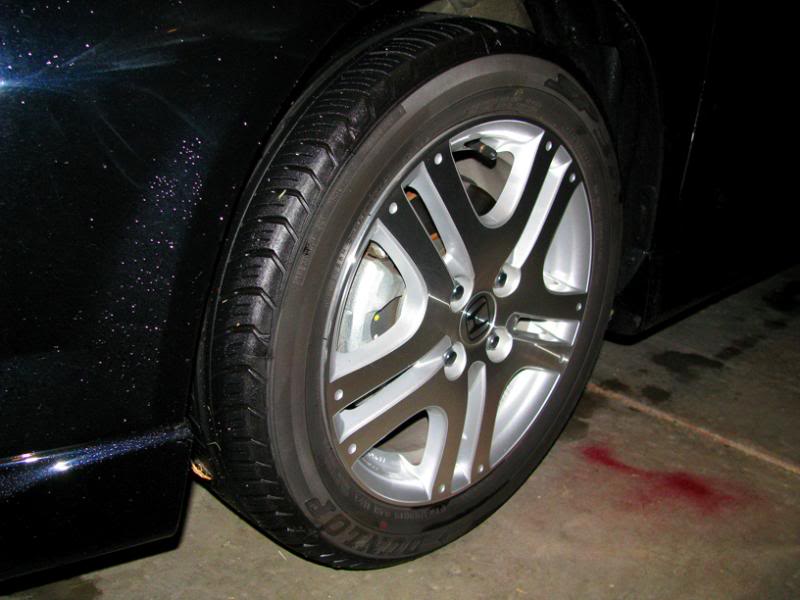
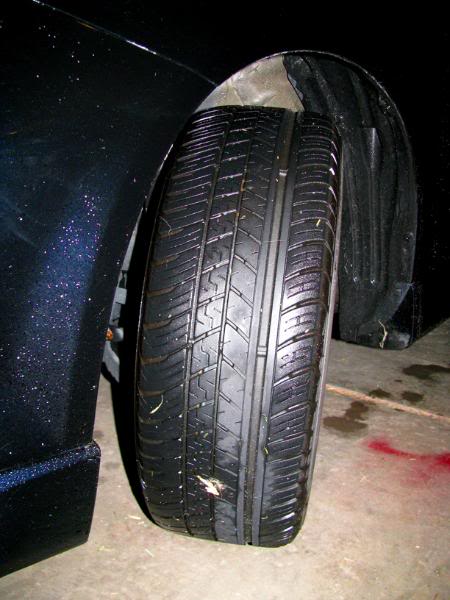
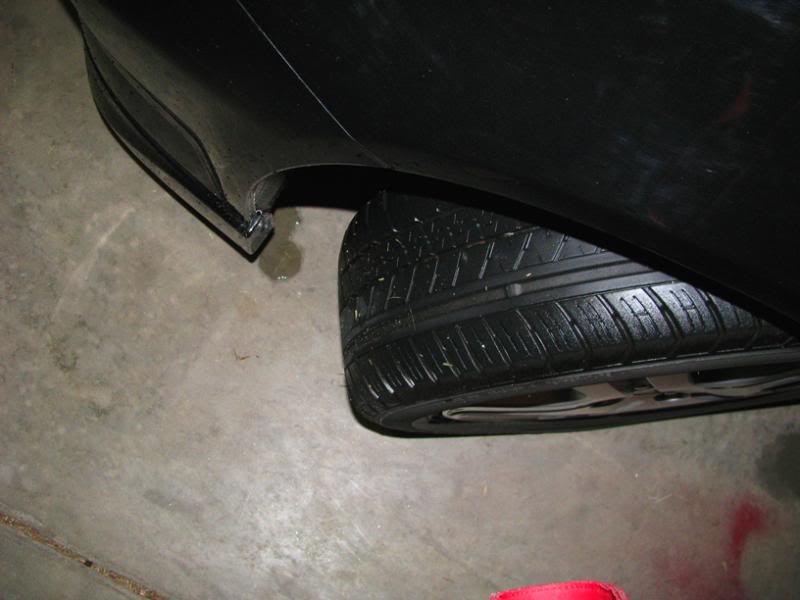
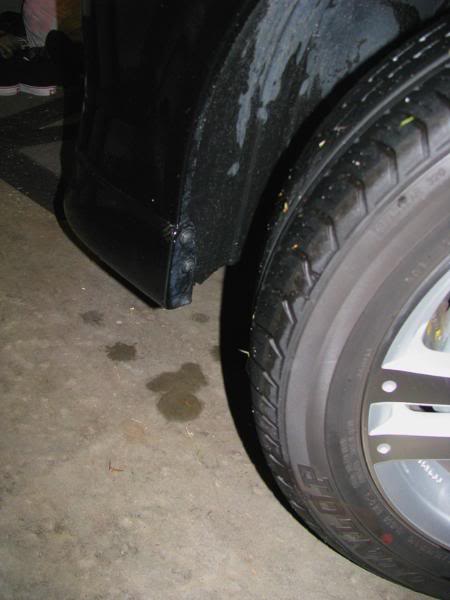
I do not notice any bulging of the middle of the tire which was my major concern. The drive to work tomorrow will be the true test.
I have 32k on the Dunlops now and I just pumped them up to 60psi. I tested them out on the way home from the gas station which was about 6 miles and it was raining. I noticed no handling or breaking differences or decreases. If any it MAY have improved around corners. And when I say corners I do not slow down and try to take them at 30mph where I know I can get away with it - conserve the fuel
. I expected sliding in the rain but none was noted.Here are some pictures of the tries at 60psi and 32k on them:
I do not notice any bulging of the middle of the tire which was my major concern. The drive to work tomorrow will be the true test.
Member
Joined: Oct 2007
Posts: 388
From: Amish Paradise, PA
Looks normal to me...
The tires on my company '05 Taurus company vehicle were gone at 30k, my 99 Civic Si stock tires needed replacement at 26k, well before any hypermiling or unusual inflation techniques.
I own 3 tread-depth gauges. If something starts to look uneven I will certainly know right away.
The tires on my company '05 Taurus company vehicle were gone at 30k, my 99 Civic Si stock tires needed replacement at 26k, well before any hypermiling or unusual inflation techniques.
I own 3 tread-depth gauges. If something starts to look uneven I will certainly know right away.
Member
Joined: Jul 2007
Posts: 604
From: Lexington, SC
I think we should create a thread on Tire Life vs. PSI. This would have people list how long their stock tires or any other tire lasted(miles driven) and the tire pressure(s) they used during the life of that tire. We could then get to the bottom of this issue. A brief description of their driving habits would be good to know as well.
This may be a little premature since the FITs are relatively new and not many have replaced tires due to wear.
This may be a little premature since the FITs are relatively new and not many have replaced tires due to wear.
Member
Joined: Jan 2008
Posts: 4,371
From: NC USA
[quote=pb and h;359035]I think we should create a thread on Tire Life vs. PSI. This would have people list how long their stock tires or any other tire lasted(miles driven) and the tire pressure(s) they used during the life of that tire. We could then get to the bottom of this issue. A brief description of their driving habits would be good to know as well.
At lunch we gathered the bench racers to get an opinion in general. Surprisingly, we all agreed: raising tire pressure to competitive levels, i.e. 40 to 50 psi on thr street for better mpg about cuts tire life in half per state inspection rules. Note that most tires have a center grove depth of 10/32" and outer groves 13/32" so at the end of 20K miles on a Geo Metro or Civic HX with 40 - 42 psig the front tires center groove is less than 2/32" while the outer groves are at least 6/32",
Inspections require minimum 2/32 on every groove so new front tires are needed.
Since we don't rotate tires to save the rotation charges, we also save an instant cash outlay by buying 2 tires. Over the long run our resident accountant points out the overall cost is reduced cause we keep more cash in our pocket for longer periods of time. Only an accountant ...
At lunch we gathered the bench racers to get an opinion in general. Surprisingly, we all agreed: raising tire pressure to competitive levels, i.e. 40 to 50 psi on thr street for better mpg about cuts tire life in half per state inspection rules. Note that most tires have a center grove depth of 10/32" and outer groves 13/32" so at the end of 20K miles on a Geo Metro or Civic HX with 40 - 42 psig the front tires center groove is less than 2/32" while the outer groves are at least 6/32",
Inspections require minimum 2/32 on every groove so new front tires are needed.
Since we don't rotate tires to save the rotation charges, we also save an instant cash outlay by buying 2 tires. Over the long run our resident accountant points out the overall cost is reduced cause we keep more cash in our pocket for longer periods of time. Only an accountant ...
Last edited by mahout; Jul 7, 2008 at 03:49 PM.
Member
Joined: Jan 2008
Posts: 4,371
From: NC USA
As I have also stated before, your braking will begin suffer at the higher PSI where handeling is optimized. Anything higher than that will beyond a reasonable doubt negitivly affect your car. Don't believe me, go have a third party do some controlled testing. Your car will be engulfed in a cloud of tire smoke if you try to push it.
I and all other showroom stock racers will disagree with your braking suffering. In proven experience braking is improved because there is less deformation of the tire carcass at upper pressure limts. (don't misunderstand, I'm talking about 40 to 50 psug here, not 60 + psig)
The one change that we have noted in recent R compoundtires is their lighter weights and stiffer carcasses so pressures don't have to be raised as much on comp tires like they do on street tires. No one who doesn't like burning $10 bills to lite cigs runs race tires on the street.
And yes if you do drag race starts higher tire pressures simply don't hook up. But once you get going rigid carcasses beat flexible ones any day.
I and all other showroom stock racers will disagree with your braking suffering. In proven experience braking is improved because there is less deformation of the tire carcass at upper pressure limts. (don't misunderstand, I'm talking about 40 to 50 psug here, not 60 + psig)
The one change that we have noted in recent R compoundtires is their lighter weights and stiffer carcasses so pressures don't have to be raised as much on comp tires like they do on street tires. No one who doesn't like burning $10 bills to lite cigs runs race tires on the street.
And yes if you do drag race starts higher tire pressures simply don't hook up. But once you get going rigid carcasses beat flexible ones any day.
Member
Joined: Jul 2007
Posts: 604
From: Lexington, SC
Ok, so here is my theory:
Tire life is dependent on driving habits and psig. I think eco driving habits and higher psig will increase the life of the tire.
Eco driving habits - driving the speed limit, slow accelerating, slow decelerating and no harsh breaking.
Higher psig - Max side wall psig or higher(yet to be determined)
My reasons are based on my personal experience and the comparison of one other, before it was suspision. I have only been able to compare to another FIT Sport 5 speed( I know one is not worthy of proving my theory which is why I suggested the tire thread in my previous post) which happens to have 32k on their tires like me and this person(EL from honda-tech.com) is in need of new tires. EL has used tire pressures ranging from 32-36mpg for the life of the tire. I on the other hand have used 32-36psig for 15K(more like 11K but can't remember) and the rest have seen the range of 40-50psig. I do not need new tires and I have posted pictures of my tires in current condition.
By the way the 60psig does seem to take the corners rather well, better than at 50psig, no skidding.
I really want data not opinions.
Also, for my rotation and balancing I paid a one time fee of $76 dollars and they will rotate and balance as often as I like. $76 dollars to does not seem like much but that is cheaper than the cost of one of the tires and MAY make the tires last longer.
Tire life is dependent on driving habits and psig. I think eco driving habits and higher psig will increase the life of the tire.
Eco driving habits - driving the speed limit, slow accelerating, slow decelerating and no harsh breaking.
Higher psig - Max side wall psig or higher(yet to be determined)
My reasons are based on my personal experience and the comparison of one other, before it was suspision. I have only been able to compare to another FIT Sport 5 speed( I know one is not worthy of proving my theory which is why I suggested the tire thread in my previous post) which happens to have 32k on their tires like me and this person(EL from honda-tech.com) is in need of new tires. EL has used tire pressures ranging from 32-36mpg for the life of the tire. I on the other hand have used 32-36psig for 15K(more like 11K but can't remember) and the rest have seen the range of 40-50psig. I do not need new tires and I have posted pictures of my tires in current condition.
By the way the 60psig does seem to take the corners rather well, better than at 50psig, no skidding.
I really want data not opinions.
Also, for my rotation and balancing I paid a one time fee of $76 dollars and they will rotate and balance as often as I like. $76 dollars to does not seem like much but that is cheaper than the cost of one of the tires and MAY make the tires last longer.
Member
Joined: Jul 2007
Posts: 604
From: Lexington, SC
As for braking, I have not NOTICED a difference but then again I haven't had my tires at 32 psig in months. Not to mention I rarely have to use the brakes very hard.
I have to agree that less traction(surface area) would make it harder for the car to slow down - we agree there.
I have to agree that less traction(surface area) would make it harder for the car to slow down - we agree there.
Member
Joined: Feb 2008
Posts: 1,049
From: lake worth FL
As I have also stated before, your braking will begin suffer at the higher PSI where handeling is optimized. Anything higher than that will beyond a reasonable doubt negitivly affect your car. Don't believe me, go have a third party do some controlled testing. Your car will be engulfed in a cloud of tire smoke if you try to push it.
I and all other showroom stock racers will disagree with your braking suffering. In proven experience braking is improved because there is less deformation of the tire carcass at upper pressure limts. (don't misunderstand, I'm talking about 40 to 50 psug here, not 60 + psig)
The one change that we have noted in recent R compoundtires is their lighter weights and stiffer carcasses so pressures don't have to be raised as much on comp tires like they do on street tires. No one who doesn't like burning $10 bills to lite cigs runs race tires on the street.
And yes if you do drag race starts higher tire pressures simply don't hook up. But once you get going rigid carcasses beat flexible ones any day.
I and all other showroom stock racers will disagree with your braking suffering. In proven experience braking is improved because there is less deformation of the tire carcass at upper pressure limts. (don't misunderstand, I'm talking about 40 to 50 psug here, not 60 + psig)
The one change that we have noted in recent R compoundtires is their lighter weights and stiffer carcasses so pressures don't have to be raised as much on comp tires like they do on street tires. No one who doesn't like burning $10 bills to lite cigs runs race tires on the street.
And yes if you do drag race starts higher tire pressures simply don't hook up. But once you get going rigid carcasses beat flexible ones any day.
I run rated side wall pressure to 10% less now.
thanks
Member
Joined: Jan 2008
Posts: 4,371
From: NC USA
Max handling and long tire life are not compatible. Like most manufacturers Honda conducts many tests with prospective suppliers to find the best mpg, tire life, and handling combination with the optimum tire pressures and that 'happy' medium is what they recommend. So you're probably right on the money at 10% less than max sidewall pressure but you are likely biasing a little towards handling and mpg. Your tires will likely still wear out in the center grove but the outside wion't be too far behind, say 4/32nds when the center is less than 2/32nds.
Push My Button
Joined: May 2007
Posts: 4,997
From: Calgary, Alberta

I and all other showroom stock racers will disagree with your braking suffering. In proven experience braking is improved because there is less deformation of the tire carcass at upper pressure limts. (don't misunderstand, I'm talking about 40 to 50 psug here, not 60 + psig)
The one change that we have noted in recent R compoundtires is their lighter weights and stiffer carcasses so pressures don't have to be raised as much on comp tires like they do on street tires. No one who doesn't like burning $10 bills to lite cigs runs race tires on the street.
And yes if you do drag race starts higher tire pressures simply don't hook up. But once you get going rigid carcasses beat flexible ones any day.
The one change that we have noted in recent R compoundtires is their lighter weights and stiffer carcasses so pressures don't have to be raised as much on comp tires like they do on street tires. No one who doesn't like burning $10 bills to lite cigs runs race tires on the street.
And yes if you do drag race starts higher tire pressures simply don't hook up. But once you get going rigid carcasses beat flexible ones any day.
So you're probably right on the money at 10% less than max sidewall pressure but you are likely biasing a little towards handling and mpg.
Despite your other statements tire pressures gernally have a lot to do with vehicle weight. Telling sombody to run First running 10% less than a max sidewall pressure is a pretty dangerous assumption. Depending on the tire they can vary from 35psi all the way up to 100psi (maybe more).
Secondly is going to affect harder summer rubber more dramatically than something like an all season tire.
Finally I think you are over looking the big picture, in order to increase MPG you need to reduce contact area or harden the tire to reduce rolling resistance. Both things will result in a comprimise in braking. The only thing I can even fathom why it would somehow defy physics is unless you are trying to say that the weight distributionof the vehicle when braking is somehow impacting that.
I will close on my final thoughts, my tires are a lower profile (40 series) tire. As a result I have a stiffer sidewall which most likely impacts my own findings. I will say that my handeling sweet spot is around 38-42psi, any more than that on my car and it starts sliding around hemeraging smoke and tread. I will acknowledge that maybe with a lager sidewall the pressure tolerances will go up, however it would still be nice to see some real world testing.
Member
Joined: Mar 2008
Posts: 587
From: Wash DC Metro
Finally I think you are over looking the big picture, in order to increase MPG you need to reduce contact area or harden the tire to reduce rolling resistance. Both things will result in a comprimise in braking. The only thing I can even fathom why it would somehow defy physics is unless you are trying to say that the weight distributionof the vehicle when braking is somehow impacting that.
I don't know enough about tires on road to know if a tire on normal asphalt has a constant coefficient of friction but it isn't a violation of a law of physics for an increase in tire pressure to have no effect on braking or cornering as long as the tire hasn't lost it's grip. The same could hold true in the rain as long as the tire isn't hydroplaning and the coefficient of friction isn't otherwise affected by water.
Push My Button
Joined: May 2007
Posts: 4,997
From: Calgary, Alberta
Not necessarily. As long as you're not skidding (creating a thin layer of liquid rubber under the contact area), braking and acceleration forces are limited to the force due to friction. In the simplified view (read constant coefficient of friction), the friction force is independent of contact area as long as the normal force (weight) is the same. If the tire and conditions are such that this holds (which is fairly reasonable since we're not dealing with sand or snow), then the size of the contact patch has no impact on braking or cornering forces up until the tire loses grip.
I don't know enough about tires on road to know if a tire on normal asphalt has a constant coefficient of friction but it isn't a violation of a law of physics for an increase in tire pressure to have no effect on braking or cornering as long as the tire hasn't lost it's grip. The same could hold true in the rain as long as the tire isn't hydroplaning and the coefficient of friction isn't otherwise affected by water.
I don't know enough about tires on road to know if a tire on normal asphalt has a constant coefficient of friction but it isn't a violation of a law of physics for an increase in tire pressure to have no effect on braking or cornering as long as the tire hasn't lost it's grip. The same could hold true in the rain as long as the tire isn't hydroplaning and the coefficient of friction isn't otherwise affected by water.
Where I am coming from is surface traction on bare road. We all know using wider tires allows you to corner better becuase it has a wider contact patch on the road. That same grip allows you to brake better as well in the same conditions.
Member
Joined: Jan 2008
Posts: 4,371
From: NC USA
I flat out disagree that all street tires are going to exhibit the same braking behaviours with the same pressure;
Despite your other statements tire pressures gernally have a lot to do with vehicle weight. Telling sombody to run First running 10% less than a max sidewall pressure is a pretty dangerous assumption. Depending on the tire they can vary from 35psi all the way up to 100psi (maybe more).
Secondly is going to affect harder summer rubber more dramatically than something like an all season tire.
Finally I think you are over looking the big picture, in order to increase MPG you need to reduce contact area or harden the tire to reduce rolling resistance. Both things will result in a comprimise in braking. The only thing I can even fathom why it would somehow defy physics is unless you are trying to say that the weight distributionof the vehicle when braking is somehow impacting that.
I will close on my final thoughts, my tires are a lower profile (40 series) tire. As a result I have a stiffer sidewall which most likely impacts my own findings. I will say that my handeling sweet spot is around 38-42psi, any more than that on my car and it starts sliding around hemeraging smoke and tread. I will acknowledge that maybe with a lager sidewall the pressure tolerances will go up, however it would still be nice to see some real world testing.
Despite your other statements tire pressures gernally have a lot to do with vehicle weight. Telling sombody to run First running 10% less than a max sidewall pressure is a pretty dangerous assumption. Depending on the tire they can vary from 35psi all the way up to 100psi (maybe more).
Secondly is going to affect harder summer rubber more dramatically than something like an all season tire.
Finally I think you are over looking the big picture, in order to increase MPG you need to reduce contact area or harden the tire to reduce rolling resistance. Both things will result in a comprimise in braking. The only thing I can even fathom why it would somehow defy physics is unless you are trying to say that the weight distributionof the vehicle when braking is somehow impacting that.
I will close on my final thoughts, my tires are a lower profile (40 series) tire. As a result I have a stiffer sidewall which most likely impacts my own findings. I will say that my handeling sweet spot is around 38-42psi, any more than that on my car and it starts sliding around hemeraging smoke and tread. I will acknowledge that maybe with a lager sidewall the pressure tolerances will go up, however it would still be nice to see some real world testing.
That maximum handling pressure depends on the wheel width as well as the profile. I, too, run 40 profile tires, 205/40x17 on 17x7 rims. My street pressures are 40 front and 36 rear. Whenever the rim width exceeds the bead width, as it does in this case, additional pressure is needed to just have the tread lay flat on the ground. That way I get acceptable life out of the tires while getting good handling thanks to the stiffer sidewalls.
Running 45 psi in a 55 series stiffens the sidewall to get pretty much the same handling as 40 psi in wider tires on a wider rimbut at the cost of less tire life,. (thats why SS racers increased pressure; a stiffer tire is more responsive and deforms less which is necessary for road racing.)
A quick survey here shows the 4 of us have used more than 10,000 tires in the last 40 years in both racing and street use. We all agree that for maximum performance, braking, cornering, and mpg, pressures higher than 'recommended' are better; for maximum tire life pressures a little less than recommended is better. Tire life is opposite of mpg.How much above and below 'recommended' is indeed different for each tire,
Rolling friction is not just a result of hardening or surface contact. The materials and tread design are also heavy factors. The less a tire surface deforms when it rolls is the key to lowering rolling friction. Hardening and pressure contribute but the rubber composition and tread design probably have more to contribute. A tire with no deformation would yield less rolling friction but would be a tad difficult to turn or shed water.
PS the general rule for altering pressures on tires is when the rim width exceeds the 'nominal' rim width the pressure shouldd be increased to get the tread' flat. when the rim width is less than the 'nominal' rim width the press ure br reduced to get the tread 'flat' The nominal rim width, or presumptionally the bead width, can be found in TireRacks specifications data.
Last edited by mahout; Jul 8, 2008 at 12:10 PM.