2009 Ford Focus RS Turbo Spotted in USA



2009 Ford Focus RS Turbo Spotted in USA
2009 Ford Focus RS Turbo Spotted in USA


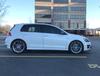
A US user at FocusFanatics.com spotted this white example of the 2009 Ford Focus RS parked outside on a street corner in Royal Oak, Michigan. The car's Michigan number plate suggested that it belongs to someone at the Ford Motor Company. This RS is obviously in the US for a reason but nothing concrete has been said on this so perhaps a little restraint on the bubbling excitement is a good idea. It is kind of strange though not to have the blue oval's fastest and most powerful everyday hatch available in its home country.
The new Ford Focus has a 2.5-litre turbocharged Duratec engine producing 300bhp (224kW) pumped through the front wheels. That makes it one of the most powerful FWD cars in the world today. According to Ford, AWD was not chosen because the system adds weight, costs and is not good for fuel economy. The last Focus RS was produced six years ago.
http://www.worldcarfans.com/9090505....ding-stateside
And here is some more in-depth information on the '09 Focus RS:
Official details have been released on the new Ford Focus RS. Introduced as a concept in London last year, the Ford Focus RS will have a large amount of power in a very recognizable package.
This is the first RS-badged Ford in six years, with the last being the first-gen Focus. The distinction is something Ford spends a great amount of effort, believing the RS has its own reputation to uphold. As Ford performance vehicles exec Jost Capito said, "This is a serious machine, with the performance, traction and precision to match far more exotic sports cars. The RS badge is not something we treat lightly and I believe this car proves it."
Engineers designed this car with a 2.5-liter Duratec engine that pumps out 300 bhp. Ford contacted previous RS owners to decide what other technologies to put into the vehicle. In the end, they decided to build a car that could do fast laps while serving as a daily driver.
For this reason, Ford will manufacture this vehicle as front-wheel-driven, a decision that has some benefits and detriments. "Front-wheel-drive was our preference all along," says RS Chief Engineer Dirk Densing. "All-wheel-drive systems add cost, weight, inertia and consequently, fuel consumption." He goes on to state that this choice gives drivers better linear steering and better performance. If the company had really wanted to bring a car that was essentially a rally racer to market, they probably should have found a way to add on an AWD system with limited-slip differential. Hopefully, Ford will put some sort of traction control on the car to compensate.
The 2009 model year marks both the 10th anniversary of the Focus, and the 40th anniversary of the RS. The new 2009 Ford Focus RS will be on sale at Ford dealerships very soon. You can read more about the genes of the Ford Focus RS in the six page press release below.
Focus RS Power
"At the heart of every great performance car is a great engine. We've cut no corners in the development of the Focus RS engine. This is a bespoke, high-performance powertrain."
Len Urwin, Powertrain Manager, Ford Team RS
The turbocharged Duratec RS 2.5-litre engine creates Focus RS' distinctive character, delivering its peak power of 305PS (300 bhp) at 6,500 rpm and peak torque of 440Nm between 2,300 and 4,500 rpm.
Power Generator
The Focus RS engine shares its fundamental structure with that of Focus ST, but there the similarities end. Powertrain manager Len Urwin knew from the beginning that simply adjusting the engine management system for more power would be insufficient for a true RS.
He explains: "There was never an intention to try to ‘chip' the ST engine. We evaluated several approaches using the ST engine and none gave us the combination of power delivery, character and durability that we wanted, so we opted to create an RS Duratec, using the ST unit as our base."
The objective was increasing power and torque without affecting durability. To meet that, multiple detail changes were made to the powertrain including a revised cylinder head gasket, ultra-durable metal sprayed cylinder bores, revised pistons and a bespoke camshaft profile and connecting rods, allowing bigger small end bearings.
However, the most obvious changes are the new intake system, exhaust manifold and turbocharger. The larger Borg Warner K16 turbo fitted to Focus RS offers a maximum steady state boost pressure of 1.4 bar - double that of Focus ST's 0.7 bar - to generate the car's 35 per cent power increase.
Committed to maintaining responsiveness of the engine, Urwin's team focused on three areas:
1. Integrating the turbo with the exhaust manifold, to allow subtle manifold tuning and strategically locating the turbo in the engine bay, to optimise crash performance and minimise revision to the exhaust system and associated oil and water pipes;
2. Carefully sizing the required larger turbo, to closely match the ‘bottom end' engine responsiveness of Focus ST;
3. Reducing the induction system and exhaust losses.
Focus RS needed its own, more aggressive performance character so engineers also modified the torque ‘ramp-up', to enhance performance feel when on boost.
"While we wanted to be equal on low-end responsiveness and minimise the common off-boost inertia of larger turbos, we didn't want RS to have the same character as ST," explains Urwin. "We wanted a stronger feel of increasing boost; we wanted you to really feel the surge of the turbo."
With the turbo spinning, power arrives quickly. The 305PS peak is reached at 6,500 rpm and holds until the 7,050 rpm redline, to allow full use of the top of the power band. After three seconds at this redline, the engine management system recognises no gear shift and then limits revs to the car's maximum continuous running rpm of 6,500.
"Turbo engines with flat torque curves can often feel like they run out of steam at the top-end, but we wanted to reward drivers who took Focus RS to the red line," states Urwin. "We're really proud of the result - strong mid-range transient response and a free revving top-end."
Straight Torque
However, Urwin believes that the power is unlikely to be the first thing drivers will notice, as to get to that redline they will have travelled along Focus RS' 440Nm torque curve.
Offering more torque than any Ford RS production car before it, Focus RS' torque curve has a steady state peak beginning at 2,300 rpm and running to 4,500 rpm, meaning torque can be appreciated in any gear and at most road speeds. The 440Nm peak torque is a 38 per cent increase over Focus ST.
Says Urwin: "Matching low-end responsiveness with a larger turbo and a peak of 440Nm is a real achievement. That's a figure you would only have seen in so-called ‘supercars' just a few years ago. It gives Focus RS a gutsy, strong pull at the lower end of the rev range - great for those wanting a powerful performance feel but also great for more relaxed everyday driving."
Bespoke Transmission
That combination of performance ability and cruising capacity is made practical by a specially-developed, six-speed Ford RS transmission. It shares its gear ratios with the Focus ST gearbox on which it is based, with minor modifications to bearings and clutch housing and a revised, stronger differential.
Overall, gearing is one per cent longer than ST due to the larger rolling circumference of Focus RS' specially developed tyres - further evidence of the team's attention to every detail.
This allows gearing long enough for Focus RS to reach the all-important 100 km/h barrier in second gear.
Differential Difference
Putting the torque on the road is aided by a Quaife helical limited slip differential. The Quaife differential was first developed for the original, five-speed Focus RS in 2002, but revised and improved by Ford Team RS for the new, six-speed Focus RS. Today, it features a sixth planet gear and has been revised for increased strength and a more subtle intervention and torque transfer.
Computer-aided engineering drove the design of the differential, identifying the potential areas for increased strength. This was aided by measuring rig work and whole vehicle development, with particular attention to refining performance plots for the differential's torque bias function, to maximise dynamic performance.
Concludes Urwin: "We have tuned the differential for a progressive torque transfer. Our work was focused on creating an optimum drive for both road and track, in the dry and the wet. It was in finding this balance that our tuning efforts were directed."
Cooling RS
Creating a high-performance version of the Duratec 2.5-litre with this level of power also required significant attention to its cooling ability. The cooling strategy was two-fold:
1. create a cooling pack that met the high performance requirements of Focus RS and;
2. match this to a comprehensive aero pack that delivered the required volume of cooling air to the system.
Explains Urwin: "Around 80 per cent of the external cooling for Focus RS comes through the car's lower front grille aperture and its precise size, shape and mesh density were a critical part of our work with the Aerodynamics team."
The lower front aperture is approximately 30 per cent larger than that of Focus ST and none of the precious cooling air it collects is allowed to escape, thanks to carefully designed ducting.
This ‘upstream' ducting focuses airflow channelled into the car's main trapezoidal aperture by the front air splitter and front bumper form, with the exact shape dictated by many hours of research, including Computational Fluid Dynamics (CFD) and wind tunnel work.
Outboard trapezoids either side of the main intake are blanked off, but positioned to give the option of converting to additional cooling systems for serious track use.
A new, 25 per cent larger capacity radiator keeps engine coolant and engine oil temperatures under control, even in the most committed performance driving, in combination with a larger, 14-plate, engine-mounted, water-cooled oil cooler.
The final part of the engine cooling picture is Focus RS' signature bonnet louvers, which Urwin identifies as having a particular benefit: "The louvers help with idle cooling, especially after high speed running, such as on a circuit, so were an important addition to Focus RS. They're there for a reason."
Testing of the cooling pack took place around the world, to find the broad range of required conditions, including Arizona, Southern Italy, the Austrian Alps and a variety of European race circuits.
"CFD helped us in the early stages of cooling development, but there's no substitute for real-world testing. We spent significant time testing physical prototypes, in wind tunnels and variety of real-world climate extremes to perfect this work," explains Urwin.
RS Breathing
The new intake system for Focus RS includes a new body-mounted airbox with a low-loss, cylindrical filter, revised turbo ducting, a modified hot charge duct, high-efficiency intercooler and new cold charge duct. The airbox also has a unique, double intake entry system to reduce induction losses further.
Intercooling is critical in high-performance engines and the Focus RS intercooler system is new, larger and specially developed for the car. It is capable of reducing air temperatures from 160 degrees Celsius at the compressor, to a maximum of 60 degrees Celsius at the intercooler outlet, in ambient temperatures of up to 38 degrees Celsius.
RS Exhaust
The sports exhaust system is also unique to Focus RS. Focus RS uses a one-brick catalyst to enhance flow and reduce exhaust back-pressure, whilst meeting current exhaust emissions requirements.
The design of the turbo and manifold allows Focus RS to use ST's exhaust geometry, downpipe and flex, with revised hangers to accommodate the car's 20mm lower subframe.
The exhaust system also features a modified mid-section, with a revised, 4.2-litre mid-muffler, fitted around Focus RS' larger, 62-litre fuel tank (up from 55 litres in Focus ST). At the rear, a modified muffler uses two larger, 100mm-diameter, ‘trumpet' tailpipes to further reduce pressure losses.
The entire system has been tuned to provide a sporty sound. Team RS engineers knew well that, for Focus RS customers, how the exhaust system sounds is as important as how it looks or performs. Every Focus RS customer wants their car to sound ‘right' and creating an induction and exhaust sound to fit the image and character of Focus RS was another critical aspect of its powertrain development.
Focus RS employs a ‘sound symposer' system, to amplify selected engine frequencies and convey pleasing engine sounds into the cabin, contributing to that all-important RS performance environment. As in all aspects of the engine, the symposer system has been adapted and tuned to fit the character of the vehicle, giving a raw, motorsport edge not present on Focus ST.
Urwin's Powertrain team also created detailed performance characteristics to delight enthusiasts, such as a spark retard that encourages the pop and crackle in the exhaust on throttle lift. Focus RS also has a distinctive, more aggressive idle tempo and engine note, to reinforce performance feel.
All these details were tuned to meet strict EU production car noise regulations and Focus RS' own targets for fuel economy and durability.
Explains Urwin: "We've gone as far as we can for a production car. In all of our engine development, we have to stay within EU drive-by noise limits, provide good overall fuel economy for the class and meet exacting durability and emissions standards - yet still create a high-performance engine with an attractive, sporty induction and exhaust noise. Achieving that is all about balance and a tireless attention to detail."
Focus RS Performance
"Creating a 305PS, front-wheel-drive performance car is a significant engineering effort, but there is equal challenge in refining it to be a true, no-compromise driver's car."
Dirk Densing, Chief Engineer, Focus RS
Creating the power of a true Ford RS is one thing; managing that power into accessible yet exhilarating performance and assured traction is another. This challenge was met by Ford's renowned vehicle dynamics experts.
Under the guidance of Chief Programme Engineer, John Wheeler, the Dynamics team was led by Chief Engineer, Dirk Densing, whose relaxed demeanour belies his passion and pedigree in performance cars and motorsport.
This team has achieved a car capable of 0-100km/h (0-62 mph) in 5.9 seconds and a top speed of 263 km/h (163 mph).
Wheeler and Densing were determined to create a dynamic mechanical set-up that would provide a pure driving experience, rather than manage power with constant electronic interference or truncation systems.
The most obvious change is the car's wider track, but the team completed their solution with a suspension technology that was under development at Ford's Research & Advanced Engineering centre (R&AE) in Aachen, Germany. Called ‘RevoKnuckle', this innovation was identified early on as offering significant benefit to a new front-wheel-drive RS.
The combination of wider track and RevoKnuckle front suspension is the reason Ford has been able to do what was thought impossible previously: develop a 305PS (300 bhp), front-wheel-drive car that is not only driveable every day, but faster in many situations than all-wheel-drive performance cars.
Exhaustive testing and refining in the hands of Team RS' dedicated vehicle dynamics expert, David Put, has also created a set-up for Focus RS that forgives the bumps of every day roads, yet rewards on-track commitment.
"It sounds simple, but is a genuine challenge: make a potent performance machine as accessible and useable as any other Focus; able to transform instantly from everyday transport to track-day ‘supercar'," explains Wheeler. "It's a combination of innovative technology and class-leading dynamics, finely honed through David's expertise and commitment that made this possible."
Torque Talk
The greatest engineering challenge was in managing the impact of the car's 440Nm torque. Torque steer - the impact of torque on steering in front-wheel-drive vehicles - is one of the key challenges in suspension development of front-wheel-drive cars.
In the real world, torque steer is most often experienced when hard acceleration, cornering or uneven surfaces are combined and its effects are apparent to the driver as a sudden or momentary disturbance on the steering wheel. This is not ‘performance feel', but a transient ‘error state' which detracts from steering precision and performance.
Wheeler explains the phenomenon: "Torque steer is experienced when an unequal traction forces exists between the left and right front driven wheels. On a good flat surface, driving straight ahead, the left and right driven wheels have equal driving torque and everything is balanced.
"When left and right torque is unequal then the trouble starts. In the design of front-wheel-drive suspension, two main aspects have to be considered to minimise torque steer: keeping the centre of the outer CV joint on the steering axis line, and minimising the offset from the wheel centre to the steering axis. This is most important in performance cars, where wider wheels create a greater offset to begin with," he continues.
In the physics behind this phenomenon, traction forces at the tyre's contact area with the road are translated in two ways: one force ‘couple' transfers harmlessly through the driveshafts, but a second force component acts at the wheel centre. This element creates a turning force about the steering axis. The larger the offset between the wheel centre and the steering axis, the larger the turning torque.
In the design of the suspension geometry, therefore, the first priority is to keep the offset from the wheel centre to steering axis as small as possible.
Even this is not an exact science since, with wide tyres on uneven road, the tyre's contact area with the road can move from the middle to the inside or outside of the tyre.
These unbalanced forces can be exacerbated further by a limited slip differential, as some have a very unforgiving characteristic of locking and applying transfer torque too rapidly.
Considering wide tyres, a wide track and wheel offset and limited slip differential are all present in the front-wheel-drive Focus RS, these areas were the first to be considered by the Dynamics team.
Tuned RevoKnuckle Technology
RevoKnuckle technology was originally conceived as the trend developed for high torque diesel engines to move from large, often all-wheel-drive vehicles into smaller, front-wheel-drive cars. The Ford RevoKnuckle approach is unique in its design and installation and has been developed and patented exclusively by Ford Research & Advanced Engineering (R&AE) and Team RS.
Ford RevoKnuckle is the product of six years' work, beginning in 2001 and led throughout by project engineer, Marc Simon. While Focus RS is R&AE's first performance car application, Simon's team was able to bring significant relevant experience to the project: in 2005, Simon and several other R&AE specialists were seconded to Ford's World Rally team, developing the suspension layout and kinematics of the then-new Focus World Rally Car.
This gave them a sound understanding of the requirements for Ford RevoKnuckle in a high-performance road car, in both its functionality and durability. "There's a direct relationship between what we were doing in WRC and our work on Focus RS," Simon states.
RevoKnuckle Structure
The performance demands of Focus RS mean it is the only model in the Focus range not to carry the traditional ‘MacPherson strut' arrangement.
Regular suspension knuckles are a one-piece design; RevoKnuckle has instead two separate pieces - one part fixed to the strut; one part that rotates with the steering line of the car.
In place of the regular, inverted ‘L'-shaped lower suspension mount, RevoKnuckle features a ‘C'-shaped mount, connected to both the wheel hub, via two arms and to the strut, which is attached at its top.
This approach afforded engineers far greater flexibility to set the car's suspension geometry to minimise torque steer, particularly by reducing the critical distance - known as the ‘king-pin offset' - between the wheel centre and the steering axis line.
The structure of RevoKnuckle provides a layout where the familiar spring/ damper strut and lower wishbone dictate the basic wheel control and geometry, but provides a separated king-pin axis, more often associated with a double wishbone design. This provides more freedom in suspension set-up - such as application of camber, castor and trail - without the need for an expensive suspension re-design. Most significantly, it also creates a king-pin offset less than half that of a conventional McPherson with wide track.
"RevoKnuckle allows the strut and lower wishbone to dictate the basic wheel control and geometry, but provides a separate king-pin axis - in effect, moving the turning line of the wheel closer the wheel centre," explains Densing.
Ford RevoKnuckle Patented
Ford succeeded in combining the new RevoKnuckle with the proven Focus front suspension layout that is normally equipped with McPherson struts. The work to create this unique combination is now protected by a Ford patent.
RevoKnuckle has been patented by Ford for a key aspect of its design: the additional connection between RevoKnuckle and the front anti-roll bar, critical for its high resistance to rotation.
"RevoKnuckle is a straightforward piece of suspension design, in an innovative application that makes it absolutely right for a high-performance car. The explanation may be a little scientific - the result is genuinely dynamic," says Simon.
Innovative Mechanical Approach
In Focus RS, RevoKnuckle has been developed to work alongside the differential in enhancing traction and drive in a range of situations. Focus RS' Quaife epicyclical design relies heavily on friction of the gear surfaces which builds with differential speed, and has been tuned finely to avoid snatch and rapid torque changes.
Such a mechanical approach was very deliberately chosen over other available solutions, such as electronic torque truncation, or Electric Power Assist Steering algorithms to ‘mask' torque steer effect by adding ‘counter-steering' force into the steering system.
"We weren't interested in masking torque steer or reducing performance to the point where it wasn't an issue. We have managed to reduce torque steer to a minimum, yet keep all the performance an RS should have," concludes Simon.
According to John Wheeler, the importance of RevoKnuckle to Focus RS cannot be underestimated:
"All-wheel-drive or rear-wheel-drive have long been default options for managing torque in a high-performance vehicle. We used AWD on RS models in the 80s and 90s, but it creates significant compromises in weight, fuel economy and the cost/ performance balance. Through combined efforts of our Research and Dynamics teams, we have created a solution that simply redefines what is possible with front-wheel-drive," he says.
Summarising the benefits of RevoKnuckle, Densing says: "RevoKnuckle gives the adjustability of a race-car style, double wishbone suspension, in a cost-effective McPherson architecture."
Stopping Power
With such performance capability on tap, it's no surprise to find Focus RS offers a vice-like braking performance. Large 336mm x 30mm, ventilated front discs are gripped by stiffer, single 60mm piston calipers, supported by 302mm x 11mm rear discs. Focus RS also boasts unique high-friction brake material and a tandem brake booster, all combining to generate up to 1.2 g under braking and give Focus RS a stopping distance of just 34.8 metres (114 feet) from 100km/h (62mph).
Anti-lock braking with Electronic Brake Force Distribution (EBD) is standard, as is Ford's Electronic Stability Programme (ESP), here tuned specifically for the car, to allow a high level of sporty driving before intervening.
"In some cars, ESP limits fun for the enthusiast, because it can be used to disguise chassis weaknesses," explains Densing. "In Focus RS, the ESP system is tuned for later and shorter interventions, so you don't feel engine intervention and only occasional brake intervention, even on race circuits, or in rain."
The ESP system can be deactivated for circuit driving. However, this may not always be necessary, as Densing highlights.
"Because it's so precisely tuned, our engineers have lapped the Nuerburgring just as quickly with ESP on, as with it off," he states.
Stable High-Performance Set-Up
By employing RevoKnuckle, the Focus RS Dynamics team was able to retain Focus' suspension layout, including ‘Control Blade' independent rear suspension set-up for stability and controllability, albeit tuned and lowered by 20 mm for a performance driving character.
"Ford Focus' fundamental dynamic character makes an excellent base for a high performance car - it's agile, responsive and stable. It required only subtle changes for Focus RS," explains Densing.
At each corner, Focus RS is set up with stiffer springs and higher spring rates, with rear spring rates increased 40 per cent, versus Focus ST. These are matched to thicker and longer, 24mm anti-roll bars, aiding stability and mechanical grip.
Front and rear track width has been increased by 40mm versus Focus ST, with the resulting wider wheel offset and increased overall vehicle footprint sharpening handling and improving stability.
At the same time, the front subframe has been lowered 20mm, giving a low roll centre height.
The highly acclaimed Focus independent rear suspension has been refined to reflect the RS' high performance intent, particularly in managing higher lateral acceleration. This is achieved through a rigid, cast suspension knuckle and larger rear wheel bearings, the combination of which improves stiffness significantly, creating the low rear suspension camber compliance critical to a responsive high-performance car.
The rear anti-roll bar has also been modified to control immediate roll, heightening vehicle stability and maintaining a fun-to-drive character.
The Dynamics team studied and developed further the ‘elastokinematics' of the Focus rear suspension, generating a more direct build-up of cornering forces through reduced lateral compliance, for a more immediate and linear steering response.
Finally, David Put himself worked closely with tyre manufacturer, Continental, to develop a specific compound tyre for Focus RS. The car's 19-inch alloy wheels are thus wrapped in 235/35/R19 bespoke Continental tyres, giving superior road contact and huge lateral grip.
"Behind the wheel, all this translates into a direct response and a high level of cornering controllability, without sudden surprises for the driver. On a circuit, the driver can feel exactly what Focus RS is doing and predict it safely," says Densing.
Dynamics Tuned for Precision
Ford's renowned driving dynamics DNA comprises four pillars: stability, precision, comfort and agility and each Ford car carries a different balance of these attributes.
In outright racing cars, comfort is the least important. Yet, while Focus RS drivers will accept a little less comfort for greater high-speed stability, agility and directional precision, engineers needed to maintain the sophisticated Focus ride and handling as far as possible, as the car must be equally competent as everyday transport.
"Focus RS has a different character from Focus ST, with a more overt sporting nature. RS is intended to meet the needs of the serious performance driver when this is demanded, yet still provide a fully acceptable and rewarding vehicle for daily driving. In dynamics terms, that's a fine balance between raw, race circuit performance and the controlled precision required for on-road driving," says Wheeler.
With stability and controllability in check thanks to the suspension set-up and RevoKnuckle, dynamics engineers moved on to concentrate on agility and precision.
In Focus, this is characterised by a fundamental turn-in tendency that tucks in the car's nose on throttle lift. This is more pronounced in Focus RS, by a more acute castor angle to the front wheels, for a keener dynamic response to throttle adjustments.
Focus' Electro-Hydraulic Power Assist Steering (EHPAS) has also been tuned with a lower ratio (13.2:1, versus 14.7 for Focus ST), providing sharper responses and requiring less steering effort in cornering, with just 2.32 turns, lock-to-lock.
Ensuring the car's weight did not rise too far was critical to handling as well as ensuring good performance feel. Thanks to RevoKnuckle, which negated the need for all-wheel-drive, and the close attention paid to detail throughout its development, Focus RS weighs in at 1,467 kilograms. This is 75 kilograms heavier than a three-door Focus ST, an increase spoken for by the larger wheels, tyres and brakes, limited slip differential and aerodynamic and cooling aids.
"It doesn't just feel faster; it's also sharper and more responsive," explains Put. "In cornering, you will notice how the improved braking performance, higher lateral mechanical grip and sharper steering responses allow you to carry more speed into and through the corner apex. The car also carries a flatter attitude in a corner and has a more rapid load transfer. It reacts faster to directional changes on twisty roads or race tracks and you can adjust its line on the throttle, so you can get back on the power quickly out of the turn."
Aerodynamics
Aerodynamics also played a part in the Dynamics team's work. Says Densing: "Aero is very important to any car, but usually concentrated on not creating lift front to rear. With its sophisticated aero package, Focus RS generates genuine downforce at circuit speeds and we've covered thousands of kilometres refining computer simulations to find the right balance of downforce without too much drag."
The target for high speed stability of a performance car is to position the aerodynamic centre of pressure at a controlled point behind the centre of gravity.
In Focus RS, the starting point was the standard Focus shape, crafted to generate moderate front end and rear end lift at higher speeds. The challenge was to transform this lift into downforce and bring the aerodynamic centre of pressure forward, without undue sacrifice to the drag coefficient and top speed.
Extensive wind-tunnel testing was conducted to refine aerodynamic performance, with a target of delivering about 40 points of downforce at the front and 10 points at the rear.
The resulting aerodynamic elements for Focus RS achieve these targets, creating 26 per cent more downforce than Focus ST, yet with a drag co-efficient (Cd) of 0.38.
The result of all this effort is a car that is not just fast in a straight line. It is the fastest ever car around the infamous handling circuit at Ford of Europe's Lommel Proving Ground in Belgium - known to the team as ‘Route 7' - beating even the Ford GT and cementing its dynamic credentials.
In addition, Focus RS has completed over 400 laps (over 8,000km) of Germany's fearsome Nuerburgring Nordschleife during its circuit performance development.
The purpose of all this work was to ensure Focus RS continues and enhances Focus' reputation as a driver's car and stays true to its core philosophy of generating pure driving enjoyment by flattering the novice driver, while rewarding the expert.
Focus RS Style
"Focus RS was an opportunity to take kinetic design into a new, ultra-performance area, where form is much more dependent on function. The challenge was to incorporate all the practical needs of a high-performance machine into a cohesive, integrated and bold design that makes clear this is the ultimate Focus."
Martin Smith, Executive Director of Design,
Ford of Europe, Asia Pacific & Africa
Focus RS exudes its intent of being the ultimate Ford performance car of its generation and strikes a lasting impression with performance car enthusiasts.
"Kinetic design visualizes the dynamic qualities of a vehicle, transmitting a feeling of driving excitement, but true to the character of each vehicle," explains Ford of Europe's Executive Director of Design, Martin Smith. "In design terms, every member of the Ford of Europe family has its own personality. Mondeo is the most premium; Fiesta the most stylish; Ka the friendliest - RS is quite simply the meanest!"
In design as in concept, Focus RS is inspired by Ford's World Rally Championship success and this is most obvious in its large, gloss-black front trapezoidal air intake, creating an immediate visual link to the Focus World Rally Car - design for the road, true to motor sport principles.
Heightened aerodynamic and cooling needs meant Focus RS required a specific design approach that integrated these requirements and differentiated it from mainstream Focus aerodynamic elements.
Rather than settle for grafting performance detailing onto a standard body shape, designers have revised almost every body panel on Focus RS to create its bespoke shape.
The result is cohesive and dramatic; new front and rear bumpers and integrated side rocker mouldings give Focus RS a lowered, meaner appearance, while a revised bodyside with wider wheel arches, rocker mouldings and vents give the vehicle a more purposeful stance. These are topped by possibly the most dramatic of Focus RS exterior features, the imposing rear spoiler, inspired directly by the Focus World Rally Car.
Necessary aerodynamic elements are contrasted with the body colour of the car by a gloss-black finish and together they provide some of the vehicle's more distinctive styling cues.
Smaller, secondary cues provide visual differentiation to mainstream Focus models:
* Twin panels of louvres on the bonnet and small vents underneath the headlamps reinforce the car's performance intent and augment the recognised Ford Focus shape;
* RS badges throughout the car reinforce the car's RS pedigree: three dimensional RS badges are present on each front wing vent, the upper radiator aperture, tailgate and embossed on each wheel;
* 19-inch, 15-spoke polished alloy wheels echo the look of their World Rally equivalents.
"Imagine a Focus WRC roaring through a stage in Monte Carlo - you know immediately what it is from front graphics, flared arches, and distinctive livery. Our intention is to make Focus RS equally and immediately recognisable." states Smith.
Performance Design, Aerodynamic Purpose
Focus RS' major design features are all functional, as well as styled to create a lasting impression, with each doing an important job in managing the airflow over and into the car.
"A high performance car like Focus RS has very different and much more sophisticated cooling requirements than a standard car, so design works hand-in-hand with aerodynamics," explains Chief Exterior Designer, Stefan Lamm. "RS is also lower and wider, not only to give the right impression, but also to ensure more downforce and less uplift than Focus ST. This is fundamental for responsive high-speed handling on circuits."
From the outset, Team RS worked with Ford's design and aerodynamics specialists to ensure performance style met performance requirements. The prominent front air splitter, twin-blade rear spoiler and rear venturi all underwent significant aerodynamic testing to achieve the right cooling and aerodynamic targets.
For example, while echoing the standard Ford trapezoidal silhouette, the front splitter's intake area and structural cross bars have been precision honed to allow the required volume of air into the car's cooling system.
The gloss-black front splitter also has a role in controlling exterior airflow, working with the rear venturi in managing air movement under the car, to help develop the required downforce for circuit use. The venturi then channels the air bisected by the front splitter, directing it out from underneath the car and past the rear bumper.
Significant aerodynamic analysis went into the design and construction of the rear venturi tunnel and rear spoiler. Here, Ford's World Rally expertise came into its own to determine the precise height, ramp angle and position of the car's twin-blade spoiler, for maximum aerodynamic efficiency.
Explains Lamm: "Customers would expect an RS to have a rear spoiler, but on Focus RS this has been designed very precisely. A large front splitter creates a large aerodynamic force at the front and could make the rear light and nervous in high speed handling. So, the rear spoiler and venturi have been developed painstakingly to balance the downforce between front and rear. In a true high-performance car like Focus RS, this ability to collect, extract and manage airflow efficiently is critical to its design."
Distinctive Colour Options
To reinforce the bold, new, motorsport-inspired design, designers knew colour was as vital ingredient of the overall Focus RS package.
The positive reception given to the signature ‘Electric Orange' colour that became a highlight of the Focus ST launch encouraged the Design team to develop an equally exciting and unique ‘hero' colour for the sportier Focus RS.
Their inspiration for the vibrant, new ‘Ultimate Green' came from the livery of Focus World Rally Cars. The colour reflects the green signature colour of Ford's global partner and World Rally Championship sponsor, BP, and also stands as a modern interpretation of the 1970s Ford Escort RS Le Mans Green colour.
"Focus RS is a car designed to grab your attention and the choice and use of colour is vital," says Stefan Lamm. "Colour can define a brand, as we saw with Focus ST and in this case we wanted something even more energetic and dazzling. Green is a critical colour that has to have the shade tuned perfectly and ‘Ultimate Green' captures and communicates the spirit and energy of Focus RS."
Focus RS will also be available in the classic RS choice of Frozen White or Ford Performance Blue, the colour of the original Focus RS.
In each case, body colour is used not just in contrast to the gloss-black exterior elements, but also extends to the car's interior.
High-Performance Interior
On the inside, Focus RS boasts a unique and appropriately performance-oriented interior, designed to appeal to customer tastes and balance genuine sports performance with a strong sense of style and quality.
The cabin is dominated by bespoke Recaro high-performance sports seats, specially designed and trimmed in an authentic motorsport microfibre, a tactile material that also provides the grip and support necessary when driving enthusiastically. Each is colour-matched to the exterior, with ebony leather accents and ‘RS' and ‘Recaro' logos stitched into each backrest. Alternatively, optional Ebony black, partial-leather seats will be available with all exterior colours.
Elsewhere, colour builds on the sporty interior theme introduced in Focus ST, with even bolder performance styling, more use of colour matching to the exterior and wide use of metallised and carbon accents.
Rear seats are sculpted, featuring the same detailing and high side bolsters as the front sports seats, making Focus RS a genuine four-seat vehicle.
The centre console is finished in a stylish, carbon-look trim and metallised highlights include air vents, door grab handles, switchgear and gearshift surround and unique RS-branded scuff plates on the door sills. These highlights contrast with a black-trimmed roof lining, emphasising the sporty, cockpit feel.
The driver is also reminded this is no ordinary Focus at every touch, with each interaction refined to match Focus RS' sporty character.
At the centre of this experience is a chunky, three-spoke steering wheel with RS signature and shorter-throw gear lever, with a slick, precise action and a six-speed gear shift graphic in RS blue. The performance driving environment is completed by aluminium foot pedals and three additional gauges, including turbo pressure, sitting atop the centre console and angled toward the driver.
Green or blue interior options are available, matched to the Ultimate Green or Performance Blue exterior options. Frozen White interior colour is blue.
Explains Martin Smith: "Just as the exterior must describe performance potential, so the interior must create a genuine sporting environment, in looks and performance. For example, the use of microfibre is tactile and grips occupants, while a branded Recaro seat communicates immediately an authentic motorsport capability."
Contemporary ‘RS'
Inside and out, Focus RS has been styled for a modern generation of performance car enthusiasts, reflecting modern customer tastes.
For the first time in its heritage, even the 38-year-old RS badge has been restyled subtly, as a more modern interpretation for the new car. It features a bolder, more solid identity and a more subtle chrome surround.
"Focus RS is kinetic design to the max, an all-modern, ultimate performance Focus with attitude. To me, the RS maximises the potential of Focus and defines a new generation of the iconic RS brand," concludes Smith.
Focus RS Practicality
"For the customers who buy it, Focus RS has to perform a dual role - to be a high performance circuit machine when required, yet be just as adept in everyday driving."
John Wheeler, Chief Programme Engineer, Focus RS
Focus RS is not just a new high-performance car, it also marks the pinnacle of the Focus road car range. While it is guaranteed to thrill and excite customers with its power and performance, it must be just as impressive in everyday use.
Inconspicuous Consumption
All the work carried out in fine-tuning the design and specification of the Focus RS in terms of aerodynamics, powertrain details and chassis set-up not only assisted the car's precise dynamic response and performance, but also the everyday consideration of its fuel economy and emissions.
For a 305PS high-performance car, Focus RS is remarkably efficient, with European Driving Cycle combined fuel economy of 9.4 litres per 100km (30.0 miles per gallon) and an average CO2 rating of 225 grams per kilometre1.
Combined with a larger, 62-litre fuel tank (up from 55 litres in other Focus models), this gives Focus RS a healthy driving range.
"It was important for us to develop a vehicle which combines high performance with fuel economy. In the 300+ PS category, Focus RS is amongst the leaders for fuel economy," comments Wheeler.
Sound, Not Noise
Within Ford of Europe, noise, vibration and harshness (NVH) work is known as Sound Quality and Vibration (SQ&V), and is a vital element in keeping Focus RS' sensory connection between car and driver.
Unwanted noise and vibrations have been minimised, using new, stronger engine mounts to absorb engine vibrations and a new roll restrictor bracket, which improves dynamic engine control by 20 per cent. The interior NVH package from Focus ST has also been used to prevent unwanted wind and road noise entering the cabin.
Distinctive, sporting sound qualities have been tuned in to the high throttle opening and higher engine rpm ranges, to reward the enthusiastic driver. The sound symposer delivers the powerful intake sound into the cabin, while the exhaust system features a rough and sonorous sound unique to RS.
States Wheeler: "In a performance car, the right sound is important. A sound package that is harmonious with the vehicle's performance and provides a positive driving experience is as important as the suppressing of unwanted noise."
Safety and Structure
Under its stylish, performance exterior, Focus RS continues Focus' excellence in active and passive safety.
The Focus RS safety package includes standard ABS, Electronic Brakeforce Distribution, ESP and a rigid passenger safety cell. Among the interior safety systems are driver and passenger front airbags, side curtain airbags and pyrotechnic belt pre-tensioners protecting front and rear occupants.
In November 2004, Focus was the first and only vehicle to be awarded a 100 per cent occupant safety rating by EuroNCAP, for both offset frontal and side impact. It also achieved a 100 per cent test score for child dynamic injury protection for 1½ and 3-year-old child crash test dummies.
Retaining Focus Reliability
All through Focus RS' development, durability has been as important as any other factor and much attention to detail has ensured it will continue Focus' excellent reputation for reliability, despite all its high-performance modifications.
This was especially true for the bespoke suspension design. For all its complexity, creating the function and set-up of Ford RevoKnuckle was just part of the challenge for engineers in Ford Team RS, Vehicle Dynamics and R&AE. Bringing such an innovative development into volume production and meeting Ford's exacting durability standards was equally important.
Explains Wheeler: "Targets for durability are higher for Focus RS than mainstream vehicles, because of its likely use as a track car. It will be driven harder and expected to perform to higher levels than other Focus models."
One of the early decisions in meeting durability targets was to move from an aluminium steering knuckle to a forged part, with the static knuckle in cast iron. This makes for a much stronger, durable component, designed for serious track use, yet adds only three kilogrammes to the overall weight of the car.
RevoKnuckle has also been developed with due consideration for easy service and maintenance, making it simple to maintain and allowing Focus RS to be covered by the standard Ford of Europe warranty.
Powertrain modifications were also made with attention to durability. For example, cylinder bores on the engine have been metal sprayed on the inside, to protect against cylinder cracking under the higher engine pressures generated by the larger turbo.
Approximately 10,000 hours of vehicle testing and development and almost 1,000 rig and vehicle-based tests went into assuring durability on Focus RS.
Wheeler explains: "Our focus was on giving the customer a fully engineered car that delivers high performance without the traditional compromises of performance tuning. We've worked extensively to make sure Focus RS is as durable as every other Focus, and introduced additional test programmes to ensure durability under high speed and race track conditions."
Straightforward Production
Production of Focus RS is also straightforward, with the car being assembled on Ford of Europe's principal Focus production line in Saarlouis, Germany. The front suspension and RevoKnuckle is accommodated in a sub-assembly before final assembly, ensuring the only line modifications required were to accommodate Focus RS' wider track.
"This car is the perfect way to celebrate our success with RS and with Focus, on both road and rally. It's the fastest European Ford production car ever, the most powerful Ford RS and probably the most powerful front-wheel-drive car on sale today. Any way you look at it, it's something special," concludes Wheeler.
RS Heritage
"One of the greatest things about any new RS is the heritage and pedigree behind it. The new Focus RS is as much a car for driving enthusiasts as every one before it and true to the core RS principles of innovative engineering, high-performance and affordability."
Jost Capito, Director, Global Performance Vehicles
& Motorsport Business Development
In 1968, man had not yet landed on the moon, Concorde had not yet flown and the newly-created Ford of Europe had just delivered its first car, the Ford Escort.
Against this backdrop, the Ford RS marque was born quietly, in Germany. The 15M RS (P6), 17M RS and 20M RS (P7), all began production in March 1968 and were the first ever Ford vehicles to carry the RS name, though none carried the badge.
It was not until two years later in 1970 that Ford - inspired by early success in "Rallye Sport" - introduced its first European RS performance car, the Escort RS 1600. The RS identity has been an important part of Ford's sporting image ever since.
In the 40 years since its first appearance, the RS marque has been applied to just 22 of the most special individual Ford road cars, each and every one offering stand-out performance and value for money.
RS Fords have been built in many different forms. They have been front-engined or mid-engined; all-wheel-drive, rear-wheel-drive or front-wheel-drive; and with four-cylinder or six-cylinder, normally-aspirated or turbocharged engines.
Most have employed wind-tunnel testing to evolve aerodynamic features, from Sierra and Escort RS Cosworths right up to new Focus RS.
Yet, all have pushed out the boundaries of technology and virtually all have been successful in motorsport. As a result, each has held a unique place in its market and shared in a proud sporting pedigree.
The original Ford RS - the Escort RS1600 - was the first Ford to use a 16-valve twin-overhead-camshaft engine, and the first to be assembled in the new Advanced Vehicle Operation factory at Aveley, in Essex, UK.
Like many subsequent RS models, the RS1600 found worldwide success in races and rallies, such as the 1972 East African Safari rally and the 1974 European Touring Car Championship.
Elsewhere, Ford Capri RS2600 and RS3100 models were not only high-powered flagship versions of Ford's best-selling coupé range, but also won scores of races, including the 1971 and 1972 European Touring car Championships.
In the late 1970s, the quad-headlamp RS2000 became the best-selling RS model to date. Escort RS1800s won the 1979 World Rally Championship for Makes, and provided power for both Bjorn Waldegard (1979) and Ari Vatanen (1981) to win their respective Drivers' titles.
In the 1980s, the first front-wheel-drive Ford RS, the Escort 1600i, was the first to use fuel-injection and a five-speed gearbox, while the Escort RS Turbo was the first to use a turbocharged engine and a limited-slip differential.
The mid-engined RS200, of which only 200 were produced between 1984 and 1986, was intended for Group B rallying and featured a race-bred aluminium honeycomb, steel chassis, carbon and Kevlar-fibre upper structure, a turbocharged Cosworth BDT engine and all-wheel-drive. Strikingly styled by Ghia, the RS200 was the most exclusive and most expensive Ford RS ever sold. In the years since, it has also been a familiar presence in the sport of rallycross.
In the late 1980s, the Cosworth YB-powered, 150mph Sierra RS Cosworth range became successful as fast, value-for-money road cars, while the RS500 derivatives were so dominant in motorsport that entire Championships had to be re-cast to make sure they did not win every race.
Even so, the 500bhp RS500 race cars won the 1987 World Touring Car Championship and the 1988 European Touring Car Championship.
The following decade saw the Escort RS Cosworth return Ford to the top of rally standings, including victory in the 1994 Monte Carlo Rally - inspiring the birth of the 1990s Escort RS Cosworth road cars. It also led onto 1997-1998 Escort World Rally Car, which brought the Escort rallying pedigree to a victorious close.
Two high performance versions of the front-wheel-drive Fiesta were also created in this period - the RS Turbo and RS1800, the latter with the award-winning Zetec 16-valve, twin-cam engine. Later, there were distinctive front-wheel-drive and four-wheel-drive Escort RS2000 models.
Then came Ford of Europe's design and engineering revolution that created the Ford Focus, in 1998. The RS name made a welcome return in 2002 on the first-generation, 215PS Focus RS, which continued the Ford RS pedigree, using a turbocharged Duratec 2.0-litre engine and limited slip differential to create a ‘World Rally car for the road' experience.
Its strictly limited-edition, 4,501 production run sold out rapidly, proving the enduring demand for high-performance Fords across Europe - a demand which was met in 2009 by the launch of the all-new, 305 PS Ford Focus RS.


"One of the greatest things about any new RS is the heritage and pedigree behind it. The new Focus RS is as much a car for driving enthusiasts as every one before it and true to the core RS principles of innovative engineering, high-performance and affordability."
Jost Capito, Director, Global Performance Vehicles
& Motorsport Business Development
In 1968, man had not yet landed on the moon, Concorde had not yet flown and the newly-created Ford of Europe had just delivered its first car, the Ford Escort.
Against this backdrop, the Ford RS marque was born quietly, in Germany. The 15M RS (P6), 17M RS and 20M RS (P7), all began production in March 1968 and were the first ever Ford vehicles to carry the RS name, though none carried the badge.
It was not until two years later in 1970 that Ford - inspired by early success in "Rallye Sport" - introduced its first European RS performance car, the Escort RS 1600. The RS identity has been an important part of Ford's sporting image ever since.
In the 40 years since its first appearance, the RS marque has been applied to just 22 of the most special individual Ford road cars, each and every one offering stand-out performance and value for money.
RS Fords have been built in many different forms. They have been front-engined or mid-engined; all-wheel-drive, rear-wheel-drive or front-wheel-drive; and with four-cylinder or six-cylinder, normally-aspirated or turbocharged engines.
Most have employed wind-tunnel testing to evolve aerodynamic features, from Sierra and Escort RS Cosworths right up to new Focus RS.
Yet, all have pushed out the boundaries of technology and virtually all have been successful in motorsport. As a result, each has held a unique place in its market and shared in a proud sporting pedigree.
The original Ford RS - the Escort RS1600 - was the first Ford to use a 16-valve twin-overhead-camshaft engine, and the first to be assembled in the new Advanced Vehicle Operation factory at Aveley, in Essex, UK.
Like many subsequent RS models, the RS1600 found worldwide success in races and rallies, such as the 1972 East African Safari rally and the 1974 European Touring Car Championship.
Elsewhere, Ford Capri RS2600 and RS3100 models were not only high-powered flagship versions of Ford's best-selling coupé range, but also won scores of races, including the 1971 and 1972 European Touring car Championships.
In the late 1970s, the quad-headlamp RS2000 became the best-selling RS model to date. Escort RS1800s won the 1979 World Rally Championship for Makes, and provided power for both Bjorn Waldegard (1979) and Ari Vatanen (1981) to win their respective Drivers' titles.
In the 1980s, the first front-wheel-drive Ford RS, the Escort 1600i, was the first to use fuel-injection and a five-speed gearbox, while the Escort RS Turbo was the first to use a turbocharged engine and a limited-slip differential.
The mid-engined RS200, of which only 200 were produced between 1984 and 1986, was intended for Group B rallying and featured a race-bred aluminium honeycomb, steel chassis, carbon and Kevlar-fibre upper structure, a turbocharged Cosworth BDT engine and all-wheel-drive. Strikingly styled by Ghia, the RS200 was the most exclusive and most expensive Ford RS ever sold. In the years since, it has also been a familiar presence in the sport of rallycross.
In the late 1980s, the Cosworth YB-powered, 150mph Sierra RS Cosworth range became successful as fast, value-for-money road cars, while the RS500 derivatives were so dominant in motorsport that entire Championships had to be re-cast to make sure they did not win every race.
Even so, the 500bhp RS500 race cars won the 1987 World Touring Car Championship and the 1988 European Touring Car Championship.
The following decade saw the Escort RS Cosworth return Ford to the top of rally standings, including victory in the 1994 Monte Carlo Rally - inspiring the birth of the 1990s Escort RS Cosworth road cars. It also led onto 1997-1998 Escort World Rally Car, which brought the Escort rallying pedigree to a victorious close.
Two high performance versions of the front-wheel-drive Fiesta were also created in this period - the RS Turbo and RS1800, the latter with the award-winning Zetec 16-valve, twin-cam engine. Later, there were distinctive front-wheel-drive and four-wheel-drive Escort RS2000 models.
Then came Ford of Europe's design and engineering revolution that created the Ford Focus, in 1998. The RS name made a welcome return in 2002 on the first-generation, 215PS Focus RS, which continued the Ford RS pedigree, using a turbocharged Duratec 2.0-litre engine and limited slip differential to create a ‘World Rally car for the road' experience.
Its strictly limited-edition, 4,501 production run sold out rapidly, proving the enduring demand for high-performance Fords across Europe - a demand which was met in 2009 by the launch of the all-new, 305 PS Ford Focus RS.
Last edited by Sid 6.7; May 10, 2009 at 03:29 AM.







Member

Joined: Jul 2006
Posts: 94
From: Spokane, WA
I want that car soo bad. Its soo mean, and sweet. It was mentioned in EVO magazine 3 months ago, when they had a road test in the south of France with it, and a Renault. It is badass, they said the ST is a Dolphin, and the RS is a shark. All wheel drive would of added 200kg also, and hampered handling too much, plus more glorious wheelspin without it :) I love that car, Ford needs to sell it here now!!

Member
Joined: Apr 2009
Posts: 226
From: Toronto, Canada
if i wanted crazy TQ and HP in a FF platform i would turbo a k24bottom/k20 head...
rwd or awd is the way to go with that much TQ.... not that i would ever buy a ford... but it is nice...
what would be faster... mustang gt or rs...
rwd or awd is the way to go with that much TQ.... not that i would ever buy a ford... but it is nice...
what would be faster... mustang gt or rs...

cam fit: thats a good question. i think that while the rs would have trouble launching, it woudl probably eat up the run of the mill mustang gt's you see everyday and the run of the mill drivers that drive them.
i would LOVE for ford to sell this here, i'll take a green one please. :)
sugarphreak: your analogy is not far off....this is basically a pumped up mazdaspeed3/volvo c30 (in very simple dumbed down laymans terms)
and there are those who want it ;)
i would LOVE for ford to sell this here, i'll take a green one please. :)
sugarphreak: your analogy is not far off....this is basically a pumped up mazdaspeed3/volvo c30 (in very simple dumbed down laymans terms)
and there are those who want it ;)