When you click on links to various merchants on this site and make a purchase, this can result in this site earning a commission. Affiliate programs and affiliations include, but are not limited to, the eBay Partner Network.
These were the last set that I bought. I grabbed them in haste, I must admit, but, on that day, I could not find anybody who had anything else.
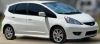
The tires are inflated to 32 psi, but they look under-inflated. I'd like to hear from anyone who has knowledge of these tires. I've had Yoko's in the past (Ascends, I think), and they did not look like this. I might just get rid of them and buy something else.
For comparison, you could take a pic with the camera at ground level and the car on a flat, level surface from the side and front. Others with whatever tires they are running could do the same. I can do that later today probably.
1) As TnTkr recommended, check your gauge against other gauges. Your 32 psi might not be 32 psi. Even if you have used the same gauge for years, they don't last forever and can also be damaged by a drop or similar.
2) Does the 2013 recommend 32 psi? The door sticker on my 2010 Fit Sport recommends 33 psi.
But, I don't pay any attention to that and run a smidge higher (34 psi) in the winter and around 38 psi front/36 psi rear in the summer.
The auto manufacturer specifies a pressure for a comfortable ride and doesn't know what tire you're going to run, or how the tire pressure they're recommending will affect the lifespan of that tire. The tire manufacturers specify a maximum safe (cold) pressure for the speed and weight rating of the tire. Stay below that and you're good. I trust the tire manufacturer when it comes to tires.
This issue is especially important with our other car, a Nissan Leaf EV, where the Nissan-recommended pressure of 36 psi chews through tires very quickly (but does improve the ride). Bump that up to 42 psi (still well below the max cold pressure of 51 psi for the tire we're using) and the lifespan of the same make/model of tire nearly doubles with the added benefit of slightly improved efficiency.
For comparison, you could take a pic with the camera at ground level and the car on a flat, level surface from the side and front. Others with whatever tires they are running could do the same. I can do that later today probably.
1) As TnTkr recommended, check your gauge against other gauges. Your 32 psi might not be 32 psi. Even if you have used the same gauge for years, they don't last forever and can also be damaged by a drop or similar.
2) Does the 2013 recommend 32 psi? The door sticker on my 2010 Fit Sport recommends 33 psi.
But, I don't pay any attention to that and run a smidge higher (34 psi) in the winter and around 38 psi front/36 psi rear in the summer.
The auto manufacturer specifies a pressure for a comfortable ride and doesn't know what tire you're going to run, or how the tire pressure they're recommending will affect the lifespan of that tire. The tire manufacturers specify a maximum safe (cold) pressure for the speed and weight rating of the tire. Stay below that and you're good. I trust the tire manufacturer when it comes to tires.
This issue is especially important with our other car, a Nissan Leaf EV, where the Nissan-recommended pressure of 36 psi chews through tires very quickly (but does improve the ride). Bump that up to 42 psi (still well below the max cold pressure of 51 psi for the tire we're using) and the lifespan of the same make/model of tire nearly doubles with the added benefit of slightly improved efficiency.
I get what you are saying, but when we veer away from factory recommendations, we quickly enter the land of superstition and conspiracy theories. The Internet is especially good at fanning the flames of this kind of fire. 32 psi is recommended on my door sill, and 32 psi has been just fine for every other set of tires I've run on this car. Even tire mfr.s recommend following the car mfr.'s recommended pressure.
I noticed that some tires look more "balloon" than others (like underinflated), even if same size and same pressure.
Maybe it's because of sidewall stiffness or tire construction.
If correctly inflated, I would not bother and just drive with them. Or maybe add 1-2 PSI, should not change things that much.
If you have great variations of ambient temperature, consider that you'll need to add PSI if temperature drops, and remove some PSI if temperature goes back up.
Yeah, pics may not be worth 1000 words in this situation. I'm just comparing the sidewall height at the top of the tire to the bottom of the tire and it doesn't look out of the ordinary for a radial tire. I have a Sport with 16" so it wouldn't be a good comparison. I can upload pics if you want to see the difference.
I am running my second set of 4 of these exact tires. They do have that same appearance when I look at them, but I have not experienced any issues with them. That being said, these are the only tires I've tried on this car (stock size, GE8 Sport).
In the past, I've had maybe three sets of YOKOHAMA AVID ASCEND GTs. The last time, for some reason, I was in a hurry, and my usual tire guy had retired and sold his shop to some not very attractive guys, so I went to a new shop and took the only tire they had in stock. I should have just waited a day, probably.
I'd be curious about your observations regarding the difference between those 2 tires actually. The Avid Ascend GT is my next tire to investigate as a replacement. Do you seem to like the Avid Ascend GT better, in terms of driving performance? I'm running the stock 185/55/16 size on OEM Sport model wheels, so we may have different experiences overall, but apples to apples with your same tire size before and after the swap is still valid and pertinent.
I'd be curious about your observations regarding the difference between those 2 tires actually. The Avid Ascend GT is my next tire to investigate as a replacement. Do you seem to like the Avid Ascend GT better, in terms of driving performance? I'm running the stock 185/55/16 size on OEM Sport model wheels, so we may have different experiences overall, but apples to apples with your same tire size before and after the swap is still valid and pertinent.
I'm running stock wheels and 175/65-15 tires. So far, so good on the GTX. The yokohamatire.com site makes them sound pretty similar, and I'm guessing that they are. The profile on the GTX may be a little more aggressive. I do not notice a great deal of difference in ride and performance yet except that new tires are always better than old tires — quiet, less rolling resistance, etc.
I kept buying the Ascend GTs because they were cheap and gave good wear. The last three times I had to replace them prematurely because of sidewall blowouts. I'm assuming that the blowouts were due to UV exposure, dirt and pollutants in the environment. (I never washed my tires.) This time, I am dressing the tires conscientiously. Just finished a bottle of Armorall Tire Protectant. (I think this is the one.) Next, I'll be switching to 303 Protectant.
Let's keep in touch on this. I am happy to follow up with updates.
I got tired of looking at under-inflated tires, so today I added some air. Left side of the car was in shade and measured 40 psi. Right side was in strong sunlight and measured 45 psi. This is first thing in the morning.
These were the last set that I bought. I grabbed them in haste, I must admit, but, on that day, I could not find anybody who had anything else.
The tires are inflated to 32 psi, but they look under-inflated. I'd like to hear from anyone who has knowledge of these tires. I've had Yoko's in the past (Ascends, I think), and they did not look like this. I might just get rid of them and buy something else.
Thanks.
I pump mine to 35-36 lbs. But I don't see any snow. I see a lot if hot weather here in Tucson. Besr tires I've ever used. I have taken to 90 mph and they are smooth.