


Honda Fit Exhaust Manifold Heat Shield Rattle Fix


Thread Starter
|
Member
Joined: Jan 2011
Posts: 397
From: Omaha, NE

 Honda Fit Exhaust Manifold Heat Shield Rattle Fix
After seeing these threads, I figured a thread with some pictures would be helpful for people with this problem. The L series engine we have is pretty grumbly, but if you've got intermittent odd metallic noises, here's something to check.
With your engine completely cold, pop the hood. You don't want to be touching what you're about to touch when it's hot.
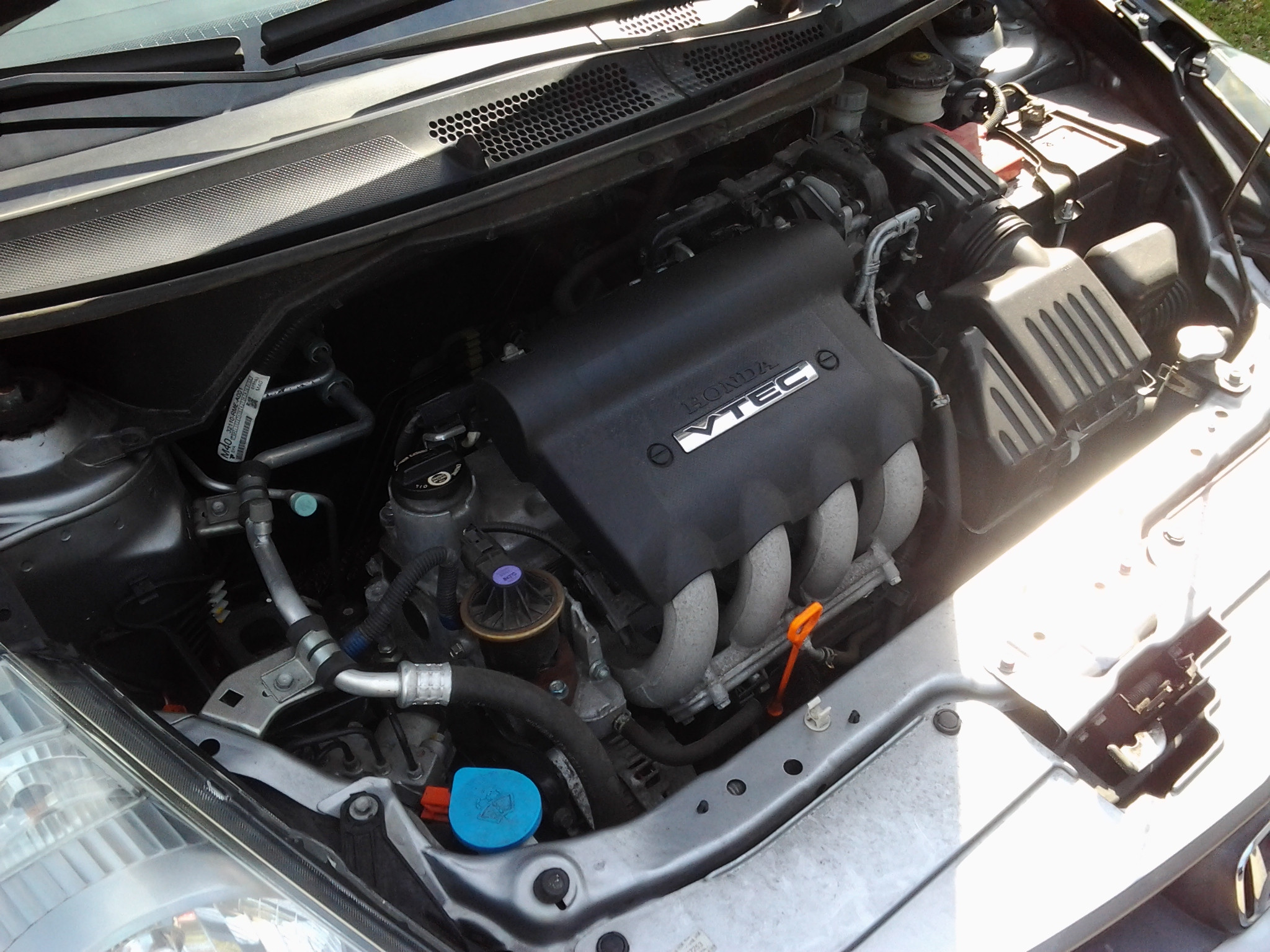
So here's what you're looking at now, right?:
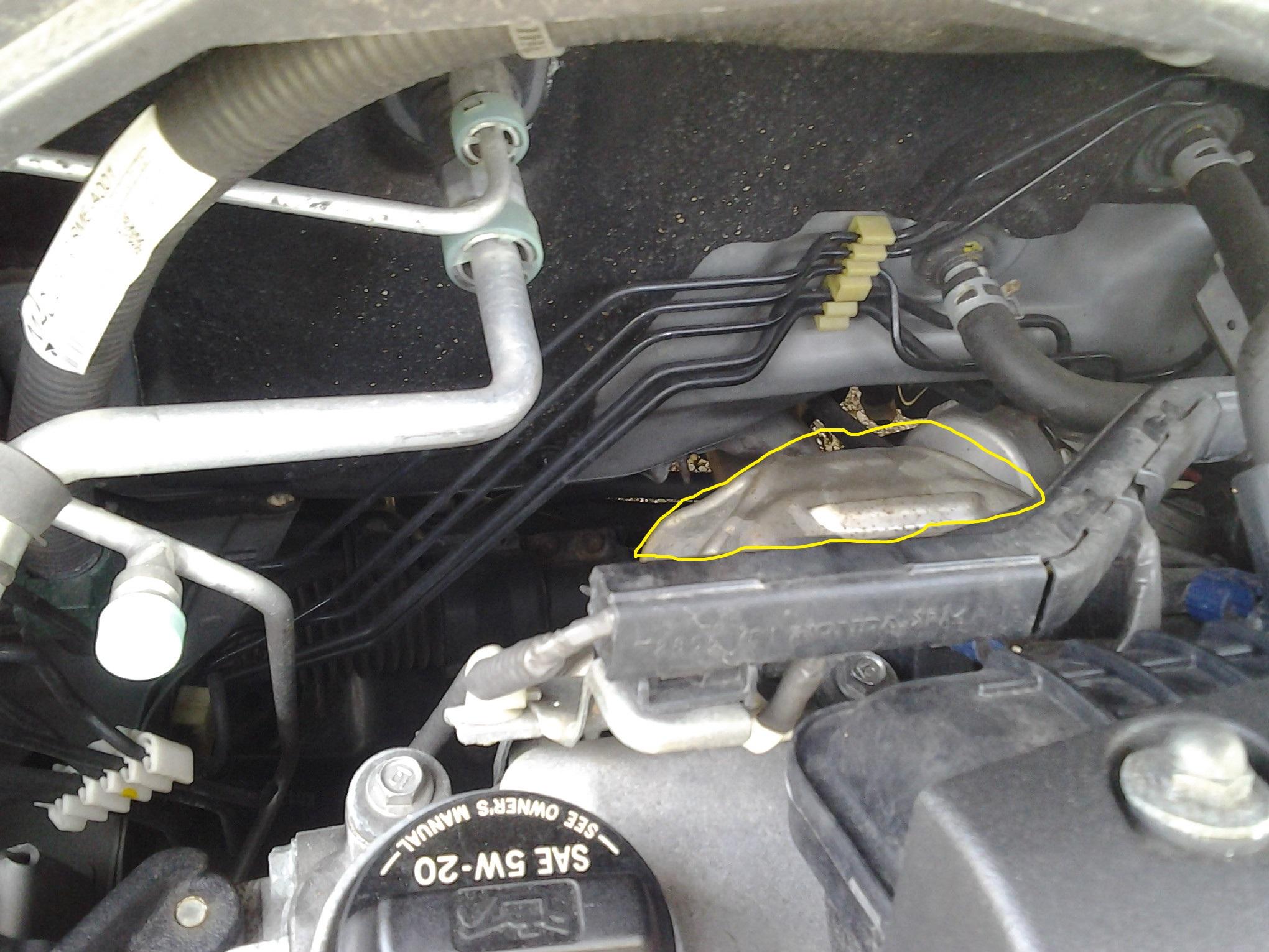
Ok, now lean over and, with your thumb and forefinger, grab onto the edges of the heat shield (encircled in yellow below) and try to get it to wiggle. If it does, you've found the source of a noise.
To fix this the way I did, you'll need a few basics:
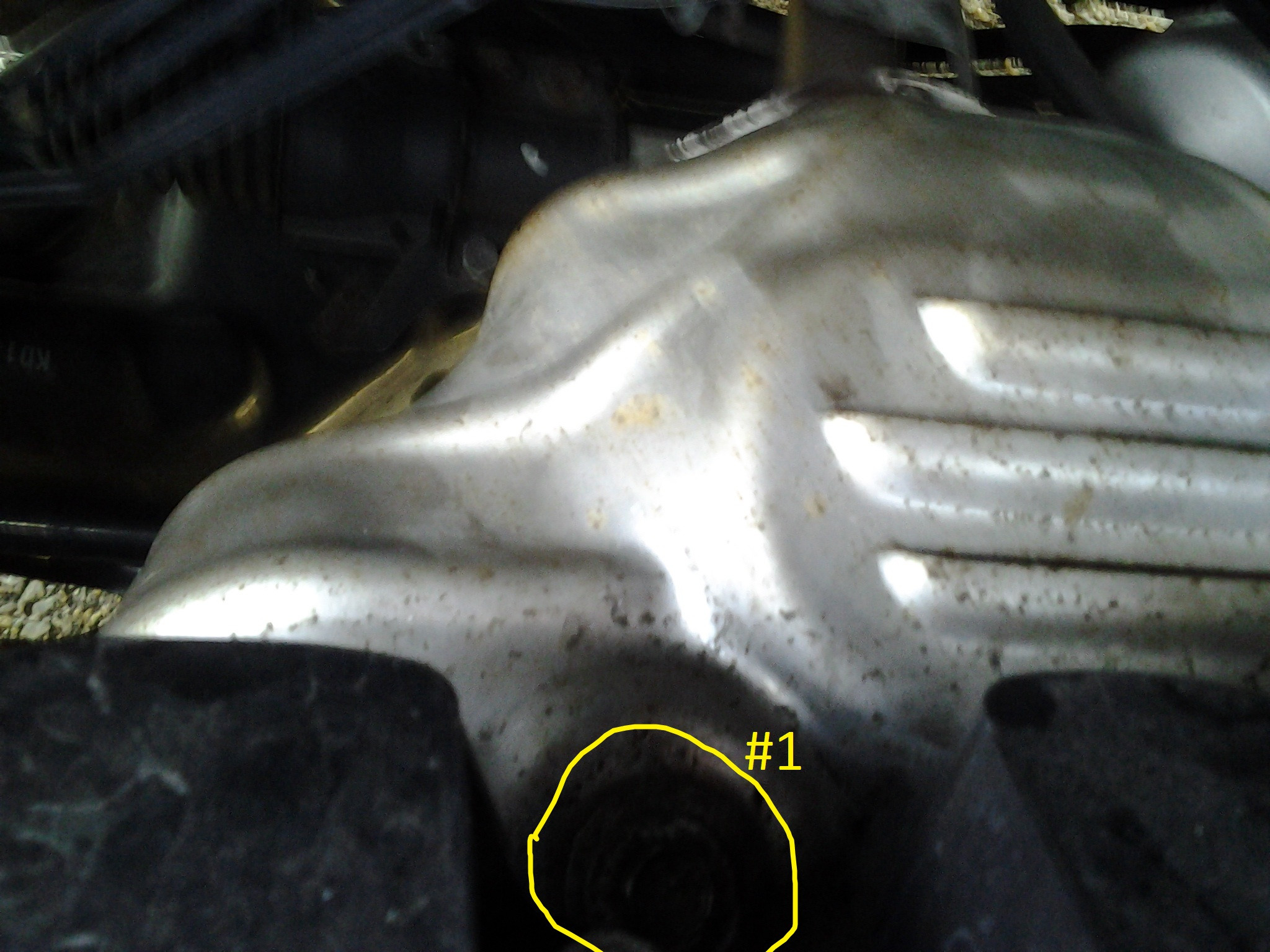
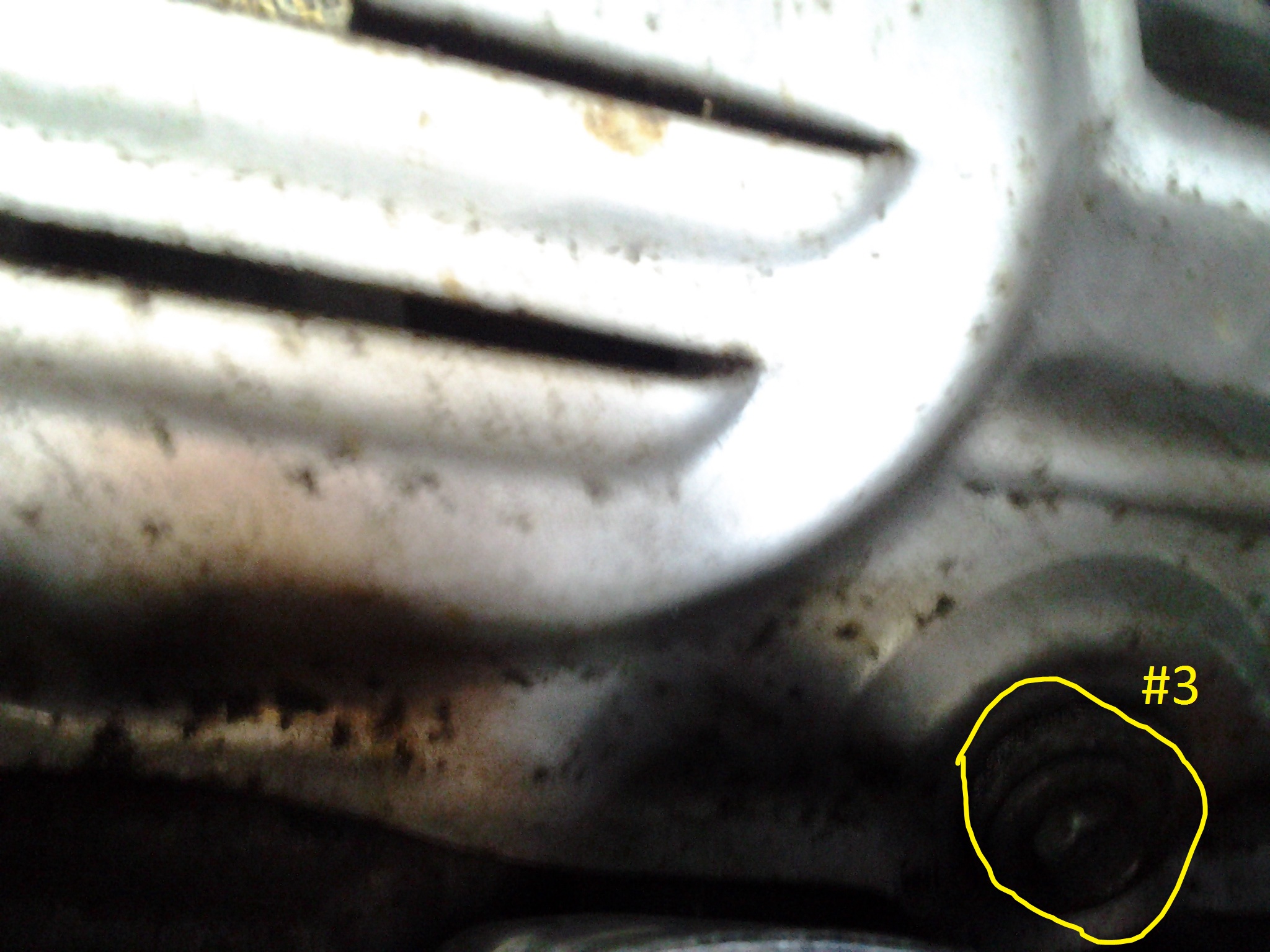
There are 3 10mm fasteners holding this heat shield on, and if you've had your car for awhile or live in the rust belt, they may put up a fight and make your day more difficult. To prevent this, it's a good idea to blast each one with some penetrating oil before even touching them with a wrench. Now start cracking 'em loose. Here they are:
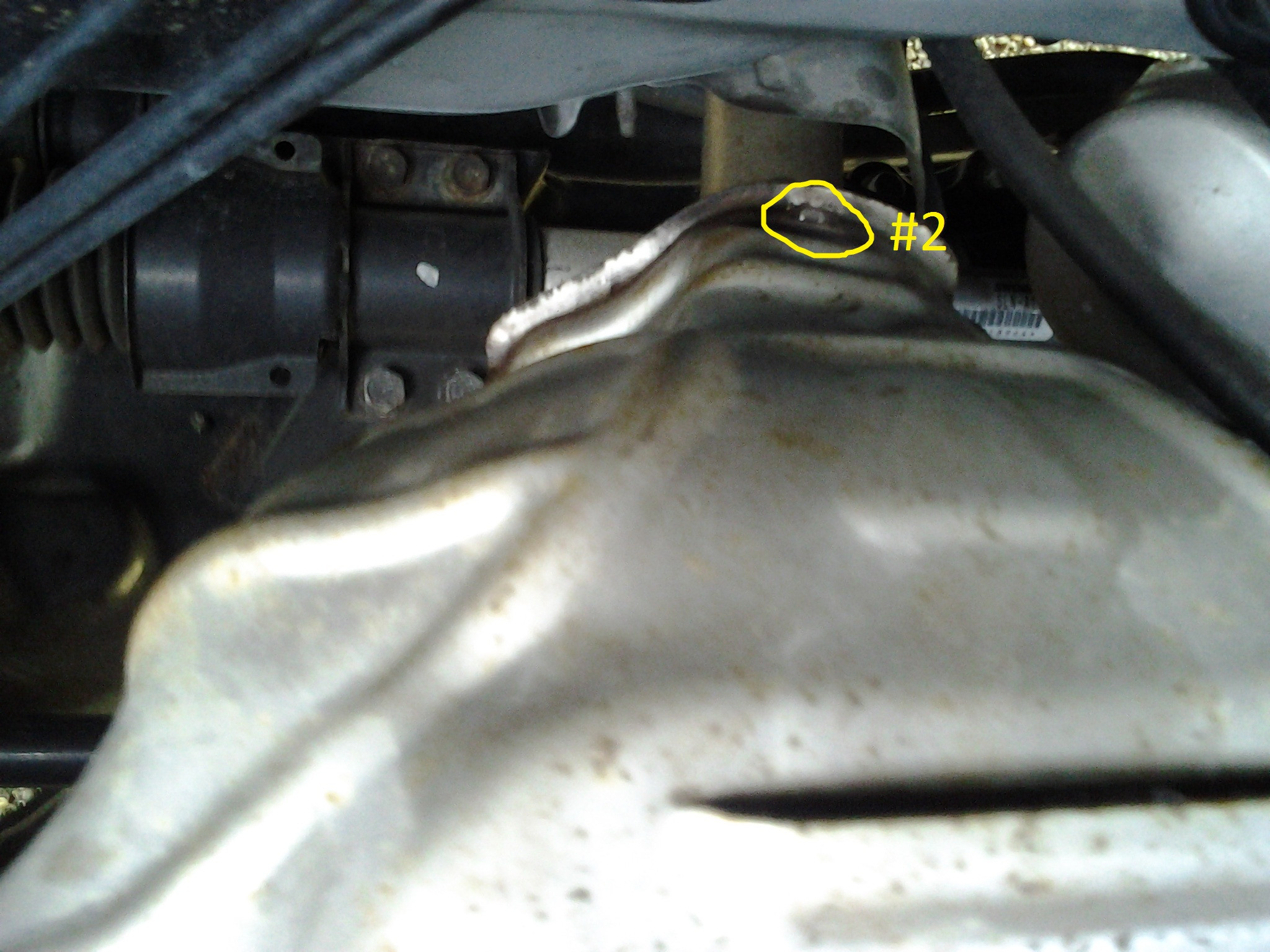
This lower one is the most likely to give you trouble, simply because it's lower to the ground and thus more likely to have had water, salt, and other stuff splattering onto it and making it rust.
Once you've got all the bolts out (each one should have a washer tightly fitted to it) and managed to not drop them down into the abyss of your engine bay, the heat shield should now be loose and you can finagle it up and out of the car. Make your way to your domicile/shipping container/garage and survey the situation.
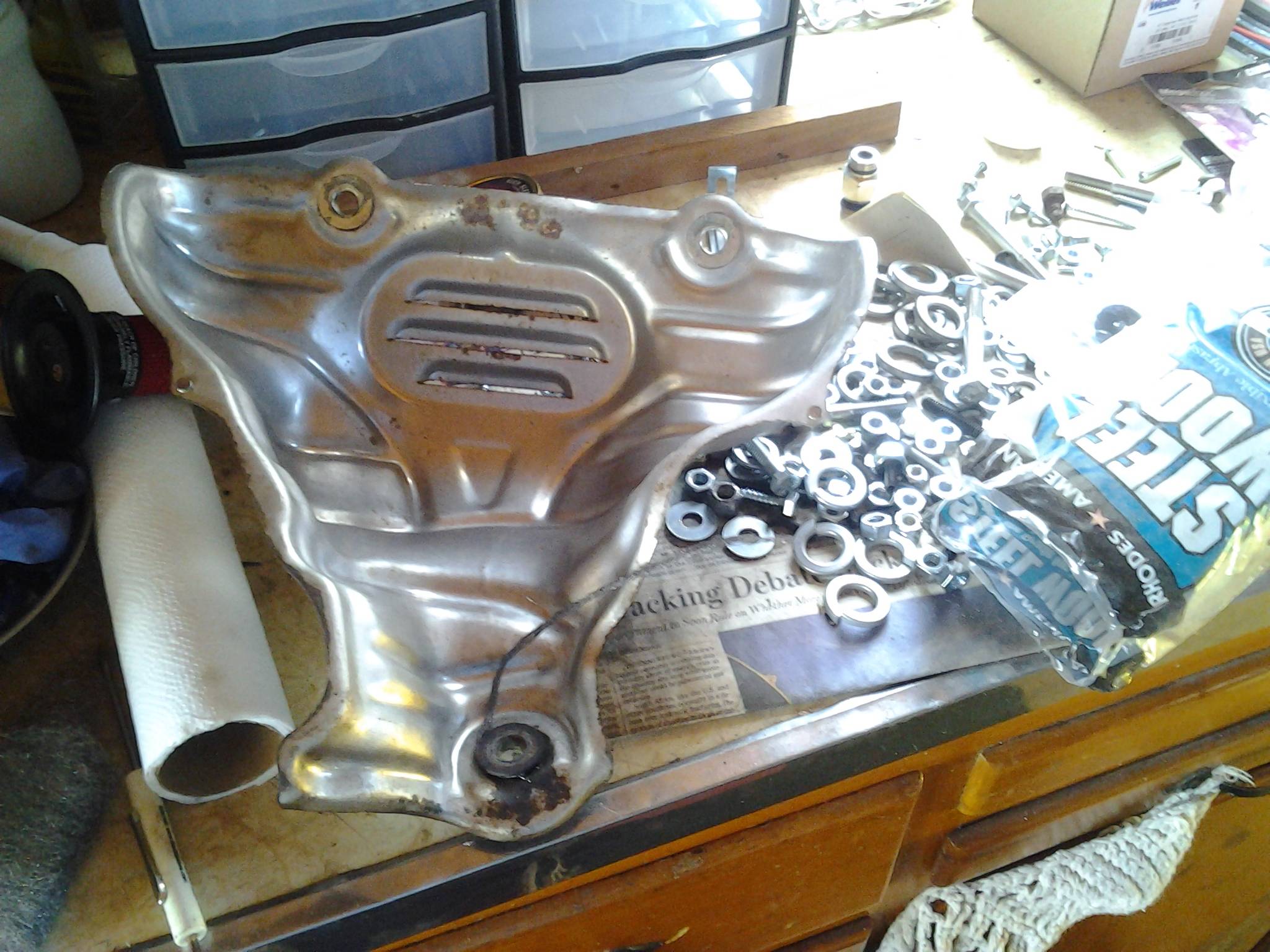
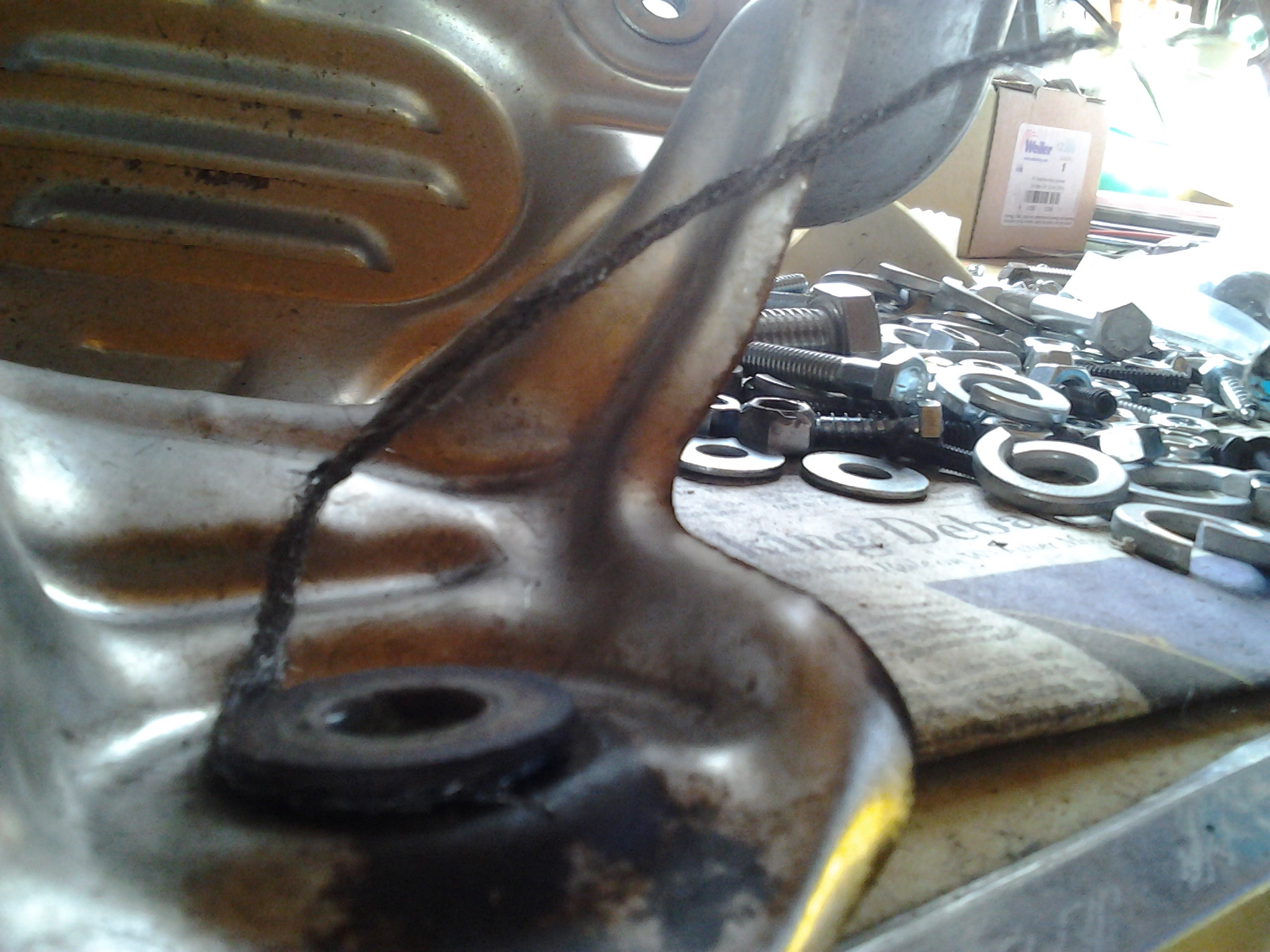
See how each of the 3 holes in the heat shield have a little steel bushing going through them? They're all meant to be tight to the heat shield. Wiggle each one. I bet the lower one is loose, but if that's not the one that's loose for you, the following steps are the same anyways.
Whip out your steel wool and flip the heat shield over. Wind a good long strand of steel wool together and begin wrapping it around the hub of the loose bushing. The goal here is to wrap it with as much steel wool as you need for it to be tight.
Once you're done, throw that puppy back in there and tighten the bolts down (don't go torque-crazy and snap them off - snug is good). If you happen to have a bottle of anti-seize, it's probably a good idea to put a little bit on each bolt in case you have to take that heat shield off again in the distant future.
Start your car and rev it to verify the repair. You should be able to hear the pure unadulterated "marbles in a blender" grumble of your engine now uninhibited by metal-on-metal clanging/rasping.
If you happen to have a MIG or TIG welder and are careful enough to not blow right through the thin steel of your heat shield, that'd be another way to fix this. My inclination is to believe Honda used the steel-wool-like material they did on these bushings to try to damp vibration and prevent the heat shield from vibrating itself/the fasteners loose at the fastener locations, but obviously this strategy created its own issues.
I hope this was helpful. Let me know if you have any questions. Peace.
UPDATE 7/6/2017:
Just figured I'd give y'all a heads-up. Just over 4 years after this fix, this shield started making noise again. I took a look and my steel wool had deteriorated to the point that the looseness had returned.
To fix it again, I first cleaned out all the steel wool and gunk from the bushing, then went digging for a way to make this a more long-lasting fix. I ended up taking a regular round washer whose hole matched exactly the diameter of the bushing's hole and made two cuts in it with some bolt-cutters (all I had on hand) to allow it to be slid into the loose gap in the bushing. I needed to use a hammer and chisel to force it in there, but now that it's in there, it's very tight and isn't going anywhere. For good measure I slathered on some high-temp red RTV. The shield is once again quiet.
UPDATE 7/24/2024:
The fix described on 7/6/2017 is still holding up 7 years later, so I can strongly recommend the "cut a washer and jam it in there" fix.
With your engine completely cold, pop the hood. You don't want to be touching what you're about to touch when it's hot.
So here's what you're looking at now, right?:
Ok, now lean over and, with your thumb and forefinger, grab onto the edges of the heat shield (encircled in yellow below) and try to get it to wiggle. If it does, you've found the source of a noise.
To fix this the way I did, you'll need a few basics:
- some steel wool (fine 0000 thickness is probably easiest to work with but any will do)- you can get this at Walmart or any hardware store/home center
- 3/8" ratchet w/ 10mm socket and at least a 6 inch extension (a ratcheting box end wrench (e.g. GearWrench) will make getting the lowest of the 3 bolts out easier)
- can of penetrating oil (e.g. PB Blaster, Liquid Wrench, etc or some transmission fluid)
There are 3 10mm fasteners holding this heat shield on, and if you've had your car for awhile or live in the rust belt, they may put up a fight and make your day more difficult. To prevent this, it's a good idea to blast each one with some penetrating oil before even touching them with a wrench. Now start cracking 'em loose. Here they are:
This lower one is the most likely to give you trouble, simply because it's lower to the ground and thus more likely to have had water, salt, and other stuff splattering onto it and making it rust.
Once you've got all the bolts out (each one should have a washer tightly fitted to it) and managed to not drop them down into the abyss of your engine bay, the heat shield should now be loose and you can finagle it up and out of the car. Make your way to your domicile/shipping container/garage and survey the situation.
See how each of the 3 holes in the heat shield have a little steel bushing going through them? They're all meant to be tight to the heat shield. Wiggle each one. I bet the lower one is loose, but if that's not the one that's loose for you, the following steps are the same anyways.
Whip out your steel wool and flip the heat shield over. Wind a good long strand of steel wool together and begin wrapping it around the hub of the loose bushing. The goal here is to wrap it with as much steel wool as you need for it to be tight.
Once you're done, throw that puppy back in there and tighten the bolts down (don't go torque-crazy and snap them off - snug is good). If you happen to have a bottle of anti-seize, it's probably a good idea to put a little bit on each bolt in case you have to take that heat shield off again in the distant future.
Start your car and rev it to verify the repair. You should be able to hear the pure unadulterated "marbles in a blender" grumble of your engine now uninhibited by metal-on-metal clanging/rasping.
If you happen to have a MIG or TIG welder and are careful enough to not blow right through the thin steel of your heat shield, that'd be another way to fix this. My inclination is to believe Honda used the steel-wool-like material they did on these bushings to try to damp vibration and prevent the heat shield from vibrating itself/the fasteners loose at the fastener locations, but obviously this strategy created its own issues.
I hope this was helpful. Let me know if you have any questions. Peace.
UPDATE 7/6/2017:
Just figured I'd give y'all a heads-up. Just over 4 years after this fix, this shield started making noise again. I took a look and my steel wool had deteriorated to the point that the looseness had returned.
To fix it again, I first cleaned out all the steel wool and gunk from the bushing, then went digging for a way to make this a more long-lasting fix. I ended up taking a regular round washer whose hole matched exactly the diameter of the bushing's hole and made two cuts in it with some bolt-cutters (all I had on hand) to allow it to be slid into the loose gap in the bushing. I needed to use a hammer and chisel to force it in there, but now that it's in there, it's very tight and isn't going anywhere. For good measure I slathered on some high-temp red RTV. The shield is once again quiet.
UPDATE 7/24/2024:
The fix described on 7/6/2017 is still holding up 7 years later, so I can strongly recommend the "cut a washer and jam it in there" fix.
Last edited by Jared592; Jul 24, 2024 at 11:13 PM. Reason: update on fix



Member
Joined: Feb 2006
Posts: 47
From: Cincinnati, OH
I took a different approach to this common problem. I removed the shield as you described. Then I tightened the bushings. This is pretty simple to do with using two sockets. I used 3/8' drive deep sockets. Can't remember the size now but just use ones that fit pretty close to the outside edge of the metal sleeve.
You place one of the sockets on a hard surface. I used my bench vice. Then you put the shield down on this socket so the lower sleeve insert is lined up with the socket. A proper sized block of wood on the work bench supported the opposite side of the shield so it would rest in the right position. Then you take the second socket and hold it against the other side of the sleeve. Then, a couple of light blows (not too hard) on the upper socket will tighten up the sleeve and secure it. Reinstall the shield and enjoy your new peacefully quiet engine.
Since I did this I can not believe how much quieter the car has become. Quick easy and cheap fix.
You place one of the sockets on a hard surface. I used my bench vice. Then you put the shield down on this socket so the lower sleeve insert is lined up with the socket. A proper sized block of wood on the work bench supported the opposite side of the shield so it would rest in the right position. Then you take the second socket and hold it against the other side of the sleeve. Then, a couple of light blows (not too hard) on the upper socket will tighten up the sleeve and secure it. Reinstall the shield and enjoy your new peacefully quiet engine.
Since I did this I can not believe how much quieter the car has become. Quick easy and cheap fix.
Thread Starter
|
Member
Joined: Jan 2011
Posts: 397
From: Omaha, NE
hans I'm not sure I understand your method. It sounds to me more like you're bashing the loose side of the bushing so that the steel wool-esque material is smushed and stops moving around, which would be another way to deal with the problem. If you do this again, please post pictures. Thanks.

Best of both. Wrap the steel wool then hold the bushing between two sockets that are somewhat closer to the edge of the bushing vs the center hole and tap them to snug it up.
P.s. I would start with that 3rd bolt. If is doesn't come out no point in taking the other two out . It would then be a trip to Honda.
P.s. I would start with that 3rd bolt. If is doesn't come out no point in taking the other two out
. It would then be a trip to Honda.

Member
Joined: May 2013
Posts: 552
From: Oceanside
[QUOTE: I would start with that 3rd bolt. If is doesn't come out no point in taking the other two out . It would then be a trip to Honda.[/QUOTE]
That is exactly right. The lower bolt in the back is the one that doesn't want to come out. I'm not sure it is subjected to more water or salt. I think the robot at the assembly plant over cranks that bolt, making our lives miserable. Stupid robots.
While I don't have any rust (visible), the bolt would not turn. I wasn't keen on putting penetrating oil on it since it is the exhaust manifold and I feared I could cause a fire hazard.
So, what's the solution? A simple C (compression) washer to fill the space. Simple shove it in there and voila; problem solved. No more rattling.
. It would then be a trip to Honda.[/QUOTE]That is exactly right. The lower bolt in the back is the one that doesn't want to come out. I'm not sure it is subjected to more water or salt. I think the robot at the assembly plant over cranks that bolt, making our lives miserable. Stupid robots.
While I don't have any rust (visible), the bolt would not turn. I wasn't keen on putting penetrating oil on it since it is the exhaust manifold and I feared I could cause a fire hazard.
So, what's the solution? A simple C (compression) washer to fill the space. Simple shove it in there and voila; problem solved. No more rattling.
Thread Starter
|
Member
Joined: Jan 2011
Posts: 397
From: Omaha, NE
Do you mean spring washers?
Like these?:
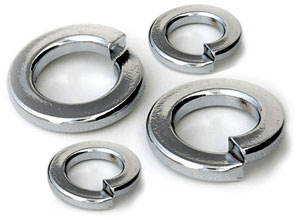
If so, please hit us back and let us know how it works out for you. My suspicion is that you might still get some resonance since only a small part on each side of the washer would actually be touching each surface, whereas the steel wool supports it all the way around.
Don't fear putting penetrating oil on exhaust stuff. If you talk to anyone who's done exhaust work in the rust belt (me, for example) they'd quickly put your fears to rest. You'd be more likely to cause the universe to implode from the level of anger you'd reach trying to undo rusty fashioners without using penetrating lubricant.
Like these?:
If so, please hit us back and let us know how it works out for you. My suspicion is that you might still get some resonance since only a small part on each side of the washer would actually be touching each surface, whereas the steel wool supports it all the way around.
Don't fear putting penetrating oil on exhaust stuff. If you talk to anyone who's done exhaust work in the rust belt (me, for example) they'd quickly put your fears to rest. You'd be more likely to cause the universe to implode from the level of anger you'd reach trying to undo rusty fashioners without using penetrating lubricant.
Last edited by Jared592; Jun 5, 2013 at 07:22 PM. Reason: fixing image tag
Member
Joined: May 2013
Posts: 552
From: Oceanside
[QUOTE=Jared592;1185395]Do you mean spring washers?
If so, please hit us back and let us know how it works out for you. My suspicion is that you might still get some resonance since only a small part on each side of the washer would actually be touching each surface, whereas the steel wool supports it all the way around.
I think the compression washer my mechanic slipped on for me is probably much thinner that what your picture indicates. They are made of pliable metal and simply push in and serve the purpose of an actual washer to bridge the gap between the top of the bolt head and the rattling heat shield. The ones you showed a picture of seem way to thick and non pliable. The one my mechanic used has an actual opening at one end and he called it an E clip.
http://www.thread-rite.com/pins/e_rings.htm
If so, please hit us back and let us know how it works out for you. My suspicion is that you might still get some resonance since only a small part on each side of the washer would actually be touching each surface, whereas the steel wool supports it all the way around.
I think the compression washer my mechanic slipped on for me is probably much thinner that what your picture indicates. They are made of pliable metal and simply push in and serve the purpose of an actual washer to bridge the gap between the top of the bolt head and the rattling heat shield. The ones you showed a picture of seem way to thick and non pliable. The one my mechanic used has an actual opening at one end and he called it an E clip.
http://www.thread-rite.com/pins/e_rings.htm
Last edited by BurntZ; Jun 6, 2013 at 08:20 AM.

Member
Joined: Mar 2010
Posts: 191
From: Southwest Ohio

Member
Joined: Mar 2007
Posts: 1,704
From: Second house on the left
When our heat shield started to buzz at 6 months of age, I "soaked" the steel wool bushings in hi-temp RTV.
Still quiet.
(There's more than one way to skin a cat.)
-Seba Smith
http://en.wikipedia.org/wiki/Seba_Smith
+++++++++++++++++++++++
EDIT: Here's my post (unfortunately, the Image link is not available) on how I fixed the buzzing.
https://www.fitfreak.net/forums/fit-...buzz-bomb.html
It was posted before there was a GE Forum, I think that's how it ended up over there.
Still quiet.
(There's more than one way to skin a cat.)
-Seba Smith
http://en.wikipedia.org/wiki/Seba_Smith
+++++++++++++++++++++++
EDIT: Here's my post (unfortunately, the Image link is not available) on how I fixed the buzzing.
https://www.fitfreak.net/forums/fit-...buzz-bomb.html
It was posted before there was a GE Forum, I think that's how it ended up over there.
Last edited by Carbuff2; Jun 8, 2013 at 08:35 AM.

Member
Joined: Mar 2007
Posts: 1,704
From: Second house on the left
The shield underneath (that surrounds the catalytic converter) is a common "rattler". That one can be removed (as long as you don't idle the engine over dry leaves).
You will probably need to cut it off...just be wary of damaging the O2 sensor wires.
You will probably need to cut it off...just be wary of damaging the O2 sensor wires.

Member
Joined: Jul 2016
Posts: 33
From: Cleveland, OH
I'm hearing an intermittent buzz coming from the engine in certain gears when accelerating as well and I'd like to explore if the origin of the noise is the heat shield near or behind the engine. I have a 2010 Fit Sport and popped the trunk, but can't find the heat shield or access it - it looks like the model in the pics above is a different year. Does anyone have pics or have advice on how to access the heat shield in a 2010? Everything seems pushed farther back and I can't find anything feeling around in the back of the compartment that seems similar to what's in the pics in the first post.
Last edited by klemmaniac; Nov 25, 2016 at 06:23 PM.
Thread Starter
|
Member
Joined: Jan 2011
Posts: 397
From: Omaha, NE
Just figured I'd give y'all a heads-up. Just over 4 years after this fix, this shield started making noise again. I took a look and my steel wool had deteriorated to the point that the looseness had returned.
To fix it again, I first cleaned out all the steel wool and gunk from the bushing, then went digging for a way to make this a more long-lasting fix. I ended up taking a regular round washer that matched exactly the diameter of the hole and making two cuts in it with some bolt-cutters (all I had on hand) to allow it to be slid into the gap in the bushing. I needed to use a hammer and chisel to force it in there, but now that it's in there, it's very tight and isn't going anywhere. For good measure I slathered on some high-temp red RTV. The shield is once again quiet.
To fix it again, I first cleaned out all the steel wool and gunk from the bushing, then went digging for a way to make this a more long-lasting fix. I ended up taking a regular round washer that matched exactly the diameter of the hole and making two cuts in it with some bolt-cutters (all I had on hand) to allow it to be slid into the gap in the bushing. I needed to use a hammer and chisel to force it in there, but now that it's in there, it's very tight and isn't going anywhere. For good measure I slathered on some high-temp red RTV. The shield is once again quiet.


