


The Modern Automobile Must Die


I think our children in general have it printed in their DNA to point out our failings

Unfortunately what I see from the children of the majority of parents I know personally is....less than encouraging to say the least.

Thread Starter
|
Member
Joined: Jul 2017
Posts: 547
From: Sacramento, CA
My vantage point is definitely skewed by the fact that there's a strong artsy/hippy influence where I live combined with a large German Baptist community.
I do fully agree that urban dwellers buy less fuel, but should that be the only measure? My urban friends and family all live in apartments, condo's, and townhome's filled with made in China junk that is less than 5 years old. Few of them even live in a place more than 5 years or own anything as old as my underwear. You want to talk carbon footprint? Consumerism of disposable foreign goods is probably the worst environmental decision. The manufacturing and transporting of all that junk is not a good thing. Meanwhile my neighbors live in older homes furnished with stuff made generations ago and much of it by family members.
Now lets think about the fuel needed to get all that junk to the cities. Guess where my produce comes from. Less than 10 miles away for most of it. My dairy is from a dairy farm about 12 miles away. My wheat and corn products come from a mill that is 4 miles away and is hydro powered by the river behind it. Chicken farms are everywhere and there's plenty of cattle nearby as well. City people seem to forget that ALL of the stuff they consume is trucked in from rural areas or, worse, from foreign countries.
My point is that there's definitely two sides to the coin. Yes, urban people burn less fuel in their personal vehicles. However, they also rely heavily on others to burn fuel to bring things to them.
You want to really analyze full impact then you also have to consider what concreting large sections of the planet has done. The water pollution issues alone are staggering.
It's a more complicated subject than looking at fuel usage alone.
One thing I definitely miss about living in the city was the recycling truck that came by to pick up my junk and make me feel better. Granted it was one of the dirtiest diesel chugging trucks I've ever seen, but it made me feel good and kept me from having to take the stuff to the recycling center myself.
I do fully agree that urban dwellers buy less fuel, but should that be the only measure? My urban friends and family all live in apartments, condo's, and townhome's filled with made in China junk that is less than 5 years old. Few of them even live in a place more than 5 years or own anything as old as my underwear. You want to talk carbon footprint? Consumerism of disposable foreign goods is probably the worst environmental decision. The manufacturing and transporting of all that junk is not a good thing. Meanwhile my neighbors live in older homes furnished with stuff made generations ago and much of it by family members.
Now lets think about the fuel needed to get all that junk to the cities. Guess where my produce comes from. Less than 10 miles away for most of it. My dairy is from a dairy farm about 12 miles away. My wheat and corn products come from a mill that is 4 miles away and is hydro powered by the river behind it. Chicken farms are everywhere and there's plenty of cattle nearby as well. City people seem to forget that ALL of the stuff they consume is trucked in from rural areas or, worse, from foreign countries.
My point is that there's definitely two sides to the coin. Yes, urban people burn less fuel in their personal vehicles. However, they also rely heavily on others to burn fuel to bring things to them.
You want to really analyze full impact then you also have to consider what concreting large sections of the planet has done. The water pollution issues alone are staggering.
It's a more complicated subject than looking at fuel usage alone.
One thing I definitely miss about living in the city was the recycling truck that came by to pick up my junk and make me feel better. Granted it was one of the dirtiest diesel chugging trucks I've ever seen, but it made me feel good and kept me from having to take the stuff to the recycling center myself.
Member
Joined: Feb 2008
Posts: 4,329
From: Cleveland, GA

Yes, but is it accurately measured? Do they include the fact that the country folk are running farming equipment to feed the cities and do they include the transportation of materials to the cities? Last time I looked around in Atlanta I didn't happen to see any farms, dairy's, grain mills etc. Yet those items are all within a few miles of my house.
Member
Joined: Feb 2008
Posts: 4,329
From: Cleveland, GA
Some of my neighbors work at a chicken plant. I don't see anyone from the city driving up here to do their jobs, yet we all need to eat and rely on them.
Thread Starter
|
Member
Joined: Jul 2017
Posts: 547
From: Sacramento, CA
Yes, but is it accurately measured? Do they include the fact that the country folk are running farming equipment to feed the cities and do they include the transportation of materials to the cities? Last time I looked around in Atlanta I didn't happen to see any farms, dairy's, grain mills etc. Yet those items are all within a few miles of my house.
I don't rely on any chicken plants.
The average country person is not feeding anyone.
"As of 2008, less than 2 percent of the population is directly employed in agriculture. In 2012, there were 3.2 million farmers, ranchers and other agricultural managers and an estimated 757,900 agricultural workers were legally employed in the US."
Conversely, about 20% of the population lives in a rural area.
The average country person is not feeding anyone.
"As of 2008, less than 2 percent of the population is directly employed in agriculture. In 2012, there were 3.2 million farmers, ranchers and other agricultural managers and an estimated 757,900 agricultural workers were legally employed in the US."
Conversely, about 20% of the population lives in a rural area.
Member
Joined: Feb 2008
Posts: 4,329
From: Cleveland, GA
I was just thinking...there's really at least 3 types of people to consider. Urban, suburban, and rural.
Most US cities are not really set up for high occupancy living. The nearest large city to me is Atlanta. Very, very few people actually live in downtown ATL. Population of downtown ATL is roughly 30k people. When expanded to include all of ATL it goes up to 460k people.
Those 30k people definitely have a very small carbon footprint. Those 460k people still likely have a small footprint.
HOWEVER, there are 6.2 MILLION people that live in the surrounding suburbs. Those people sit in their cars for 2+ hours each day to get into and out of ATL. I was once one of them. I will agree that those 6.2 MILLION people have large carbon footprints. For the sake of that article, are those 6.2 million people rural? They most certainly do not live in a rural environment. They live in congested suburbs, live city lifestyles, and sit in traffic every day all day. I think we can agree that their footprint is massive, but it's not like they have the option of moving closer to work. There simply is not housing for 6.2 million people in ATL. The land is occupied by skyscraper office buildings.
Where I live now is truly rural, but it takes me less than 15 minutes to get to two different wal-marts, 3 grocery stores, etc. There are literally only 3 stop lights in my county and everything I need is here.
I can promise you that my carbon footprint is much smaller now than when I lived in the "city" and commuted over an hour each way to get to the bigger city.
Working from home is what allows me to live where I do. If that ability were afforded to those 6.2 million ATL suburbanites, the fuel usage would drop dramatically.
Most US cities are not really set up for high occupancy living. The nearest large city to me is Atlanta. Very, very few people actually live in downtown ATL. Population of downtown ATL is roughly 30k people. When expanded to include all of ATL it goes up to 460k people.
Those 30k people definitely have a very small carbon footprint. Those 460k people still likely have a small footprint.
HOWEVER, there are 6.2 MILLION people that live in the surrounding suburbs. Those people sit in their cars for 2+ hours each day to get into and out of ATL. I was once one of them. I will agree that those 6.2 MILLION people have large carbon footprints. For the sake of that article, are those 6.2 million people rural? They most certainly do not live in a rural environment. They live in congested suburbs, live city lifestyles, and sit in traffic every day all day. I think we can agree that their footprint is massive, but it's not like they have the option of moving closer to work. There simply is not housing for 6.2 million people in ATL. The land is occupied by skyscraper office buildings.
Where I live now is truly rural, but it takes me less than 15 minutes to get to two different wal-marts, 3 grocery stores, etc. There are literally only 3 stop lights in my county and everything I need is here.
I can promise you that my carbon footprint is much smaller now than when I lived in the "city" and commuted over an hour each way to get to the bigger city.
Working from home is what allows me to live where I do. If that ability were afforded to those 6.2 million ATL suburbanites, the fuel usage would drop dramatically.
I'd say there are five types.
Urban, the easiest way to have a small footprint.
Suburban, the oldest suburbs, close to the city, moderately walkable, generally smallish houses.
Exurban, most people call these suburbs, but they wouldn't exist without the widespread interstate system, super wasteful, most of the houses are tacky 80s/90s/00s houses that are huge & lack all architectural merit
Small towns, people may live, work, eat, shop in their small town, but be in the middle of a properly rural area.
Rural, not in one of the other four.
Cities need to be better designed for pedestrians, living, working, etc. Cities should be dense but also preserve green space, cities shouldn't focus on being car friendly. I will say, I believe exurbs to be by far the worst of the options listed above. Long wasteful commutes & the people in those areas seem to universally live hugely wasteful lifestyles.
Urban, the easiest way to have a small footprint.
Suburban, the oldest suburbs, close to the city, moderately walkable, generally smallish houses.
Exurban, most people call these suburbs, but they wouldn't exist without the widespread interstate system, super wasteful, most of the houses are tacky 80s/90s/00s houses that are huge & lack all architectural merit
Small towns, people may live, work, eat, shop in their small town, but be in the middle of a properly rural area.
Rural, not in one of the other four.
Cities need to be better designed for pedestrians, living, working, etc. Cities should be dense but also preserve green space, cities shouldn't focus on being car friendly. I will say, I believe exurbs to be by far the worst of the options listed above. Long wasteful commutes & the people in those areas seem to universally live hugely wasteful lifestyles.
Member
Joined: Feb 2008
Posts: 4,329
From: Cleveland, GA
I'd say there are five types.
Urban, the easiest way to have a small footprint.
Suburban, the oldest suburbs, close to the city, moderately walkable, generally smallish houses.
Exurban, most people call these suburbs, but they wouldn't exist without the widespread interstate system, super wasteful, most of the houses are tacky 80s/90s/00s houses that are huge & lack all architectural merit
Small towns, people may live, work, eat, shop in their small town, but be in the middle of a properly rural area.
Rural, not in one of the other four.
Cities need to be better designed for pedestrians, living, working, etc. Cities should be dense but also preserve green space, cities shouldn't focus on being car friendly. I will say, I believe exurbs to be by far the worst of the options listed above. Long wasteful commutes & the people in those areas seem to universally live hugely wasteful lifestyles.
Urban, the easiest way to have a small footprint.
Suburban, the oldest suburbs, close to the city, moderately walkable, generally smallish houses.
Exurban, most people call these suburbs, but they wouldn't exist without the widespread interstate system, super wasteful, most of the houses are tacky 80s/90s/00s houses that are huge & lack all architectural merit
Small towns, people may live, work, eat, shop in their small town, but be in the middle of a properly rural area.
Rural, not in one of the other four.
Cities need to be better designed for pedestrians, living, working, etc. Cities should be dense but also preserve green space, cities shouldn't focus on being car friendly. I will say, I believe exurbs to be by far the worst of the options listed above. Long wasteful commutes & the people in those areas seem to universally live hugely wasteful lifestyles.
The short answer to all of this is we need less humans. That's one place where my wife and I did our part to a small degree. The two of us made one human.
Thread Starter
|
Member
Joined: Jul 2017
Posts: 547
From: Sacramento, CA
Maybe you guys heard of the site Walk Score? I personally always viewed how far I was away from the center of town via a bicycle ride. I was in Long Beach, CA and 2 miles from downtown. Now I'm in Sacramento, CA and ~10 miles from downtown. Yeah the walking score has gone down for me, but I'll deal with it. BTW the last over 9 yrs in LB I was getting around with bicycle and subway system. Had pretty much all of LA county free and open to me almost anytime. It wasn't a bad setup.
Member
Joined: Feb 2008
Posts: 4,329
From: Cleveland, GA
That walk score is pretty neat! I would say they should include likelihood of being mugged though. LOL
I grew up in S FL and still spend some time in and around Miami on business. They gave it a high score, but I'd rather be in my car with the windows up and a firearm in my lap than walking anywhere.
My little town got a score of 60. Sounds about right. Funny thing is my parents town in S FL got a 29. I'm "rural" and they are "city."
I grew up in S FL and still spend some time in and around Miami on business. They gave it a high score, but I'd rather be in my car with the windows up and a firearm in my lap than walking anywhere.
My little town got a score of 60. Sounds about right. Funny thing is my parents town in S FL got a 29. I'm "rural" and they are "city."

Maybe you guys heard of the site Walk Score?

Member
Joined: Aug 2008
Posts: 1,606
From: Orange, CA, USA
Most people are using (and should use) a car as a transportation, but some use to boost their inner ego. That's where road rage and other car related crimes are coming from. (And why my mentally ill neighbor used 2000 v-8 Mercedes to run me off the road or block my way out of a parking space etc). This is why cops are not always wrong by pulling over a luxury car circling around a bad neighborhood.
Member
Joined: Apr 2010
Posts: 2,074
From: Oregon
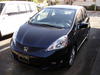
When I traded in my Prius and switched back to a Honda Fit...the person who was the most disappointed and genuinely upset, was my 10 year old nephew. He was really angry at me. And he was mostly upset because he liked the electric, hybrid efficiency of The Prius. The idea of giving up ecologically supportive and efficient Hybrid for a "regular" vehicle really made him upset.
It's been two years and counting, and I don't think he's totally forgiven me yet.
Thread Starter
|
Member
Joined: Jul 2017
Posts: 547
From: Sacramento, CA
About 40% of peoples car trips are less than 5 miles. 40%! As just about everyone here knows, the most wear and pollution happens when the car is cold. Many users can really benefit by taking these trips another way other than their cars. Going by bicycle or walking can really have some health benefits for the user and the car!
Member
Joined: Feb 2008
Posts: 4,329
From: Cleveland, GA
I'd take a car to my mailbox, but it takes too long to let it warm up. :)

