


A/C Vent Temperatures


I went ahead and took some measurement with a digital temperature probe, with and without the insulation.
Here are my findings:
Test Procedure:
-Car parked in shade (attached house garage).
-Outside temperature approximately 83 F.
-Probe was located in center left vent. Temperature taken at vent output. Readings on this probe update every 5 secs.
-A/C in max fan speed mode, with the 'all upper vent' mode set on the dial (max air output on top vents, no air coming out of bottom vents).
-Recirculation mode ON; also set to OFF to test both conditions.
-Took readings after temperature had stabilized (i.e., when no change in temp after 20 secs the temp reading was taken and the test stopped).
-Tested with insulation, and without insulation. The last (small) portion of the run was not ever insulated.
-The material used was the highest grade 'rubber' plumbing insulation sold at Lowes. I also have the lighter grey foam material, seemingly lower grade/quality and certainly much cheaper, but did not test it.
WITHOUT INSULATION:
-Temp at vent, recirculation ON: 43.3 F
-Temp at vent, recirculation OFF: 60.9 F
WITH INSULATION:
-Temp at vent, recirc ON: 43.5 F
-Temp at vent, recirc OFF: 60.2 F
As you can see, there is not much difference. A variation of +- 0.5 degrees is probably within the error margin, so I consider these results ~ NO DIFFERENCE.
Note: I did not take 'time' readings, which I should have done. So, we have no way of knowing which condition cooled faster, but I can tell you I noticed the 'insulated' version to be cooling faster than the non-insulated. Sorry I don't have exact numbers in this regard.
Conclusion: No significant difference to final temperatures at vent, when adding insulation. Adding insulation however appears to cool the car faster.
Other tests to perform: test with car outside directly under sun on a hot day. Test with different foam material.
PICS showing material, test procedure, etc:
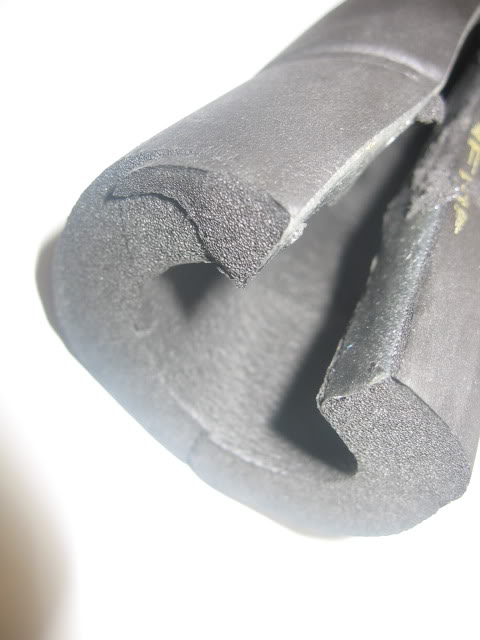

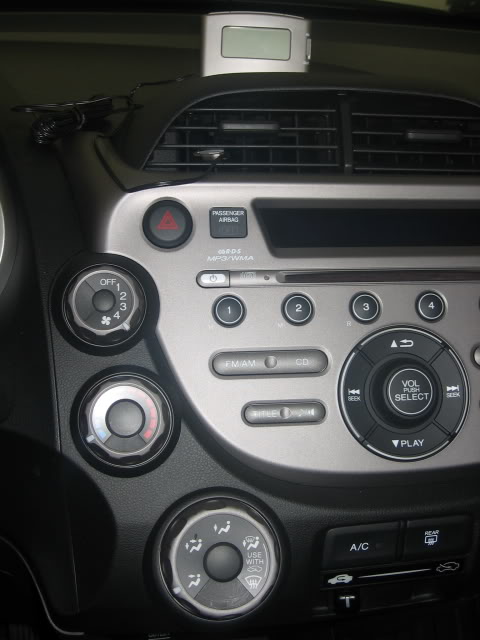
Here are my findings:
Test Procedure:
-Car parked in shade (attached house garage).
-Outside temperature approximately 83 F.
-Probe was located in center left vent. Temperature taken at vent output. Readings on this probe update every 5 secs.
-A/C in max fan speed mode, with the 'all upper vent' mode set on the dial (max air output on top vents, no air coming out of bottom vents).
-Recirculation mode ON; also set to OFF to test both conditions.
-Took readings after temperature had stabilized (i.e., when no change in temp after 20 secs the temp reading was taken and the test stopped).
-Tested with insulation, and without insulation. The last (small) portion of the run was not ever insulated.
-The material used was the highest grade 'rubber' plumbing insulation sold at Lowes. I also have the lighter grey foam material, seemingly lower grade/quality and certainly much cheaper, but did not test it.
WITHOUT INSULATION:
-Temp at vent, recirculation ON: 43.3 F
-Temp at vent, recirculation OFF: 60.9 F
WITH INSULATION:
-Temp at vent, recirc ON: 43.5 F
-Temp at vent, recirc OFF: 60.2 F
As you can see, there is not much difference. A variation of +- 0.5 degrees is probably within the error margin, so I consider these results ~ NO DIFFERENCE.
Note: I did not take 'time' readings, which I should have done. So, we have no way of knowing which condition cooled faster, but I can tell you I noticed the 'insulated' version to be cooling faster than the non-insulated. Sorry I don't have exact numbers in this regard.
Conclusion: No significant difference to final temperatures at vent, when adding insulation. Adding insulation however appears to cool the car faster.
Other tests to perform: test with car outside directly under sun on a hot day. Test with different foam material.
PICS showing material, test procedure, etc:
Last edited by justintime; Jun 28, 2009 at 12:09 PM.

New Member
Joined: May 2009
Posts: 13
From: Conroe, TX, USA
Great info, Justintime... Interesting findings. Sucks you weren't able to time the cool down period. Do you think there would be a way to test the numbers of cycles per five minutes with / without the insulation?
I've noticed my A/C working a lot better, as long as three conditions are met, 1, park in shade, 2, windows cracked to allow ventilation, and 3, at least 3-5 minutes of highway / non-stop driving as soon as you start going. If those three conditions are met, then the A/C cools pretty effectively.
However, today, I was in the Wal-Mart parking lot, so I couldn't crack the windows, due to possible thieves or little kids putting stuff in, whatever... I'm paranoid.
Car sat in the noon sun for about 45 minutes, and we were stuck in stop light after stop light on the way home. We did not get below 70(ish) degree vent temps for 15+ minutes.
Note: I did not have a temp gauge, I this was merely an educated guess of what the temps were, but I can feel what is around 70 degrees, 60 degrees, 50 degrees, etc, with some bit of accuracy.
I've noticed my A/C working a lot better, as long as three conditions are met, 1, park in shade, 2, windows cracked to allow ventilation, and 3, at least 3-5 minutes of highway / non-stop driving as soon as you start going. If those three conditions are met, then the A/C cools pretty effectively.
However, today, I was in the Wal-Mart parking lot, so I couldn't crack the windows, due to possible thieves or little kids putting stuff in, whatever... I'm paranoid.
Car sat in the noon sun for about 45 minutes, and we were stuck in stop light after stop light on the way home. We did not get below 70(ish) degree vent temps for 15+ minutes.
Note: I did not have a temp gauge, I this was merely an educated guess of what the temps were, but I can feel what is around 70 degrees, 60 degrees, 50 degrees, etc, with some bit of accuracy.
I didn't really think of testing cycles per minute.... I hear people complaining about the cycling, but I don't understand why... someone mentioned hot air coming when cycling down, and cold again when cycling up. I can hear my A/C cycling frequently, but the air is constantly cold, no difference whatsoever. So I didn't really even think of timing the cycles. It seemed ON pretty much all the time for my tests though... not sure if it had anything to do with being parked in shade or what....
On a side note... I ran the same test (no insulation) on my 2002 2nd Generation CR-V (Which I consider to have OUTSTANDING A/C by the way!). Surprisingly enough the vent temp was 47 F at its lowest. That is 3-4 degrees higher/poorer than the Fit managed for the exact same conditions. What gives?! The CR-V definitely feels colder in real world to me... must test this out in the sun to see what's going on!
On a side note... I ran the same test (no insulation) on my 2002 2nd Generation CR-V (Which I consider to have OUTSTANDING A/C by the way!). Surprisingly enough the vent temp was 47 F at its lowest. That is 3-4 degrees higher/poorer than the Fit managed for the exact same conditions. What gives?! The CR-V definitely feels colder in real world to me... must test this out in the sun to see what's going on!
Last edited by justintime; Jul 27, 2009 at 07:12 PM.


Member

Joined: Jul 2009
Posts: 837
From: Atlanta, GA
As your evaporator coil cools, the pressure of the refrigerant in your A/C system drops. When the pressure in your system reaches a preset point power to the compressor clutch is switched off. This prevents the evaporator coil temperature from falling below 32*F. If the evaporator coil were to operate below 32*F moisture in the air passing through the coil would freeze and collect as ice on the coil blocking air from passing through the coil.

Member
Joined: Jun 2006
Posts: 1,104
From: Chattanooga
I realize that a dealer wouldn't do this, but would slightly overcharging the coolant system reduce the likelihood of reaching the low pressure switchoff point, thereby reducing cycling? I can imagine that "in spec" covers a fair amount of variation, and might explain why some people complain about cycling, while others don't (I didn't notice it all in my first week of driving).
spreadhead: Not sure I understand.. are you saying the dealer acknowledged the problem as 'evaporator icing over', and will get the evaporator sensor replaced for you?
What where the symptoms you were experiencing? (hot air when cycling?)
What where the symptoms you were experiencing? (hot air when cycling?)

Member
Joined: Jun 2006
Posts: 1,104
From: Chattanooga
My dealer is a pain. I took them a photo of a thermometer in my center vents showing a temperature of 27*F and a picture of the low pressure line under the hood covered with ice. They couldn't "duplicate the problem". They changed the refrigerant and wanted $115 for doing it (I have an extended warranty). I "discussed" this with the dealers general manager who contacted Honda. Honda made the discision to replace the sensor and cover the (unneeded) refrigerant change. The car is at the dealer now getting the sensor replaced. The sensor retails for $17.75 and looks like about an hour's work to change. The dealer spent two days trying other things before calling Honda. When the evaporator iced over all cooling stopped due to no air flow through the evaporator.

Member
Joined: Aug 2009
Posts: 20
From: Phoenix AZ
Sorry for keeping this thread going, but i subscribed to it and have some news:
Went to the dealer today for a bad battery. They swapped it out. While I was there I complained that the AC compressor kicks on and off a lot...more than I would've thought. The service rep explained to me that this is normal for a small car with a small compressor and the computers are setup to kick off the ac when you accelerate for better mpgs because the government is making us overdesign cars...blah...blah
I persisted and said it's something you should check out. Glad I did.
He came back 30 minutes later saying that they checked the AC and found the hi/lo pressures off, which meant the factory didn't fill the AC enough! They evacuated the refrigerant and then re-filled it. We were waiting for the tech and he came back with the report. His thermometer before said 70* at vent, after *42 degrees.
Pretty good! So if you question your new fit's AC....TAKE IT IN!
Went to the dealer today for a bad battery. They swapped it out. While I was there I complained that the AC compressor kicks on and off a lot...more than I would've thought. The service rep explained to me that this is normal for a small car with a small compressor and the computers are setup to kick off the ac when you accelerate for better mpgs because the government is making us overdesign cars...blah...blah
I persisted and said it's something you should check out. Glad I did.
He came back 30 minutes later saying that they checked the AC and found the hi/lo pressures off, which meant the factory didn't fill the AC enough! They evacuated the refrigerant and then re-filled it. We were waiting for the tech and he came back with the report. His thermometer before said 70* at vent, after *42 degrees.
Pretty good! So if you question your new fit's AC....TAKE IT IN!
Thread Starter
|
Member
Joined: Nov 2008
Posts: 166
From: Phoenix
FWIW, here's a trick that you can use that helps the Fit's A/C considerably. If you've got a manual or a Fit sport, shift the car manually and select a gear that keeps the revs closer to 3000 rpm instead of 2000 rpm. Yes, you'll burn a bit more gas, but at least you'll be comfortable doing it. When stopped at a light, and the vent temps rise to ridiculously hot levels (e.g. over 80 deg. F), put it in neutral and rev the engine to a little over 2000 rpm, and you'll immediately feel the vent temperatures drop to cool levels. Watch the light! You don't want to be slamming it back into gear....
Definitely going to get it all checked out next time I'm at the dealer.
Definitely going to get it all checked out next time I'm at the dealer.


Member
Joined: Feb 2009
Posts: 34
From: San Diego
drive around a few minutes with the windows down some, and the A/C on RECIRCULATE with the vents pointed on DEFROSTER!
the main issue with the A/C i have found is tht is doesnt sufficiently cool down the body of air on top of the gigantic, heat consuming dash!
also the angle of the windshield allows the huge sheet of glass to collect heat from the sun, especially around noon.
the warm air on top of the dash acts just like the air in a sweater, it insulates and radiates heat constantly unless u circulate the hot air, at least just a few minutes till its not so hot n the windshield cools a lil bit.
i usually drive around with the a/c on this setting the whole time im driving, i forget to switch it to dash/floor after about 5-10 minutes, and ill be freezing in less then 20 minutes.
the main issue with the A/C i have found is tht is doesnt sufficiently cool down the body of air on top of the gigantic, heat consuming dash!
also the angle of the windshield allows the huge sheet of glass to collect heat from the sun, especially around noon.
the warm air on top of the dash acts just like the air in a sweater, it insulates and radiates heat constantly unless u circulate the hot air, at least just a few minutes till its not so hot n the windshield cools a lil bit.
i usually drive around with the a/c on this setting the whole time im driving, i forget to switch it to dash/floor after about 5-10 minutes, and ill be freezing in less then 20 minutes.
I use the black dash as a food-warmer when I buy food from a gas-station that needs to be warmed. Even here in MD, a 7 minute drive after the car has been sitting in the sun from 0700 to 1300 will warm up a refrigerated sandwich to edible temperatures inside.
I think of it more as a bonus. It's like one of those Dominoes Portable Pizza Warmers.
EDIT: oh, if you flip the visors down a bit, not completely, but about 60%, the air coming off the windshield will flow onto the dash, and once the dash is cool, the rest of the car quickly cools down.
I think of it more as a bonus.
It's like one of those Dominoes Portable Pizza Warmers.EDIT: oh, if you flip the visors down a bit, not completely, but about 60%, the air coming off the windshield will flow onto the dash, and once the dash is cool, the rest of the car quickly cools down.

Member
Joined: Jan 2008
Posts: 4,371
From: NC USA
drive around a few minutes with the windows down some, and the A/C on RECIRCULATE with the vents pointed on DEFROSTER!
the main issue with the A/C i have found is tht is doesnt sufficiently cool down the body of air on top of the gigantic, heat consuming dash!
also the angle of the windshield allows the huge sheet of glass to collect heat from the sun, especially around noon.
the warm air on top of the dash acts just like the air in a sweater, it insulates and radiates heat constantly unless u circulate the hot air, at least just a few minutes till its not so hot n the windshield cools a lil bit.
i usually drive around with the a/c on this setting the whole time im driving, i forget to switch it to dash/floor after about 5-10 minutes, and ill be freezing in less then 20 minutes.
the main issue with the A/C i have found is tht is doesnt sufficiently cool down the body of air on top of the gigantic, heat consuming dash!
also the angle of the windshield allows the huge sheet of glass to collect heat from the sun, especially around noon.
the warm air on top of the dash acts just like the air in a sweater, it insulates and radiates heat constantly unless u circulate the hot air, at least just a few minutes till its not so hot n the windshield cools a lil bit.
i usually drive around with the a/c on this setting the whole time im driving, i forget to switch it to dash/floor after about 5-10 minutes, and ill be freezing in less then 20 minutes.
Having lived in SD for several years I can attest to the heat. but if you drive with the rear windows down you are adding a heat load the A/C was not designed to handle. Close the windows, recirculate, and give the system a chance to cool.
For best results you can lower your windows for a half minute to get that air heated more than outside air (when the car has set in the sun a while) out of the car but leaving them open longer than that is counterproductive.
If the dash is your worry, cover it with a cloth or insulated non-relective sheet that you can remove easily on startup. My dash gets hot but because the A/C ducts are inside the dash and not directed at the dash my A/C gets under 50 F with a couple of minutes. Even with the temp comfortable my dash is hot from sun bearing on it but it has so little heat capacity it doesn't matter.

New Member
Joined: Nov 2009
Posts: 8
From: USA
 2009 Honda Fit Sport/Tidewater Blue A/C Problem
To all you Fit freaks with a/c problems..Find the BEST dealer in your area..
call American Honda..Have your Vin # & Mileage handy..register your complaint..They will have the dealer run the EXTENSIVE test on your a/c system! They will bend over backwards to help you!
I Live in the Atlanta area..The a/c worked fine on short trips..BUT..as soon as you drove 1 1/2 -2 hours on a trip..The a/c would FREEZE up..its just like you
shut the system OFF! I had it to a Dealer here that did nothing more than check the fluid levels!!..I Lucked upon a Dealer in Clear-water Fla. Autoway
Honda 1-888-282-7619 my service adviser was Chuck..If Your Service Dealer Can't find the problem..Have them call autoway! The problem with mine was
The A/C EXPANSION Block..Problem was..parts on back-order! I told all parties concerned that i did not want the car back until it was FIXED or a new car in its place!! I took it in on a Tuesday about 11:00..They had the problem diagnosed in 2 hours and parts ordered..I picked up the car at 5pm Thrusday evening!!
call American Honda..Have your Vin # & Mileage handy..register your complaint..They will have the dealer run the EXTENSIVE test on your a/c system! They will bend over backwards to help you!
I Live in the Atlanta area..The a/c worked fine on short trips..BUT..as soon as you drove 1 1/2 -2 hours on a trip..The a/c would FREEZE up..its just like you
shut the system OFF! I had it to a Dealer here that did nothing more than check the fluid levels!!..I Lucked upon a Dealer in Clear-water Fla. Autoway
Honda 1-888-282-7619 my service adviser was Chuck..If Your Service Dealer Can't find the problem..Have them call autoway! The problem with mine was
The A/C EXPANSION Block..Problem was..parts on back-order! I told all parties concerned that i did not want the car back until it was FIXED or a new car in its place!! I took it in on a Tuesday about 11:00..They had the problem diagnosed in 2 hours and parts ordered..I picked up the car at 5pm Thrusday evening!!

New Member
Joined: Nov 2009
Posts: 8
From: USA
2009 Honda Fit Sport/Tidewater Blue/A/C Problem Fixed
My Problem Was It Worked Fine On Short Trips..As Soon As You Were On A Trip Of 2 hours or more..The a/c would freeze up!
The FIX For Mine Was Replacement Of The A/C expansion block! Autoway Honda In Clearwater Fla Fixed Mine..If Your Dealer Claims He Can't Find The Problem..Have Him Call Autoway Honda..Mine Is Fine Now..I Live In the Altanta area and It will FREEZE your butt off..we keep turning It down!
The FIX For Mine Was Replacement Of The A/C expansion block! Autoway Honda In Clearwater Fla Fixed Mine..If Your Dealer Claims He Can't Find The Problem..Have Him Call Autoway Honda..Mine Is Fine Now..I Live In the Altanta area and It will FREEZE your butt off..we keep turning It down!