


Anyone know the Coefficient of drag for the 09's?


Member
Joined: Oct 2008
Posts: 37
From: Nashville, TN
i would guess 0.28 for the Base model and 0.29 for the Sport. It seems every time Car & Driver has reported this figure over the years the "Sport" model of anything with it's extra aero bits actually raised the figure. Which, i guess makes sense.
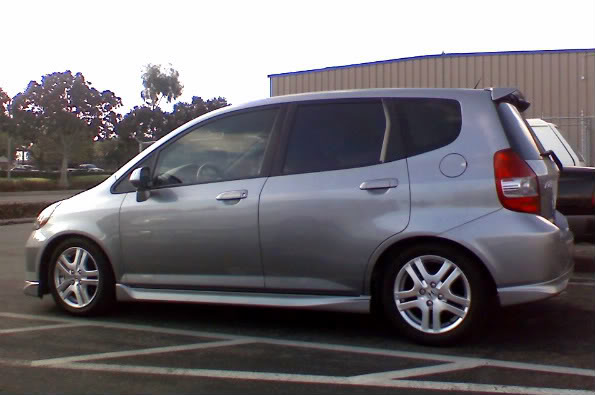
One look at the Base Fit shows it is quite a bit more "slippery" looking from a side profile than the Sport with it's spoilers, etc.
One look at the Base Fit shows it is quite a bit more "slippery" looking from a side profile than the Sport with it's spoilers, etc.

Joined: Mar 2007
Posts: 1,251
From: Winthrop Harbor Illinois/ Presque Isle Wisconsin
Originally Posted by Rosswond
Plus the whole car tapers smoothly back to the rear, at the sides as well as along the roof, to minimise the area of the wake. Once the air leaves the roof or the sides, the shape of the tailgate makes no difference, it's in turbulent air that's moving along with the car anyway. the trick is to minimise the size of the tail so that you minimise the amount of air you have to tow along with you.
a lot of the evolution in Fit styling in the new gen is based on wind tunnel aerodynamic design (which is probably why some GD3 guys dont like it. All you got to do is take a careful look at the 2 designs, it's right there to see.


Member
Joined: Dec 2008
Posts: 200
From: NSW, Australia
i would guess 0.28 for the Base model and 0.29 for the Sport. It seems every time Car & Driver has reported this figure over the years the "Sport" model of anything with it's extra aero bits actually raised the figure. Which, i guess makes sense.
One look at the Base Fit shows it is quite a bit more "slippery" looking from a side profile than the Sport with it's spoilers, etc.
One look at the Base Fit shows it is quite a bit more "slippery" looking from a side profile than the Sport with it's spoilers, etc.
When they fitted bigger wheels and a spoiler it went slower.

That's why I don't like rice.
Member

Joined: Feb 2009
Posts: 107
From: Minnesota, USA
The purpose of spoilers is to act as reverse airplane wings and create downforce on the car at high speeds so it grips better. that extra force has to come from somewhere, at the expense of slipping through the air, all assuming well designed spoilers. At worst, they add weight, costs, and drag without creating downforce.
Although I have read an article in one of the auto magazines a while back that a simple subtle trunk lip spoiler on a sedan can decrease cd by .01 if done right so that it smoothes out the tail turbulence.
Although I have read an article in one of the auto magazines a while back that a simple subtle trunk lip spoiler on a sedan can decrease cd by .01 if done right so that it smoothes out the tail turbulence.
A couple of things work in the Fit's favour though. Two big areas where cars have problems is the hood/windshield transition and the wake. Sedans actually have poor aerodynamics because the airflow breaks away at the rear corner of the roof, not the rear of the trunk. This can almost double the area of the wake. In order to keep the airflow attached, carmakers use those nifty little roof spoilers, and if there is a boot, they make it as high as they can. that's why you can't see out the back of so many modern sedans. Most of the time, putting a spoiler on the trunk lid is for rice looks only, because it is in turbulent air and does little to help.
One of the reasons the vents are often in front of the windshield, is becuase the transition makes this a high pressure area.
With the Fit, they have optimised things by reducing the change in angle between the hood and the windshield to a minimum, largely by kicking out the windshield forward over the engine.
Plus the whole car tapers smoothly back to the rear, at the sides as well as along the roof, to minimise the area of the wake. Once the air leaves the roof or the sides, the shape of the tailgate makes no difference, it's in turbulent air that's moving along with the car anyway. the trick is to minimise the size of the tail so that you minimise the amount of air you have to tow along with you.
I don't think the Fit wouldbe as unaerodyamic as you suggest. Certainly 0.31 is likely but small things can undo all the good work. Things like mudflaps or bodykits. I woould expect the Sport to have poorer Cd than the base because of wider wheels and the bodykit.
Here in Aus, our Jazz has a shorter nose and two main shapes - one with a bodykit and fat wheels, and one without.
It would be interesting to see the effect of the USDM specific extended bumper.
One of the reasons the vents are often in front of the windshield, is becuase the transition makes this a high pressure area.
With the Fit, they have optimised things by reducing the change in angle between the hood and the windshield to a minimum, largely by kicking out the windshield forward over the engine.
Plus the whole car tapers smoothly back to the rear, at the sides as well as along the roof, to minimise the area of the wake. Once the air leaves the roof or the sides, the shape of the tailgate makes no difference, it's in turbulent air that's moving along with the car anyway. the trick is to minimise the size of the tail so that you minimise the amount of air you have to tow along with you.
I don't think the Fit wouldbe as unaerodyamic as you suggest. Certainly 0.31 is likely but small things can undo all the good work. Things like mudflaps or bodykits. I woould expect the Sport to have poorer Cd than the base because of wider wheels and the bodykit.
Here in Aus, our Jazz has a shorter nose and two main shapes - one with a bodykit and fat wheels, and one without.
It would be interesting to see the effect of the USDM specific extended bumper.
Rear spoilers will increase drag (as another posted mentioned). A good slippery shape is the air foil or tear drop, which is essentially what cars resemble, only that shape also is perfect for lift. That's why car designers avoid creating low rear trunks in their designs. The car would just fly at high speeds. So imagine that airfoil shape. The rear end is clean and minimal. Sedans have some semblance of this while wagons like our Fit don't. Having a chopped off big rear area creates a lot of turbulence and therefore more drag compared to a shape of a sedan or coupe.
Joined: Mar 2007
Posts: 1,251
From: Winthrop Harbor Illinois/ Presque Isle Wisconsin
One thing good about the Sport body kit is Honda designed it in the wind tunnel, it probably adds drag but not much.
After market body kits are a whole other story as those companies will likely NOT have sophisticated CAD and wind tunnel resources.
After market body kits are a whole other story as those companies will likely NOT have sophisticated CAD and wind tunnel resources.
Member
Joined: Dec 2008
Posts: 200
From: NSW, Australia
Rear spoilers will increase drag (as another posted mentioned). A good slippery shape is the air foil or tear drop, which is essentially what cars resemble, only that shape also is perfect for lift. That's why car designers avoid creating low rear trunks in their designs. The car would just fly at high speeds. So imagine that airfoil shape. The rear end is clean and minimal. Sedans have some semblance of this while wagons like our Fit don't. Having a chopped off big rear area creates a lot of turbulence and therefore more drag compared to a shape of a sedan or coupe.
The wake on the Fit will be a bit bigger than the tailgate. The wake on most sedans and a lot of coupes is bigger than you would expect because the airflow still separates off the back of the roof, not the end of the trunklid.
That's why in most cases, trunklid spoilers do very little for aerodynamics. they are in air that has already separated and is turbulent.
One reason for a big wing on a sedan is to get that aerofoil up into clean air where it can do some good.
Then it's a trade off between downforce and drag. That trade off is different for every car.
In most cases for a road car, a spoiler just adds extra drag. An example of a beneficial application would be the old series I - III Rx7s, that needed a big spoiler around the trunklid to reduce the tendency of the rear of the car to lift at speed. They created a lot of drag, but the extra stability was worth it.
The best drag reducing spoiler for a hatchback or sedan is a small (only an inch or so) lip or other disturbance at the top of the back window. This creates a thicker boundary layer that stays attached longer and reduces the size of the wake. Also helps to keep your back window clean on dusty outback roads
 .
.http://www.autospeed.com.au has some really good articles on aerodynamics. If you are serious about reducing your car's drag, one of them shows you how to do wool tuft testing to see what the air around your car is doing. Cheaper than a wind tunnel!
Member
Joined: Dec 2008
Posts: 200
From: NSW, Australia
The purpose of spoilers is to act as reverse airplane wings and create downforce on the car at high speeds so it grips better. that extra force has to come from somewhere, at the expense of slipping through the air, all assuming well designed spoilers. At worst, they add weight, costs, and drag without creating downforce.
Although I have read an article in one of the auto magazines a while back that a simple subtle trunk lip spoiler on a sedan can decrease cd by .01 if done right so that it smoothes out the tail turbulence.
Although I have read an article in one of the auto magazines a while back that a simple subtle trunk lip spoiler on a sedan can decrease cd by .01 if done right so that it smoothes out the tail turbulence.
That's true, but in most sedans, you'd be better of putting it above the back window.
As an aside, it's the same reason a golf ball has dimples on it.

New Member
Joined: Feb 2009
Posts: 8
From: indiana
hey guys. im new here and am researching my next car purchase. my fiancees brother is an engineer for honda and lives in oomiya city, saitama, japan. i had asked him this question about the current gen fit since when i called honda usa, their response was "honda chooses not to publish these numbers." i found that rather odd. anyway, the inside information i obtained was that the current gen fit has a cd of .30,and the previous generation fit was at .31. so, those are quite good numbers. i dont see why this has to be such a secret for honda. i had no trouble getting the cd numbers for a couple other cars i am looking at: 2009 corolla and 2009 yaris (both have a cd of .29). he said it takes alot of work just dropping the cd by .01, especially because of the large, flat rear end inherent to hatchbacks
so, im down to:
fit: great interior versatility. i want a stick, but the fit manual revs awfully high at spead
corolla: very quiet for eco car/nice smooth ride, stick drove nicely.
yaris: price/great mileage, but cheap interior.
arghh, ive researched this to death and this site has been very valuable. maybe im getting old because i am putting alot of value on a softer ride and quietness.
so, im down to:
fit: great interior versatility. i want a stick, but the fit manual revs awfully high at spead
corolla: very quiet for eco car/nice smooth ride, stick drove nicely.
yaris: price/great mileage, but cheap interior.
arghh, ive researched this to death and this site has been very valuable. maybe im getting old because i am putting alot of value on a softer ride and quietness.
Last edited by momomo; Feb 12, 2009 at 05:33 PM.
Member
Joined: Oct 2008
Posts: 37
From: Nashville, TN
to momomo...you're here because you obviously have a bit of an obsession with cars. well, it you've had enough time in them you KNOW that the Fit is the more "driver's car" than the Corolla, but yeah, kinda like what you said....not necessarily that you're getting old, but that the nicer ride of the Corolla would be pleasing...from time to time, but....being a car enthusiast....aren't you more after the more fun to drive machine??
Member
Joined: Oct 2008
Posts: 37
From: Nashville, TN
CrystalFiveMT: this is exactly why they had to put a rear spoiler on the Audi TT after a couple of years of production because at high speed the things were launching themselves about. well, not necessarily launching themselves, but became so light in the rear end that the driver would lose control of his audi near-plane and crash much easier than, say, a volvo 240.

New Member
Joined: Jan 2009
Posts: 2
From: Ms
Very interesting. Did a bit of googling, and came up with this 3 year old but still worthwhile link to a list of other drag coefficients for various cars.

Member
Joined: Sep 2008
Posts: 300
From: Milwaukee
Surprised the Honda's first Insight is not there.
I think this is more informative.
Automobile drag coefficient - Wikipedia, the free encyclopedia
F1 racing cars have the worst drag. Anyone expected that?
I think this is more informative.
Automobile drag coefficient - Wikipedia, the free encyclopedia
F1 racing cars have the worst drag. Anyone expected that?
Last edited by Ein; Feb 13, 2009 at 02:51 AM.
New Member
Joined: Feb 2009
Posts: 8
From: indiana
truthfully, 95% of the time, sitting in the quieter, softer riding car appeals to me. (commuting on routes where there is no fun to be had). but i still want to have fun with the car the other 5% of the time. the fit 5 speed is more fun to drive than the corolla, for sure. however, i just found it tiresome at 70 mph due to the high rpm's. i, like most stick drivers (i am guessing here) am more than happy to downshift when we want more power. i dont need to have good acceleration when cruising in 5th gear. if i want it, ill make it. i guess they think americans are too lazy to shift when needed? isnt that what the auto transmission is for?
i fear that in a few years, they will just drop manual transmissions as an option.


 Pointed areas of back bumper

Its not a full diffuser but most diffusers are for aerodynamics..
Rear Diffusers... improves the car's aerodynamic properties by enhancing the transition between the high-velocity airflow underneath the car and the much slower freestream airflow of the ambient atmosphere. It works by providing a space for the underbody airflow to decelerate and expand so that the boundary between the car's airflow and "external" airflow is less turbulent. It also provides a degree of "wake infill" (the wake being a turbulent area of low pressure that is caused by the passage of the vehicle through the air; this can cause pressure drag). Useing Bernoulli's principle.
Member
Joined: Feb 2009
Posts: 107
From: Minnesota, USA
Surprised the Honda's first Insight is not there.
I think this is more informative.
Automobile drag coefficient - Wikipedia, the free encyclopedia
F1 racing cars have the worst drag. Anyone expected that?
I think this is more informative.
Automobile drag coefficient - Wikipedia, the free encyclopedia
F1 racing cars have the worst drag. Anyone expected that?
maybe it's just urban legend.
Member
Joined: Feb 2009
Posts: 107
From: Minnesota, USA
truthfully, 95% of the time, sitting in the quieter, softer riding car appeals to me. (commuting on routes where there is no fun to be had). but i still want to have fun with the car the other 5% of the time. the fit 5 speed is more fun to drive than the corolla, for sure. however, i just found it tiresome at 70 mph due to the high rpm's. i, like most stick drivers (i am guessing here) am more than happy to downshift when we want more power. i dont need to have good acceleration when cruising in 5th gear. if i want it, ill make it. i guess they think americans are too lazy to shift when needed? isnt that what the auto transmission is for?
i fear that in a few years, they will just drop manual transmissions as an option.
i fear that in a few years, they will just drop manual transmissions as an option.
As for Yaris, I compared the two. The Yaris is smaller, less refined, less safe (crash tests), worse resale value. Just slightly though. As for corolla, it's a different type of car. I prefer the versatility of a 5door hatchback for carrying large cargo if need to.
