


Can someone explain Torshion-beam rear susp.?



Joined: Mar 2007
Posts: 1,251
From: Winthrop Harbor Illinois/ Presque Isle Wisconsin
This is the rear torsion beam of a fit (less coil springs)
The left and right wheels are connected so if one wheel hits a bump the other will react. Except the torsion part means that the center beam is allowed to twist allowing a 'partial 'independent rear suspension


The left and right wheels are connected so if one wheel hits a bump the other will react. Except the torsion part means that the center beam is allowed to twist allowing a 'partial 'independent rear suspension
Last edited by Tork; Feb 28, 2009 at 05:49 PM.
Joined: Mar 2007
Posts: 1,251
From: Winthrop Harbor Illinois/ Presque Isle Wisconsin
To properly understand a torsion beam,
it might help to understand a torsion bar suspension.
A torsion bar suspension has no coil or leaf spring, the bar IS the spring.
In other words hit a bump and the bar twists.
It is VERY compact (having no coil or leaf type spring) and is found on Porsche 911, some Toyota pick-ups and many other vehicles
Going back to torsion 'beam' the center section should twist like the torsion bar
look at the 2 pictures here and you will see http://en.wikipedia.org/wiki/Torsion_beam_suspension


it might help to understand a torsion bar suspension.
A torsion bar suspension has no coil or leaf spring, the bar IS the spring.
In other words hit a bump and the bar twists.
It is VERY compact (having no coil or leaf type spring) and is found on Porsche 911, some Toyota pick-ups and many other vehicles
Going back to torsion 'beam' the center section should twist like the torsion bar
look at the 2 pictures here and you will see http://en.wikipedia.org/wiki/Torsion_beam_suspension
Last edited by Tork; Feb 28, 2009 at 04:35 PM.
Member
Joined: Jul 2008
Posts: 548
From: USA
The 5 common types in cars today:
Multilink (double wishbone, trailing arm, etc) has at least 2 suspension arms going from the body to the knuckle, with the shock and spring assembly attached to one of the arms.
Advantages:
-capable of finely tuned suspension geometry, such as changing wheel angle at different spring compression.
-rubber bushings at every body link absorb a lot of road shock.
Disadvantages:
-rubber deteriorates over time and can result in sloppy movement
-ball joints need replacement when they wear
-control arms susceptible to bending from excessive bump shock
Used on: many front wheel drive cars, such as the '88-'00 civic and all usdm integras.
Macpherson strut is a single link suspension that uses a lower arm that only moves up and down, and a strut (shock/spring assy) that takes the place of an upper arm. The strut rotation and a ball joint provide the capability of steering.
Advantages:
-fewer parts and cheaper
-more accurate steering response compared to typical multi-link due to less rubber links
Disadvantages:
-if not strong enough, the strut can bend from excessive road shock as it supports the wheel's angle
Used on: most newer hondas, incl. the front suspension on the Fit, most toyotas, and ATVs.
Torsion bar suspension is a modified version of a Macpherson or multilink suspension. Instead of having the spring around the shock, a long bar replaces it that twists. It connects to the body end of the lower control arm and to a bracket attached to the frame about 3-5' away. The twisting of this bar acts as the spring.
Advantages:
-see Macpherson
-smooth spring rate
Disadvantages:
-bar susceptible to rock damage if off-road
Used on: many General Motors full-size pickup front suspensions.
Torsion beam is a variation of the old swingarm rear suspension type. The one piece design pivots about 1-2' in front of the wheel centers, and on each side extends back to the wheels. For an easy visualization, sit in the back seat of your car, face the rear, hold your arms out in front of you and move them up and down together. A shock/spring connects by the wheel to each side. The innovation is the center part of the piece- it can flex. This allows somewhat independent movement, but as a whole it moves as one, much like if an anti-sway bar were installed on a multilink.
Advantages:
-Very few components make it lightweight, cheap, and durable
-Few pivot points keep sloppiness from developing over time as much
-stability and cornering ability come from its anti-sway tendency and its keeping a stable wheel angle
Disadvantages:
-can't adjust anti-sway tendency
-damage means replacing the whole rear piece
-can't change wheel camber (leaning in at the top) through suspension movement to keep tire patch as flat on the road
Used on: Honda Fit, Honda Insight 1, CR-V, etc.
The solid rear suspension is the last major type. It can be either a solid drive axle with leaf springs (like a truck), a bar that holds the wheels on the ends supported by leaf springs (like many older minivans' rear beam suspensions), or a 4-link solid axle (used in motorsports because it uses 4 parallel connecting arms that reach forward, preventing axle twist and allowing the use of coil springs).
Advantages:
-durable
-can hold a lot of torque, especially the 4-link
Disadvantages:
-spring wrap can cause traction issues
-most solid axles with leaf springs aren't as capable of keeping the tires planted in bumps, reducing cornering ability somewhat
-heavy
There, you're a little more edumacated. lol
Multilink (double wishbone, trailing arm, etc) has at least 2 suspension arms going from the body to the knuckle, with the shock and spring assembly attached to one of the arms.
Advantages:
-capable of finely tuned suspension geometry, such as changing wheel angle at different spring compression.
-rubber bushings at every body link absorb a lot of road shock.
Disadvantages:
-rubber deteriorates over time and can result in sloppy movement
-ball joints need replacement when they wear
-control arms susceptible to bending from excessive bump shock
Used on: many front wheel drive cars, such as the '88-'00 civic and all usdm integras.
Macpherson strut is a single link suspension that uses a lower arm that only moves up and down, and a strut (shock/spring assy) that takes the place of an upper arm. The strut rotation and a ball joint provide the capability of steering.
Advantages:
-fewer parts and cheaper
-more accurate steering response compared to typical multi-link due to less rubber links
Disadvantages:
-if not strong enough, the strut can bend from excessive road shock as it supports the wheel's angle
Used on: most newer hondas, incl. the front suspension on the Fit, most toyotas, and ATVs.
Torsion bar suspension is a modified version of a Macpherson or multilink suspension. Instead of having the spring around the shock, a long bar replaces it that twists. It connects to the body end of the lower control arm and to a bracket attached to the frame about 3-5' away. The twisting of this bar acts as the spring.
Advantages:
-see Macpherson
-smooth spring rate
Disadvantages:
-bar susceptible to rock damage if off-road
Used on: many General Motors full-size pickup front suspensions.
Torsion beam is a variation of the old swingarm rear suspension type. The one piece design pivots about 1-2' in front of the wheel centers, and on each side extends back to the wheels. For an easy visualization, sit in the back seat of your car, face the rear, hold your arms out in front of you and move them up and down together. A shock/spring connects by the wheel to each side. The innovation is the center part of the piece- it can flex. This allows somewhat independent movement, but as a whole it moves as one, much like if an anti-sway bar were installed on a multilink.
Advantages:
-Very few components make it lightweight, cheap, and durable
-Few pivot points keep sloppiness from developing over time as much
-stability and cornering ability come from its anti-sway tendency and its keeping a stable wheel angle
Disadvantages:
-can't adjust anti-sway tendency
-damage means replacing the whole rear piece
-can't change wheel camber (leaning in at the top) through suspension movement to keep tire patch as flat on the road
Used on: Honda Fit, Honda Insight 1, CR-V, etc.
The solid rear suspension is the last major type. It can be either a solid drive axle with leaf springs (like a truck), a bar that holds the wheels on the ends supported by leaf springs (like many older minivans' rear beam suspensions), or a 4-link solid axle (used in motorsports because it uses 4 parallel connecting arms that reach forward, preventing axle twist and allowing the use of coil springs).
Advantages:
-durable
-can hold a lot of torque, especially the 4-link
Disadvantages:
-spring wrap can cause traction issues
-most solid axles with leaf springs aren't as capable of keeping the tires planted in bumps, reducing cornering ability somewhat
-heavy
There, you're a little more edumacated. lol
Last edited by polaski; Mar 3, 2009 at 11:22 PM. Reason: corrected

Thread Starter
|
Member
Joined: Feb 2009
Posts: 45
From: Bozrah, CT
To properly understand a torsion beam,
it might help to understand a torsion bar suspension.
A torsion bar suspension has no coil or leaf spring, the bar IS the spring.
In other words hit a bump and the bar twists.
It is VERY compact (having no coil or leaf type spring) and is found on Porsche 911, some Toyota pick-ups and many other vehicles
Going back to torsion 'beam' the center section should twist like the torsion bar
look at the 2 pictures here and you will see Torsion bar suspension - Wikipedia, the free encyclopedia
it might help to understand a torsion bar suspension.
A torsion bar suspension has no coil or leaf spring, the bar IS the spring.
In other words hit a bump and the bar twists.
It is VERY compact (having no coil or leaf type spring) and is found on Porsche 911, some Toyota pick-ups and many other vehicles
Going back to torsion 'beam' the center section should twist like the torsion bar
look at the 2 pictures here and you will see Torsion bar suspension - Wikipedia, the free encyclopedia
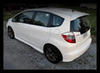
yes, quite a few companies already make coilovers for the Fit GD (USA/Japan) and the Fit GE in Japan.
Joined: Mar 2007
Posts: 1,251
From: Winthrop Harbor Illinois/ Presque Isle Wisconsin
separate spring and shock design, so you get shocks and springs with adjustable spring perches. The effect is the same though.


Member
Joined: Dec 2008
Posts: 200
From: NSW, Australia
Great write up!
It's not quite true though that you can't adjust the anti-sway properties of the torsion beam. Some torsion beam setups have an additional anti-sway bar incorporated to increase rear roll stiffness. (eg Australian Honda Jazz has this for better stability) You can add them aftermarket to reduce understeer. They just bolt onto the torsion beam.
It's not quite true though that you can't adjust the anti-sway properties of the torsion beam. Some torsion beam setups have an additional anti-sway bar incorporated to increase rear roll stiffness. (eg Australian Honda Jazz has this for better stability) You can add them aftermarket to reduce understeer. They just bolt onto the torsion beam.
Joined: Mar 2007
Posts: 1,251
From: Winthrop Harbor Illinois/ Presque Isle Wisconsin
Great write up!
It's not quite true though that you can't adjust the anti-sway properties of the torsion beam. Some torsion beam setups have an additional anti-sway bar incorporated to increase rear roll stiffness. (eg Australian Honda Jazz has this for better stability) You can add them aftermarket to reduce understeer. They just bolt onto the torsion beam.
It's not quite true though that you can't adjust the anti-sway properties of the torsion beam. Some torsion beam setups have an additional anti-sway bar incorporated to increase rear roll stiffness. (eg Australian Honda Jazz has this for better stability) You can add them aftermarket to reduce understeer. They just bolt onto the torsion beam.
While initial turn in on my GD3 was a bit more hair trigger, the rear comes around much quicker on the GE.
Guys who add rear bars to GD3 would have awesome go kart handling.
Last edited by Tork; Mar 5, 2009 at 12:06 AM.
Member
Joined: Dec 2008
Posts: 200
From: NSW, Australia
Indeed, my GE is probably the least understeering FWD car I've ever driven. (although my Corolla Twincam 16 wasn't too bad) For an MPV shaped car on skinny 15" tires it corners pretty well.

Member
Joined: Nov 2006
Posts: 450
From: Detroit

1st off GREAT WRITE UP!!! but one part is not 100% true, you can adjust the static set-up.
Torsion beam is a variation of the old swingarm rear suspension type. The one piece design pivots about 1-2' in front of the wheel centers, and on each side extends back to the wheels. For an easy visualization, sit in the back seat of your car, face the rear, hold your arms out in front of you and move them up and down together. A shock/spring connects by the wheel to each side. The innovation is the center part of the piece- it can flex. This allows somewhat independent movement, but as a whole it moves as one, much like if an anti-sway bar were installed on a multilink.
Advantages:
-Very few components make it lightweight, cheap, and durable
-Few pivot points keep sloppiness from developing over time as much
-stability and cornering ability come from its anti-sway tendency and its keeping a stable wheel angle
Disadvantages:
-can't adjust anti-sway tendency
-damage means replacing the whole rear piece
-can't change wheel camber (leaning in at the top) through suspension movement to keep tire patch as flat on the road
Used on: Honda Fit, Honda Insight 1, CR-V, etc.
Here is the solution to this problem:
eBay Motors: SPC FRONT REAR CAMBER KIT 07+ HONDA FIT 2007 2008 2009 (item 270348096440 end time Mar-23-09 14:06:08 PDT)
It has some interesting videos in the description... I learned this a few days ago
Torsion beam is a variation of the old swingarm rear suspension type. The one piece design pivots about 1-2' in front of the wheel centers, and on each side extends back to the wheels. For an easy visualization, sit in the back seat of your car, face the rear, hold your arms out in front of you and move them up and down together. A shock/spring connects by the wheel to each side. The innovation is the center part of the piece- it can flex. This allows somewhat independent movement, but as a whole it moves as one, much like if an anti-sway bar were installed on a multilink.
Advantages:
-Very few components make it lightweight, cheap, and durable
-Few pivot points keep sloppiness from developing over time as much
-stability and cornering ability come from its anti-sway tendency and its keeping a stable wheel angle
Disadvantages:
-can't adjust anti-sway tendency
-damage means replacing the whole rear piece
-can't change wheel camber (leaning in at the top) through suspension movement to keep tire patch as flat on the road
Used on: Honda Fit, Honda Insight 1, CR-V, etc.
eBay Motors: SPC FRONT REAR CAMBER KIT 07+ HONDA FIT 2007 2008 2009 (item 270348096440 end time Mar-23-09 14:06:08 PDT)
It has some interesting videos in the description... I learned this a few days ago
^^^ hey that's pretty cool. nice find.
would i do it? naw... my rear tires have significant toe-in and
some neg camber, but it's not enough to cause that much wear
on the tires. the car with only me in it 99% of the time is not
heavy enough to cause un-even wear. 12k miles and wear looks
pretty flat.
would i do it? naw... my rear tires have significant toe-in and
some neg camber, but it's not enough to cause that much wear
on the tires. the car with only me in it 99% of the time is not
heavy enough to cause un-even wear. 12k miles and wear looks
pretty flat.
Member
Joined: Dec 2008
Posts: 200
From: NSW, Australia
1st off GREAT WRITE UP!!! but one part is not 100% true, you can adjust the static set-up.
Here is the solution to this problem:
eBay Motors: SPC FRONT REAR CAMBER KIT 07+ HONDA FIT 2007 2008 2009 (item 270348096440 end time Mar-23-09 14:06:08 PDT)
It has some interesting videos in the description... I learned this a few days ago
Here is the solution to this problem:
eBay Motors: SPC FRONT REAR CAMBER KIT 07+ HONDA FIT 2007 2008 2009 (item 270348096440 end time Mar-23-09 14:06:08 PDT)
It has some interesting videos in the description... I learned this a few days ago
With a torsion beam, the camber doesn't change with wheel travel when both wheels move together.
For racing, being able to adjust camber on all the wheels is v. useful, so it's good that this kit is out there, but you need a lot of testing to see if it's helping.

Thread
Thread Starter
Forum
Replies
Last Post
blackndecker
2nd Generation GE8 Specific Suspension & Brakes Sub-Forum
38
Oct 28, 2011 09:08 AM
