


Do wider tires = less MPG's ? ? ?

Thread Starter
|
Member
Joined: Dec 2012
Posts: 47
From: Gardnerville, Nevada
Do wider tires = less MPG's ? ? ?
Since we're talking tires, does upgrading to the 205-55-15 or the 205-50-16
cut into the MPG's ???
Lets hear from the owners that have upgraded
Whats your MPG reading now vs the stock size tire. . . . . . . . .
cut into the MPG's ???
Lets hear from the owners that have upgraded
Whats your MPG reading now vs the stock size tire. . . . . . . . .
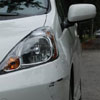
For what its worth...I went from stock to 205/50/16 a year ago and there wasnt any noticeable change. However my car does not get driven on a regular basis (a car that is driven on a regular daily route would be more worthwhile because it would make a more accurate reading in my opinion).
edit: i guess i should put down what are my tires and wheels.
Continental DWS 205/50/16. FNR01-C powdercoated. The Conti's weighted 1lb more than stock but the 5zigens are about 2lbs lighter than the stock 09 alloys. so overall i am lighter atleast 1lb per wheel including tires.
edit: i guess i should put down what are my tires and wheels.
Continental DWS 205/50/16. FNR01-C powdercoated. The Conti's weighted 1lb more than stock but the 5zigens are about 2lbs lighter than the stock 09 alloys. so overall i am lighter atleast 1lb per wheel including tires.
Last edited by blassty; Jan 11, 2013 at 09:44 PM.
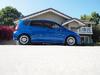
I lost 2-3 mpg when I switched from 195/55/15 to 205/50/15 on the OEM wheels.
Now I'm on different wheels and a different set of 205/50/15. And still 2-3 mpg lower than the OEM combination.
It depends on the tread pattern too, not just tread width. It's a fact mpg will go down when you increase the tread width - more friction - and weight of the tire typically goes up when it's wider too.
Now I'm on different wheels and a different set of 205/50/15. And still 2-3 mpg lower than the OEM combination.
It depends on the tread pattern too, not just tread width. It's a fact mpg will go down when you increase the tread width - more friction - and weight of the tire typically goes up when it's wider too.

Member

Joined: Jul 2009
Posts: 136
From: York, Pa
Not really a drop noticed here in routine summer driving. I went from stock Dunnies to Continental Extreme Contact DWS 205/50/16. Still get 38-40 mpg summer,33-36 mpg winter on dry roads. I drive mostly highway constant speed with a little in town driving to and from work,84 miles a day. However I have noticed a fair drop of 3-4 mpg driving in snow with the DWS over the Dunlops,and 1-2 mpg drop if and when I mount Michelin IceX'2s ,195/55/16 in size. When pushing wet snow with the wider DWS tire appears to affect mileage even more then the 195/55/16 Michelin IceX2's. First year with DWS using in winter,and so far pleased with winter snow driving. I may not mount the IceX2's unless it gets lots deeper then the 2-3" we had recently.
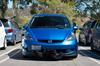
Identical to my experience. 205 50 15 UHP tires. With the change to significantly lighter than OEM wheels it was effectively a wash.

Thread Starter
|
Member
Joined: Dec 2012
Posts: 47
From: Gardnerville, Nevada
I have noticed that the 185-55-16 has a limited amount of choices. Why ???
I'm guessing that lighter wheels + the 205-50-16 tires may give the same MPG's if they are all season tires like the Cont DWS . . . . . . . .
Did Honda test the Dunlops to give the best MPG's or was it cost ???
I'm guessing that lighter wheels + the 205-50-16 tires may give the same MPG's if they are all season tires like the Cont DWS . . . . . . . .
Did Honda test the Dunlops to give the best MPG's or was it cost ???
Member
Joined: Jan 2008
Posts: 4,371
From: NC USA
Heavier tires, usual with extra width, means fewer mpg. That can be minimized by getting tires slightly less diameter. (more weight but at less diameter reduces torque required to turn the wheels and that helps keep mpg reduction to a minimum.)
Consult TirteRack for tire weights and diameters. Its not guaranteed that wider is heavier.


Member
Joined: Apr 2009
Posts: 353
From: SF Bay Area, USA

I have noticed that the 185-55-16 has a limited amount of choices. Why ???
I'm guessing that lighter wheels + the 205-50-16 tires may give the same MPG's if they are all season tires like the Cont DWS . . . . . . . .
Did Honda test the Dunlops to give the best MPG's or was it cost ???
I'm guessing that lighter wheels + the 205-50-16 tires may give the same MPG's if they are all season tires like the Cont DWS . . . . . . . .
Did Honda test the Dunlops to give the best MPG's or was it cost ???
New Member
Joined: Jan 2013
Posts: 10
From: Florida
Tire Calculator
Here's a tire calculator that will show you info on contact patch, affect on speedometer, etc. ..... but doesn't tell you mpg, lol 
BND TechSource - Tire Data Calculator
BND TechSource - Tire Data Calculator

Heavier tires, usual with extra width, means fewer mpg. That can be minimized by getting tires slightly less diameter. (more weight but at less diameter reduces torque required to turn the wheels and that helps keep mpg reduction to a minimum.)
Consult TirteRack for tire weights and diameters. Its not guaranteed that wider is heavier.
Consult TirteRack for tire weights and diameters. Its not guaranteed that wider is heavier.
Wider means more frictional losses and aerodynamic losses, so even if the tire is lighter you could still lose mpg simply because its larger patch requires more force to move plus wider means less aerodynamic at speed. This is just my hypothesis on this, i will report back once i get my Hankook Ventus V2 on my Kosei's. The Hankook 205 50 16 is 0.3lbs lighter then OEM 185 55 16 Dunlops on each corner so tire weight wont be the issue, so it only leaves frictional losses and aero at this point. The wheels are 5.6lbs lighter each then factory so thats a non issue.
Member
Joined: Jan 2008
Posts: 4,371
From: NC USA
Wider means more frictional losses and aerodynamic losses, so even if the tire is lighter you could still lose mpg simply because its larger patch requires more force to move plus wider means less aerodynamic at speed. This is just my hypothesis on this, i will report back once i get my Hankook Ventus V2 on my Kosei's. The Hankook 205 50 16 is 0.3lbs lighter then OEM 185 55 16 Dunlops on each corner so tire weight wont be the issue, so it only leaves frictional losses and aero at this point. The wheels are 5.6lbs lighter each then factory so thats a non issue.
An example is using wider rubber tires on a soap box derby racer; velocity downhill always increased. Didn't take officials long to check tread widths either and our molded additional widths were harshly dealt with.
And for those who found that narrowing the tires on pinewood derby racers increased speed the resulting increase in speed occured because there is no deformation on solid wood wheels so rolling resistance is indeed decreased. As long as the wheels weren't checked with magnifying glasses you could get away with trued and radiused wheels. Officials finally caught up with us then too. Can't understand why they were so supecvious of our troop after that.
There is some added loss from the wider cross section that's exposed to the aero forces but not until speeds get to 100 mph.
Its beneficial to have tires that are .36 lb lighter but the diameter is also slightly larger by .06 inches and even with the 0.36 lb lesser weight but at marginally greater radius you may barely see a change unless the tire carcass construction is not equal, which I bet aren't. The only way you can honestly be sure of the difference is by making sure the contact surface patch has equal areas and that will be tough. Even then the hysteresis of the carcass in motion may be impossible to equalize.
Still, you're results will be interesting. Have at it.
cheers.
Unfortunately, there is not increased frictional losses from wider tires unless the air pressure is reduced. The load area is still the same as before but because its wider means there's less depth and therefore the deformation is less. That is the length of the flattening of the circumference is less so the deformation, or the source of resistance, is reduced. Overiding that of course is the structural regidity of the tire's construction.
An example is using wider rubber tires on a soap box derby racer; velocity downhill always increased. Didn't take officials long to check tread widths either and our molded additional widths were harshly dealt with.
And for those who found that narrowing the tires on pinewood derby racers increased speed the resulting increase in speed occured because there is no deformation on solid wood wheels so rolling resistance is indeed decreased. As long as the wheels weren't checked with magnifying glasses you could get away with trued and radiused wheels. Officials finally caught up with us then too. Can't understand why they were so supecvious of our troop after that.
There is some added loss from the wider cross section that's exposed to the aero forces but not until speeds get to 100 mph.
Its beneficial to have tires that are .36 lb lighter but the diameter is also slightly larger by .06 inches and even with the 0.36 lb lesser weight but at marginally greater radius you may barely see a change unless the tire carcass construction is not equal, which I bet aren't. The only way you can honestly be sure of the difference is by making sure the contact surface patch has equal areas and that will be tough. Even then the hysteresis of the carcass in motion may be impossible to equalize.
Still, you're results will be interesting. Have at it.
cheers.
An example is using wider rubber tires on a soap box derby racer; velocity downhill always increased. Didn't take officials long to check tread widths either and our molded additional widths were harshly dealt with.
And for those who found that narrowing the tires on pinewood derby racers increased speed the resulting increase in speed occured because there is no deformation on solid wood wheels so rolling resistance is indeed decreased. As long as the wheels weren't checked with magnifying glasses you could get away with trued and radiused wheels. Officials finally caught up with us then too. Can't understand why they were so supecvious of our troop after that.
There is some added loss from the wider cross section that's exposed to the aero forces but not until speeds get to 100 mph.
Its beneficial to have tires that are .36 lb lighter but the diameter is also slightly larger by .06 inches and even with the 0.36 lb lesser weight but at marginally greater radius you may barely see a change unless the tire carcass construction is not equal, which I bet aren't. The only way you can honestly be sure of the difference is by making sure the contact surface patch has equal areas and that will be tough. Even then the hysteresis of the carcass in motion may be impossible to equalize.
Still, you're results will be interesting. Have at it.
cheers.

Member
Joined: Sep 2012
Posts: 181
From: California
Also, rule of thumb, for every 1 lb of unsprung weight, it is equivalent to 7 lbs of sprung weight. So even a small change in wheel weight produce a BIG change in energy used to move, add a wider friction patch and you'll see a noticable change. I'll gladly take a 1-2 mpg change for a better handling car.
My feeling is that Honda looked at what was the widest wheel they could use to produce acceptable results (road loading, handling, utility, milage, wear) and came up with the oddball tire. I got the same thing with my Mini Cooper the 175/65/15, once i upgraded to better tires and wheels, I lost nearly 3 mpg consistently. But the Mini had a HUGE tank, so it wasn't that noticable.
My feeling is that Honda looked at what was the widest wheel they could use to produce acceptable results (road loading, handling, utility, milage, wear) and came up with the oddball tire. I got the same thing with my Mini Cooper the 175/65/15, once i upgraded to better tires and wheels, I lost nearly 3 mpg consistently. But the Mini had a HUGE tank, so it wasn't that noticable.

Member
Joined: Jan 2012
Posts: 514
From: AL
Unfortunately, there is not increased frictional losses from wider tires unless the air pressure is reduced. The load area is still the same as before but because its wider means there's less depth and therefore the deformation is less. That is the length of the flattening of the circumference is less so the deformation, or the source of resistance, is reduced. Overiding that of course is the structural regidity of the tire's construction.
An example is using wider rubber tires on a soap box derby racer; velocity downhill always increased. Didn't take officials long to check tread widths either and our molded additional widths were harshly dealt with.
And for those who found that narrowing the tires on pinewood derby racers increased speed the resulting increase in speed occured because there is no deformation on solid wood wheels so rolling resistance is indeed decreased. As long as the wheels weren't checked with magnifying glasses you could get away with trued and radiused wheels. Officials finally caught up with us then too. Can't understand why they were so supecvious of our troop after that.
There is some added loss from the wider cross section that's exposed to the aero forces but not until speeds get to 100 mph.
Its beneficial to have tires that are .36 lb lighter but the diameter is also slightly larger by .06 inches and even with the 0.36 lb lesser weight but at marginally greater radius you may barely see a change unless the tire carcass construction is not equal, which I bet aren't. The only way you can honestly be sure of the difference is by making sure the contact surface patch has equal areas and that will be tough. Even then the hysteresis of the carcass in motion may be impossible to equalize.
Still, you're results will be interesting. Have at it.
cheers.
An example is using wider rubber tires on a soap box derby racer; velocity downhill always increased. Didn't take officials long to check tread widths either and our molded additional widths were harshly dealt with.
And for those who found that narrowing the tires on pinewood derby racers increased speed the resulting increase in speed occured because there is no deformation on solid wood wheels so rolling resistance is indeed decreased. As long as the wheels weren't checked with magnifying glasses you could get away with trued and radiused wheels. Officials finally caught up with us then too. Can't understand why they were so supecvious of our troop after that.
There is some added loss from the wider cross section that's exposed to the aero forces but not until speeds get to 100 mph.
Its beneficial to have tires that are .36 lb lighter but the diameter is also slightly larger by .06 inches and even with the 0.36 lb lesser weight but at marginally greater radius you may barely see a change unless the tire carcass construction is not equal, which I bet aren't. The only way you can honestly be sure of the difference is by making sure the contact surface patch has equal areas and that will be tough. Even then the hysteresis of the carcass in motion may be impossible to equalize.
Still, you're results will be interesting. Have at it.
cheers.
Continental DWS 205/50/16 - MPG either stayed same or went down a couple MPG
Kumho Ecsta 4X 205/50/16 - MPG either stayed same or went up a couple MPG
Bridgestone Ecopia 205/50/16 - MPG went up by 3 to 4 MPG
I've pretty much decided that the Kumho Ecsta 4X is what I'll be going with because I really don't want to lose any MPG's and the Kumho still seems to be ranked pretty high in all the other categories (cornering feel, dry and wet traction, noise level, etc.). I would love to get the extra MPG that the Bridgestone Ecopia would probably give, but that tire is rated a good bit lower in all the performance categories and I feel that it would be sacrificing too much for the sake of an extra MPG or two.
-Dustin

Thread
Thread Starter
Forum
Replies
Last Post
Mooser1454
2nd Generation (GE 08-13)
19
Sep 1, 2018 10:04 AM
andre181
3rd Generation GK Specific Wheel & Tire Sub-Forum
6
Sep 29, 2015 08:45 PM
