


Adding 2.5 deg of camber on the cheap...


Adding 2.5 deg of camber on the cheap...
So I was messing around looking at my lower strut bolts on my Fit while I was contemplating coil over options when I realized the strut bolts diameter and thread is exact to my MR2 Spyder. What's interesting about the MR2 is Toyota offers various shaft diameter strut bolts (better known as crash bolts) to adjust strut camber. Now the bolt and nut is still remains the same diameter but the midsection where the knuckle meets is thinned slightly to allow strut to slip in or out depending on how you want it. I installed both top and bottom strut bolts made for my MR2 and added in about 2.5 deg of negative camber for about $15 total (4 bolts). The thread is exactly the same so I reused the oem honda nuts. What was particularly shocking was how loose the factory nuts were It took nothing more then a quick nudge with my normal 3/8 ratchet to get it loose (maybe about 45ft lbs of force). I though these things have to be super tight? The Toyota bolts are higher grade then the honda ones, they are grade 11 while oem honda ones are 10 rated.
When you do this you have to reset the toe as the way the suspension is laid out it makes the car toe in if you set camber negative. I eyeballed the toe to be set toe out about 0.2 so it keeps the car from wandering on the highway and gives slightly better turn in. (I'm good at eyeballing alignments) lol. So far so good, I took the fit to local Azusa and gmr canyons and was quiet pleased with the improvements despite rolling on completely stock suspension. The factory setting was soo bad I swore it was positive camber, it just wore the outside of the tire like no tomorrow. The alignment I eyeballed is bang on exact, no more wandering on the highway and steering wheel actually has slightly better on center feel.
Here are the part# I used:
Toyota part# 90105-14147 they are about $3.77 ea. you need 4 if you want that much camber or you can just put 2 (one of each side) if you want mild camber.
Side note: these need to be torque down more then normal, Toyota specs say 200ft lbs but I got me cranked down to 177ft lbs in case that honda nut isn't really designed for that much load.
Pictures....
Top is oem honda bolt, bottom installed is Toyota bolt

All done and perfect fit:

When you do this you have to reset the toe as the way the suspension is laid out it makes the car toe in if you set camber negative. I eyeballed the toe to be set toe out about 0.2 so it keeps the car from wandering on the highway and gives slightly better turn in. (I'm good at eyeballing alignments) lol. So far so good, I took the fit to local Azusa and gmr canyons and was quiet pleased with the improvements despite rolling on completely stock suspension. The factory setting was soo bad I swore it was positive camber, it just wore the outside of the tire like no tomorrow. The alignment I eyeballed is bang on exact, no more wandering on the highway and steering wheel actually has slightly better on center feel.
Here are the part# I used:
Toyota part# 90105-14147 they are about $3.77 ea. you need 4 if you want that much camber or you can just put 2 (one of each side) if you want mild camber.
Side note: these need to be torque down more then normal, Toyota specs say 200ft lbs but I got me cranked down to 177ft lbs in case that honda nut isn't really designed for that much load.
Pictures....
Top is oem honda bolt, bottom installed is Toyota bolt
All done and perfect fit:



Mine is a GE8 I'm not sure if the GD uses same type of length of bolt. The heads and nuts are 19mm both ends, thread is 14mm x 1.5mm, these bolts slim down to 12.8 in the center section to allow camber. Hopfully that helps, this MIGHT be helpful on certain forms of sanctioned racing as I understand certain classes allow oem crash bolts but not camber bolts from aftermarket makes.

Member
Joined: Aug 2009
Posts: 3,661
From: Georgia

So I was messing around looking at my lower strut bolts on my Fit while I was contemplating coil over options when I realized the strut bolts diameter and thread is exact to my MR2 Spyder. What's interesting about the MR2 is Toyota offers various shaft diameter strut bolts (better known as crash bolts) to adjust strut camber.

Member
Joined: Aug 2009
Posts: 3,661
From: Georgia
Shop manual doesn't specify the inner diameter. It does say one bolt will allow up to +/-20' and two allows up to +/- 40'
Interesting, Toyota offers 3 different shank bolts for different range of adjustments. I went with the one with the most range just because I planned on aggressive wheels on my mr2 so I needed most adjustability as I can get.

So you say Toyota P# 90105-14147 is the one with the most range.
Can you find and post info on the other 2? I dont know any reliable online dealer parts websites.
Id like the inner diameter if possible.
I assume the camber bolts I bought for my 92 camry to prevent the TRD 19s from rubbing during heavy turns will match up as well? Seeing as the D2 Coilovers (Ksport twins) only allowed roughly 1.5 degrees adjustment with their slotted top hole.
Can you find and post info on the other 2? I dont know any reliable online dealer parts websites.
Id like the inner diameter if possible.
I assume the camber bolts I bought for my 92 camry to prevent the TRD 19s from rubbing during heavy turns will match up as well? Seeing as the D2 Coilovers (Ksport twins) only allowed roughly 1.5 degrees adjustment with their slotted top hole.

Great Info for the bolts, now we can get camber bolts at much cheaper price,
and not to mention the Grade 11 Quality too !
This will be perfect if we can get the Toyota Nuts too.
Can you please provide us with the matching Toyota Nuts, Part number ?
Thanks again

EDIT:
I think I just find the Nuts and Washer number from this forum:
Crash Bolts
Nut Flange Part# 90080-17208
Washer Part# 90201-14005
Please kindly correct me if I am wrong about the part number above.
it did said that the Toyota Camber Bolt can only be re use 3 times because that is how the metal is...
anyway it is still much cheaper then the SPC camber bolt...
I think I want to try this one, when I am doing my suspension upgrade.
Last edited by BMW ALPINA; May 25, 2013 at 02:09 AM.
So you say Toyota P# 90105-14147 is the one with the most range.
Can you find and post info on the other 2? I dont know any reliable online dealer parts websites.
Id like the inner diameter if possible.
I assume the camber bolts I bought for my 92 camry to prevent the TRD 19s from rubbing during heavy turns will match up as well? Seeing as the D2 Coilovers (Ksport twins) only allowed roughly 1.5 degrees adjustment with their slotted top hole.
Can you find and post info on the other 2? I dont know any reliable online dealer parts websites.
Id like the inner diameter if possible.
I assume the camber bolts I bought for my 92 camry to prevent the TRD 19s from rubbing during heavy turns will match up as well? Seeing as the D2 Coilovers (Ksport twins) only allowed roughly 1.5 degrees adjustment with their slotted top hole.
here are all 3 of them to compare:
90105-14140 and the description:
BOLT (FOR STEERING KNUCKLE RH) NCP1#,SCP10..4FC,5F
OD=14,TYPE A
90105-14146 and the description:
BOLT (FOR STEERING KNUCKLE RH) NCP1#,SCP10..4FC,5F
OD=13,TYPE B
90105-14147 and the description:
BOLT (FOR STEERING KNUCKLE RH) NCP1#,SCP10..4FC,5F
OD=12,TYPE C
so looks like the Type C that mention in this thread has the smaller OD diameter..., and that should make this bolt had the most adjustment range,... right? (please correct me if I am wrong)...
I think I also found the other 2 Bolt Part number,
here are all 3 of them to compare:
90105-14140 and the description:
BOLT (FOR STEERING KNUCKLE RH) NCP1#,SCP10..4FC,5F
OD=14,TYPE A
90105-14146 and the description:
BOLT (FOR STEERING KNUCKLE RH) NCP1#,SCP10..4FC,5F
OD=13,TYPE B
90105-14147 and the description:
BOLT (FOR STEERING KNUCKLE RH) NCP1#,SCP10..4FC,5F
OD=12,TYPE C
so looks like the Type C that mention in this thread has the smaller OD diameter..., and that should make this bolt had the most adjustment range,... right? (please correct me if I am wrong)...
here are all 3 of them to compare:
90105-14140 and the description:
BOLT (FOR STEERING KNUCKLE RH) NCP1#,SCP10..4FC,5F
OD=14,TYPE A
90105-14146 and the description:
BOLT (FOR STEERING KNUCKLE RH) NCP1#,SCP10..4FC,5F
OD=13,TYPE B
90105-14147 and the description:
BOLT (FOR STEERING KNUCKLE RH) NCP1#,SCP10..4FC,5F
OD=12,TYPE C
so looks like the Type C that mention in this thread has the smaller OD diameter..., and that should make this bolt had the most adjustment range,... right? (please correct me if I am wrong)...
Yes that is correct, the midsection is tapered, the threaded part and bolt head are all the same between them all, so this only varies the tapered section only.
I just read the thread on that forum and it's look like the different between
this Toyota Camber Bolt and After Market SPC camber bolt came to the design,
the Toyota Camber Bolt have tapered midsection as you said just now,
and the After Market Camber Bolt have CAM on it,
that is why the Toyota Camber Bolt need to be TORQUE so tight to prevent from slipping,
while the aftermarket one do not need to be torque that high because the CAM design help hold it in place,
and that is also why the aftermarket one last longer (can be re adjust many times more),
but NOT because the aftermarket had had better material,
but simply because the aftermarket one had not been subjected to such high Torque needed for the Toyota one...
hmmm.... why can't Toyota make a CAM design like aftermarket one and using the grade 11 material, and still sell it on the cheap,...
I'm personally OK with it being cheap and strong without cam, i don't adjust my camber or alignments all that often to worry about it. I usually just set it and forget it, you figure as often as you take your wheels on and off the lug and studs last how many times before replacement is required? And those are grade 9, most anyone i know never regularly replace studs or nuts unless you broke one.
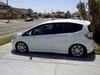

No, you don't gain camber by lowering on this suspension design. If anything, you will lose some in the front when you lower. Will be similar regardless of ride height with the bolts.

Member
Joined: Jun 2013
Posts: 629
From: USA
Actually you do gain camber when the vehicle is lowered on a Macpherson suspension. As the car is lowered, the lower control arm starts to become horizontal pushing the bottom of the tire out, creating camber.
That's the beauty of this design. The tire "straightens" out in a straight line for stability. And gains camber in turns for a larger contact patch.
The horizontal control arm because of lowering is a BAD side effect. It increases body roll because the moment arm between the center of gravity and pivot point (aka roll center). Buddy club makes Extended Lower Ball Joint to correct this. I'm surprised (and scares me) more people don't run the extended ball joints.
Over 2.5 degrees camber is a lot. You probably only see this exclusively on a track car, where you can adjust control arm length, ect..... Its more than having a lot of camber, Suspension geometry is way more important. Running a lot of camber would throw off the geometry so that any gains from camber would be lost.
If you use crash bolts:
Having the crash bolt in the top hole of the strut will straighten out the strut, with more camber. Using the lower hole will angle the bottom of the strut outwards. (Recommended)
In suspension, when you adjust/ change one thing, another spec changes. Its about balance.
Are you saying the LCA is not horizontal at rest at stock height on a Fit and in fact it is pointing upwards at the inboard mount point? I have not taken a look at a stock Fit's LCA angle at rest, but it'd be pretty disappointing if this was the case (shame on you Honda engineers!)
This is the only case in which I can see lowering a macstrut car gaining camber. When you make the LCA horizontal it will push the strut out further, and that horizontal position is where you will see the most camber. Anything other than horizontal you will lose camber as the LCA pulls the strut closer.
The mount on the strut is mobile, the mount on the car is not. In your mind, lower the mount on the car. What do you need to do the get the mount on the strut to meet with the new position? Pull the strut assembly inward (adding + camber). You cannot change the length of the LCA, so this is the only way? The top mount changes position as well, but the LCA angle basically negates camber gain from this.
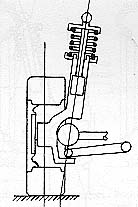
Macstrut cars lose camber during roll, which is the whole point of running more static camber, because you don't gain any in turns and actually lose a lot of camber on the outside tire. That is the whole point of this camber bolt exercise, no?
This is the only case in which I can see lowering a macstrut car gaining camber. When you make the LCA horizontal it will push the strut out further, and that horizontal position is where you will see the most camber. Anything other than horizontal you will lose camber as the LCA pulls the strut closer.
The mount on the strut is mobile, the mount on the car is not. In your mind, lower the mount on the car. What do you need to do the get the mount on the strut to meet with the new position? Pull the strut assembly inward (adding + camber). You cannot change the length of the LCA, so this is the only way? The top mount changes position as well, but the LCA angle basically negates camber gain from this.
Macstrut cars lose camber during roll, which is the whole point of running more static camber, because you don't gain any in turns and actually lose a lot of camber on the outside tire. That is the whole point of this camber bolt exercise, no?
Last edited by Wanderer.; Nov 14, 2013 at 03:25 PM.
Dammit you beat me to that reply, but yes you are correct. Extreme lowering will lose camber as the arms butterfly up. That's is why I put this camber in to fix the positive camber I used to get cornering while stock. So anyways 11k miles later my tires are still doing ok with no camber wear or feathering.
Are you saying the LCA is not horizontal at rest at stock height on a Fit and in fact it is pointing upwards at the inboard mount point? I have not taken a look at a stock Fit's LCA angle at rest, but it'd be pretty disappointing if this was the case (shame on you Honda engineers!)
This is the only case in which I can see lowering a macstrut car gaining camber. When you make the LCA horizontal it will push the strut out further, and that horizontal position is where you will see the most camber. Anything other than horizontal you will lose camber as the LCA pulls the strut closer.
The mount on the strut is mobile, the mount on the car is not. In your mind, lower the mount on the car. What do you need to do the get the mount on the strut to meet with the new position? Pull the strut assembly inward (adding + camber). You cannot change the length of the LCA, so this is the only way? The top mount changes position as well, but the LCA angle basically negates camber gain from this.
Macstrut cars lose camber during roll, which is the whole point of running more static camber, because you don't gain any in turns and actually lose a lot of camber on the outside tire. That is the whole point of this camber bolt exercise, no?
This is the only case in which I can see lowering a macstrut car gaining camber. When you make the LCA horizontal it will push the strut out further, and that horizontal position is where you will see the most camber. Anything other than horizontal you will lose camber as the LCA pulls the strut closer.
The mount on the strut is mobile, the mount on the car is not. In your mind, lower the mount on the car. What do you need to do the get the mount on the strut to meet with the new position? Pull the strut assembly inward (adding + camber). You cannot change the length of the LCA, so this is the only way? The top mount changes position as well, but the LCA angle basically negates camber gain from this.
Macstrut cars lose camber during roll, which is the whole point of running more static camber, because you don't gain any in turns and actually lose a lot of camber on the outside tire. That is the whole point of this camber bolt exercise, no?