Adding 2.5 deg of camber on the cheap...


Member
Joined: Dec 2011
Posts: 544
From: Los Angeles
I'm only lowered on Swifts and plan to use the top only for around -1.5
a recent photo I posted really shows the positive camber and body roll you get with stock set up.Jump to the 3:00 mark
Club Racer Show -- Honda Racing HPD B-Spec kit for the Honda Fit - YouTube
Last edited by zilla8; Nov 15, 2013 at 05:29 AM.

Member
Joined: Oct 2013
Posts: 96
From: US
You may be compromising the integrity of the strut assembly using camber/crash bolts in both the upper and lower strut bolt locations. Most manufacturers recommend using them in the upper position only. (Specialty Products Company | SPC Alignment | The Automotive Alignment Leaders)

^True that is what they recommend, though many of the autoX guys on here use them in both holes and have yet to see a failure. They see chassis and suspension stresses greater than most will see.
Just both sides of the coin, take it for what you will. I only got one set and will run it in the top bolt fwiw.
Just both sides of the coin, take it for what you will. I only got one set and will run it in the top bolt fwiw.

Member
Joined: Jun 2013
Posts: 629
From: USA

Dammit you beat me to that reply, but yes you are correct. Extreme lowering will lose camber as the arms butterfly up. That's is why I put this camber in to fix the positive camber I used to get cornering while stock. So anyways 11k miles later my tires are still doing ok with no camber wear or feathering.

It
Member
Joined: Jun 2013
Posts: 629
From: USA
You may be compromising the integrity of the strut assembly using camber/crash bolts in both the upper and lower strut bolt locations. Most manufacturers recommend using them in the upper position only. (Specialty Products Company | SPC Alignment | The Automotive Alignment Leaders)
Last edited by De36; Nov 19, 2013 at 12:56 PM.
Member
Joined: Jun 2013
Posts: 629
From: USA
If you look at this old video they only install 1 bolt per side in the top hole and I think you can get around -1.8 or so and even more if you also use the bottom.
I'm only lowered on Swifts and plan to use the top only for around -1.5
a recent photo I posted really shows the positive camber and body roll you get with stock set up.Jump to the 3:00 mark
Club Racer Show -- Honda Racing HPD B-Spec kit for the Honda Fit - YouTube
I'm only lowered on Swifts and plan to use the top only for around -1.5
a recent photo I posted really shows the positive camber and body roll you get with stock set up.Jump to the 3:00 mark
Club Racer Show -- Honda Racing HPD B-Spec kit for the Honda Fit - YouTube

Yes the bottom bolt will give you more camber.
They mentioned using 2 bolts on one side.... eeek. If that much camber is needed Coilover are the way to go.
If that team could run camber plates (can't because of rules) they wouldn't use the bolts.
Member
Joined: Jun 2013
Posts: 629
From: USA
^True that is what they recommend, though many of the autoX guys on here use them in both holes and have yet to see a failure. They see chassis and suspension stresses greater than most will see.
Just both sides of the coin, take it for what you will. I only got one set and will run it in the top bolt fwiw.
Just both sides of the coin, take it for what you will. I only got one set and will run it in the top bolt fwiw.
The speeds are way lower and so are the forces when auto xing so if something fails you spin out and hit a couple of cones. I agree, Auto xing will probably see more chassis twisting because its constantly rolling, not necessarily to the magnitude of the forces. Around town crash bolts should be fine too.
But at the track the forces are higher and speeds greater, reliability is more important. There are guys who go to the track with crash bolts and are fine. I personally have never, and would never.
Member
Joined: Jun 2013
Posts: 629
From: USA
Are you saying the LCA is not horizontal at rest at stock height on a Fit and in fact it is pointing upwards at the inboard mount point? I have not taken a look at a stock Fit's LCA angle at rest, but it'd be pretty disappointing if this was the case (shame on you Honda engineers!)
This is the only case in which I can see lowering a macstrut car gaining camber. When you make the LCA horizontal it will push the strut out further, and that horizontal position is where you will see the most camber. Anything other than horizontal you will lose camber as the LCA pulls the strut closer.
The mount on the strut is mobile, the mount on the car is not. In your mind, lower the mount on the car. What do you need to do the get the mount on the strut to meet with the new position? Pull the strut assembly inward (adding + camber). You cannot change the length of the LCA, so this is the only way? The top mount changes position as well, but the LCA angle basically negates camber gain from this.
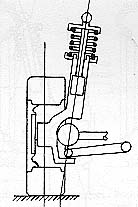
Macstrut cars lose camber during roll, which is the whole point of running more static camber, because you don't gain any in turns and actually lose a lot of camber on the outside tire. That is the whole point of this camber bolt exercise, no?
This is the only case in which I can see lowering a macstrut car gaining camber. When you make the LCA horizontal it will push the strut out further, and that horizontal position is where you will see the most camber. Anything other than horizontal you will lose camber as the LCA pulls the strut closer.
The mount on the strut is mobile, the mount on the car is not. In your mind, lower the mount on the car. What do you need to do the get the mount on the strut to meet with the new position? Pull the strut assembly inward (adding + camber). You cannot change the length of the LCA, so this is the only way? The top mount changes position as well, but the LCA angle basically negates camber gain from this.
Macstrut cars lose camber during roll, which is the whole point of running more static camber, because you don't gain any in turns and actually lose a lot of camber on the outside tire. That is the whole point of this camber bolt exercise, no?
You are correct:
"This is the only case in which I can see lowering a macstrut car gaining camber. When you make the LCA horizontal it will push the strut out further, and that horizontal position is where you will see the most camber. Anything other than horizontal you will lose camber as the LCA pulls the strut closer. "
You lost me on the last part, but heres a pic, compression=lowering


On the other hand, i'm not putting crash bolts on a 400hp car running R comps and full race suspension with teen-rate springs going into turn 1 at 130mph.

Edit: I am also not aware of any camber plates easily available for the Fit, which doesn't leave us many other choices for adding camber. Are any available? As this is indeed the much preferred method.
Last edited by Wanderer.; Nov 19, 2013 at 02:30 PM.
Member
Joined: Jun 2013
Posts: 629
From: USA
I agree, it is situation dependent. If you're doing HPDE in your 120 hp DD with club rubber I think you're going to see far less stress on a road course than you will with the same car on an autoX course, if only because the turns are far less abrupt on circuit and you're not seeing transitions like chicanes and keyholes that induce a lot of roll and travel very quickly. The tires will be overpowered and let go long before a bolt failure.
On the other hand, i'm not putting crash bolts on a 400hp car running R comps and full race suspension with teen-rate springs going into turn 1 at 130mph.
Edit: I am also not aware of any camber plates easily available for the Fit, which doesn't leave us many other choices for adding camber. Are any available? As this is indeed the much preferred method.
On the other hand, i'm not putting crash bolts on a 400hp car running R comps and full race suspension with teen-rate springs going into turn 1 at 130mph.
Edit: I am also not aware of any camber plates easily available for the Fit, which doesn't leave us many other choices for adding camber. Are any available? As this is indeed the much preferred method.
But auto xing is brutal all around on the chassis. Mostly to the constant and (like you said) abrupt rolling.
Haha, the 400hp car is a good example. Because if something doesn't feel right... it probably isn't.
Im not dumping on crash bolts, but I do suggest to use in moderation. Two bolts per side is a bad idea.
I haven't seen camber plates for the fit, and doubt it is available. But... A GOOD Coilover usually comes with camber plates:

Last edited by De36; Nov 19, 2013 at 03:45 PM.

....
having said that, now I realized that
I might need (FORCED) to buy the one with camber adjustable kind simply because
I might need more negative camber since I had to put at least 15mm to 25mm spacer (depend on which brake kit I buy) for my front wheel.
This is the one that I need:
Tryforce company ƒgƒ‰ƒCƒtƒH�[ƒXƒJƒ“ƒpƒj�[�@�yƒtƒBƒbƒg�zƒTƒXƒyƒ“ƒVƒ‡ƒ“�@’²�®Ž®ƒsƒ�ƒAƒbƒp�[ƒ}ƒEƒ“ƒg
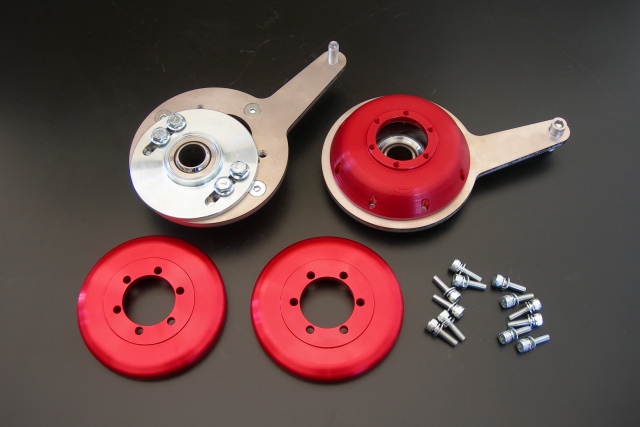
....
having said that, now I realized that
I might need (FORCED) to buy the one with camber adjustable kind simply because
I might need more negative camber since I had to put at least 15mm to 25mm spacer (depend on which brake kit I buy) for my front wheel.
This is the one that I need:
Tryforce company ƒgƒ‰ƒCƒtƒH�[ƒXƒJƒ“ƒpƒj�[�@�yƒtƒBƒbƒg�zƒTƒXƒyƒ“ƒVƒ‡ƒ“�@’²�®Ž®ƒsƒ�ƒAƒbƒp�[ƒ}ƒEƒ“ƒg
....
Member
Joined: Jun 2013
Posts: 629
From: USA
^ Oh cool. I'd be lying if I said I looked very hard. $260 USD ouch!
Eibach Springs: $230
KYB Struts: $360
Camber Plates $260
Total: $850....
Better off just buy the D2 coil overs for $850 shipped, you'll have more adjustability:
D2 Racing RS Coilover Suspension 09-10 Honda Fit
Eibach Springs: $230
KYB Struts: $360
Camber Plates $260
Total: $850....
Better off just buy the D2 coil overs for $850 shipped, you'll have more adjustability:
D2 Racing RS Coilover Suspension 09-10 Honda Fit
Last edited by De36; Nov 19, 2013 at 04:53 PM.
Member
Joined: Jun 2013
Posts: 629
From: USA
The bottom of the tire goes outward. I dont have pics but... I can calculate approx. how much the LCA pushes out the bottom of the wheel.
Assume:
Control arm length=15in
lowered height=2in
Arctan(2/15)=7.59 degree of control arm change
assuming the control arm was perfectly level.
15cos(7.59)=14.86"
15"-14.86"=.131" the bottom of the tire moves out.
.131" horizontally approx is your answer. It doesn't sound like a lot but when you turn it into degrees of camber:
arctan(.131/2)=3.7 neg degrees of camber.
Disclaimer: This is approx. I did a lot of assuming. And did not a count for change in strut angle. That depends on spring rate and the math gets messy. This is only to give you an idea how "little" changes (like lowering 2in) are big.
Assume:
Control arm length=15in
lowered height=2in
Arctan(2/15)=7.59 degree of control arm change
assuming the control arm was perfectly level.
15cos(7.59)=14.86"
15"-14.86"=.131" the bottom of the tire moves out.
.131" horizontally approx is your answer. It doesn't sound like a lot but when you turn it into degrees of camber:
arctan(.131/2)=3.7 neg degrees of camber.
Disclaimer: This is approx. I did a lot of assuming. And did not a count for change in strut angle. That depends on spring rate and the math gets messy. This is only to give you an idea how "little" changes (like lowering 2in) are big.
You will not gain camber by lowering. Not even 3". The only way you will gain camber is by adding bolts or running camber plates.
Here check this thread for example:
https://www.fitfreak.net/forums/2nd-...cs-inside.html
There are a ton of alignment printouts on here as well showing this. Lowering springs= camber will still be close to 0. You have to account for change in strut angle because the LCA angle and strut mount position cancel each other out.
That picture posted is the opposite of what's going on here. The LCA is angling down after lowering (resting). What that picture is showing is what would happen if you raised the car back up (negative camber, the greatest that can be set is when the LCA is horizontal, which is what the second picture shows). The first picture assumes the LCAs angle up significantly at rest. The whole exercise rests on that angle.
The LCA's horizontal position is the tipping point. Even if the LCA stock are rest is SLIGHTLY higher than horizontal, you won't gain much if any camber by lowering it because MOST lowering springs will drop that angle below horizontal.
I believe this is one of the 1000 reasons Swift springs are perfect for people who are just running stock shocks, no RCAs, stock LCAs, no camber bolts. It doesn't put that angle very far out of whack, and might actually help if the LCA is indeed angled up slightly. They only lower 1" or so. There are many other reasons as well, but that's another thread.
Here check this thread for example:
https://www.fitfreak.net/forums/2nd-...cs-inside.html
There are a ton of alignment printouts on here as well showing this. Lowering springs= camber will still be close to 0. You have to account for change in strut angle because the LCA angle and strut mount position cancel each other out.
That picture posted is the opposite of what's going on here. The LCA is angling down after lowering (resting). What that picture is showing is what would happen if you raised the car back up (negative camber, the greatest that can be set is when the LCA is horizontal, which is what the second picture shows). The first picture assumes the LCAs angle up significantly at rest. The whole exercise rests on that angle.
The LCA's horizontal position is the tipping point. Even if the LCA stock are rest is SLIGHTLY higher than horizontal, you won't gain much if any camber by lowering it because MOST lowering springs will drop that angle below horizontal.
I believe this is one of the 1000 reasons Swift springs are perfect for people who are just running stock shocks, no RCAs, stock LCAs, no camber bolts. It doesn't put that angle very far out of whack, and might actually help if the LCA is indeed angled up slightly. They only lower 1" or so. There are many other reasons as well, but that's another thread.
Member
Joined: Jun 2013
Posts: 629
From: USA
You will not gain camber by lowering. Not even 3". The only way you will gain camber is by adding bolts or running camber plates.
Here check this thread for example:
https://www.fitfreak.net/forums/2nd-...cs-inside.html
There are a ton of alignment printouts on here as well showing this. Lowering springs= camber will still be close to 0. You have to account for change in strut angle because the LCA angle and strut mount position cancel each other out.
That picture posted is the opposite of what's going on here. The LCA is angling down after lowering (resting). What that picture is showing is what would happen if you raised the car back up (negative camber, the greatest that can be set is when the LCA is horizontal, which is what the second picture shows). The first picture assumes the LCAs angle up significantly at rest. The whole exercise rests on that angle.
The LCA's horizontal position is the tipping point. Even if the LCA stock are rest is SLIGHTLY higher than horizontal, you won't gain much if any camber by lowering it because MOST lowering springs will drop that angle below horizontal.
I believe this is one of the 1000 reasons Swift springs are perfect for people who are just running stock shocks, no RCAs, stock LCAs, no camber bolts. It doesn't put that angle very far out of whack, and might actually help if the LCA is indeed angled up slightly. They only lower 1" or so. There are many other reasons as well, but that's another thread.
Here check this thread for example:
https://www.fitfreak.net/forums/2nd-...cs-inside.html
There are a ton of alignment printouts on here as well showing this. Lowering springs= camber will still be close to 0. You have to account for change in strut angle because the LCA angle and strut mount position cancel each other out.
That picture posted is the opposite of what's going on here. The LCA is angling down after lowering (resting). What that picture is showing is what would happen if you raised the car back up (negative camber, the greatest that can be set is when the LCA is horizontal, which is what the second picture shows). The first picture assumes the LCAs angle up significantly at rest. The whole exercise rests on that angle.
The LCA's horizontal position is the tipping point. Even if the LCA stock are rest is SLIGHTLY higher than horizontal, you won't gain much if any camber by lowering it because MOST lowering springs will drop that angle below horizontal.
I believe this is one of the 1000 reasons Swift springs are perfect for people who are just running stock shocks, no RCAs, stock LCAs, no camber bolts. It doesn't put that angle very far out of whack, and might actually help if the LCA is indeed angled up slightly. They only lower 1" or so. There are many other reasons as well, but that's another thread.
"On MacPherson strut-equipped cars, the wheel will gain negative camber under roll as long as the lower control arm is positioned less than 90 degrees relative to the strut axis. Unfortunately, many enthusiasts with MacPherson strut-equipped cars lower their cars too much and make this angle greater than 90 degrees. Beyond 90 degrees, the suspension will gain positive camber instead of negative as it compresses, significantly compromising grip" -Sport Compact Car
This is a really great read:
Source: Suspension Geometry Info - Sport Compact Car Magazine

Last edited by De36; Nov 20, 2013 at 08:17 PM.
Yes, that is exactly what i'm saying. Everything there. All that stuff hinges on the 90 degree (horizontal) LCA angle statement.
I just don't know what you're getting at with those trig calculations and where you arrive at 3.7 degrees of negative camber and what that is referring to?
You also state:
Which is confusing. It reads like you are saying lowering a Macstrut car 2" will gain 3.7 degrees of camber, which is untrue. There are no big changes to camber at rest lowering the car 2" at all. I am also confused on what spring rates have to do with camber angle at rest?
I just don't know what you're getting at with those trig calculations and where you arrive at 3.7 degrees of negative camber and what that is referring to?
You also state:
Disclaimer: This is approx. I did a lot of assuming. And did not a count for change in strut angle. That depends on spring rate and the math gets messy. This is only to give you an idea how "little" changes (like lowering 2in) are big.