


My 2013 Fit Sport data and calculations

Thread Starter
|
Member
Joined: May 2014
Posts: 24
From: Gap, PA

 My 2013 Fit Sport data and calculations
I wanted to start this thread for multiple reasons:
1. To share my "data" with other Fit owners with the hope it helps someone
2. To find out if others are getting same/better/worse mpg in similar driving conditions
3. To get advice as to how to improve my numbers while driving
4. To get advice as to how to improve my spreadsheet
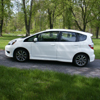
First off, my car's specs: I won't bore you all by reiterating the window sticker. My car is a 2013 Fit Sport with standard equipment package, which includes 117hp 1.5-liter 4-cyl engine, 5-speed AT, Paddle Shifters, 16x6.0 alloy wheels and P185/55R16 all-season tires. My car is OEM stock.
Second, my typical driving pattern and conditions: I live in rural PA where the rural roads include many hills with blind spots or 90° curves (slowing down necessary), and some very steep, long hills (I live on one which covers a vertical climb of 320 feet over 0.65 miles), many stop signs, and the semi-frequent need to slow down or stop to pass a horse and buggy. Typical speeds on these roads average 35-60 mph. On the other side of the coin, there are expressways where speeds can reach 70mph but also have long steep hills. My weekly commute is 100% rural roads, while I take semi-regular weekend trips to Delaware which include 80% expressway/highway driving and 20% rural roads.
Third, some constants: I never use the paddle shifters, I typically tend to go above the speed limit (oops), and I always use 87 octane gas.
Fourth, how I come to my mpg value: For each "trip" between fillups, I take my miles traveled and divide by my gallons bought. I believe that is correct but if not someone please tell me!
So, here is my data with any pertinent info noted (like was the AC running, rural vs highway travels, etc). I have not included every column in my spreadsheet:
Fill up #00: bought car with 170 miles (dealership topped off tank)
Fill up #01: travel 275 miles, bought 9.312 gallons, = 29.53 mpg (using A/C often, rural driving only)
Fill up #02: travel 273 miles, bought 9.373 gallons, = 29.13 mpg (using A/C often, rural driving only)
Fill up #03: travel 298 miles, bought 9.593 gallons, = 31.06 mpg (includes highway driving and rural driving, some A/C)
Fill up #04: travel 227 miles, bought 7.729 gallons, = 29.37 mpg (rural driving only)
Fill up #05: travel 310 miles, bought 9.582 gallons, = 32.35 mpg (includes highway driving)
Fill up #06: travel 317 miles, bought 9.444 gallons, = 33.57 mpg (includes highway driving, little A/C)
Fill up #07: (haven't filled up yet, but started coasting more)
So far, I am happy with my mpg results considering all the hills I have to climb and all the curves and buggies I have to slow down for (daily) when commuting for work. Plus, with my previous vehicles, I was lucky to hit 26mpg in my car and 15mpg in my minivan. I get better mpg when traveling on highways making my semi-regular trips to Delaware than I do driving back and forth for work. Of course, I expected those results.
After reading a few threads on here about increasing my mpg, and seeing as how I'm getting just under 30 mpg when commuting for work on the back roads, I recently began trying to coast more and brake less (i.e. "drive smarter"). I'm looking forward to my next fill up to see how this is working for me.
Thank you for reading my thread. I hope it is/was informative. I'll be updating my data chart in this post as I fill up my Fit.
In case anyone was interested, I would like to explain my Excel spreadsheet that I started the day I bought my Fit. If you're not interested, feel free to skip over the remainder of this thread.
Picture, if you will, the headings for each column A thru R: (A) Fill up #, (B) Day, (C) Time, (D) Date, (E) Duration ... (F) Odometer at start, (G) Odometer at fillup, (H) distance traveled ... (I) Start gallons, (J) gallons bought, (K) gallons unused, (L) price/gal, (M) total, (N) cost/mile, (O) mpg, (P) tank used (%), (Q) tank unused (%), (R) Notes.
Calculations in the spreadsheet for "Fill up #1" (as an example) include: E=D7-D6, H=G7-F7, K=I7-J7, M=L7*J7, N=M7/H7, O=H7/J7, P=J7/I7, Q=K7/I7.
Does anyone else keep their data in a similar spreadsheet? What other data and/or calculations do you include?
1. To share my "data" with other Fit owners with the hope it helps someone
2. To find out if others are getting same/better/worse mpg in similar driving conditions
3. To get advice as to how to improve my numbers while driving
4. To get advice as to how to improve my spreadsheet
First off, my car's specs: I won't bore you all by reiterating the window sticker. My car is a 2013 Fit Sport with standard equipment package, which includes 117hp 1.5-liter 4-cyl engine, 5-speed AT, Paddle Shifters, 16x6.0 alloy wheels and P185/55R16 all-season tires. My car is OEM stock.
Second, my typical driving pattern and conditions: I live in rural PA where the rural roads include many hills with blind spots or 90° curves (slowing down necessary), and some very steep, long hills (I live on one which covers a vertical climb of 320 feet over 0.65 miles), many stop signs, and the semi-frequent need to slow down or stop to pass a horse and buggy. Typical speeds on these roads average 35-60 mph. On the other side of the coin, there are expressways where speeds can reach 70mph but also have long steep hills. My weekly commute is 100% rural roads, while I take semi-regular weekend trips to Delaware which include 80% expressway/highway driving and 20% rural roads.
Third, some constants: I never use the paddle shifters, I typically tend to go above the speed limit (oops), and I always use 87 octane gas.
Fourth, how I come to my mpg value: For each "trip" between fillups, I take my miles traveled and divide by my gallons bought. I believe that is correct but if not someone please tell me!
So, here is my data with any pertinent info noted (like was the AC running, rural vs highway travels, etc). I have not included every column in my spreadsheet:
Fill up #00: bought car with 170 miles (dealership topped off tank)
Fill up #01: travel 275 miles, bought 9.312 gallons, = 29.53 mpg (using A/C often, rural driving only)
Fill up #02: travel 273 miles, bought 9.373 gallons, = 29.13 mpg (using A/C often, rural driving only)
Fill up #03: travel 298 miles, bought 9.593 gallons, = 31.06 mpg (includes highway driving and rural driving, some A/C)
Fill up #04: travel 227 miles, bought 7.729 gallons, = 29.37 mpg (rural driving only)
Fill up #05: travel 310 miles, bought 9.582 gallons, = 32.35 mpg (includes highway driving)
Fill up #06: travel 317 miles, bought 9.444 gallons, = 33.57 mpg (includes highway driving, little A/C)
Fill up #07: (haven't filled up yet, but started coasting more)
So far, I am happy with my mpg results considering all the hills I have to climb and all the curves and buggies I have to slow down for (daily) when commuting for work. Plus, with my previous vehicles, I was lucky to hit 26mpg in my car and 15mpg in my minivan. I get better mpg when traveling on highways making my semi-regular trips to Delaware than I do driving back and forth for work. Of course, I expected those results.
After reading a few threads on here about increasing my mpg, and seeing as how I'm getting just under 30 mpg when commuting for work on the back roads, I recently began trying to coast more and brake less (i.e. "drive smarter"). I'm looking forward to my next fill up to see how this is working for me.
Thank you for reading my thread. I hope it is/was informative. I'll be updating my data chart in this post as I fill up my Fit.
In case anyone was interested, I would like to explain my Excel spreadsheet that I started the day I bought my Fit. If you're not interested, feel free to skip over the remainder of this thread.
Picture, if you will, the headings for each column A thru R: (A) Fill up #, (B) Day, (C) Time, (D) Date, (E) Duration ... (F) Odometer at start, (G) Odometer at fillup, (H) distance traveled ... (I) Start gallons, (J) gallons bought, (K) gallons unused, (L) price/gal, (M) total, (N) cost/mile, (O) mpg, (P) tank used (%), (Q) tank unused (%), (R) Notes.
Calculations in the spreadsheet for "Fill up #1" (as an example) include: E=D7-D6, H=G7-F7, K=I7-J7, M=L7*J7, N=M7/H7, O=H7/J7, P=J7/I7, Q=K7/I7.
Does anyone else keep their data in a similar spreadsheet? What other data and/or calculations do you include?

New Member
Joined: Sep 2013
Posts: 2
From: SoCal
I've been keeping similar spreadsheets for a while now. I record the date, fill number, location of the purchase, $ amount, gallons, mileage, trip and fcd reading. From there I calculate the distance between fills, mpg, fcd % error if the trip matches the fill distance, $/gal, $/mile, and miles per day.
So far I've found the fcd is averaging about 1% over my calculated mpg in the long haul even if it is off +/-5% on any given fill. Here in SoCal traffic my '11 sport AT has averaged 28.9 mpg but I've recently changed my route for the last couple of fills and it's running 33-34 now. I had been avoiding the new route because of construction that has been going on for quite some time and while it isn't finished it's almost beyond the stretch I use so it only backs up just as I'm getting off.
I've also found that if I lend the car to someone they often "throw a few gallons in" as a thank you and it throws me off for a while. Now as a condition of borrowing the car they are required to record some minimal data if they get fuel so I at least have some numbers for the calcs and naturally they only fuel it if they absolutely have to which is fine by me.
So far I've found the fcd is averaging about 1% over my calculated mpg in the long haul even if it is off +/-5% on any given fill. Here in SoCal traffic my '11 sport AT has averaged 28.9 mpg but I've recently changed my route for the last couple of fills and it's running 33-34 now. I had been avoiding the new route because of construction that has been going on for quite some time and while it isn't finished it's almost beyond the stretch I use so it only backs up just as I'm getting off.
I've also found that if I lend the car to someone they often "throw a few gallons in" as a thank you and it throws me off for a while. Now as a condition of borrowing the car they are required to record some minimal data if they get fuel so I at least have some numbers for the calcs and naturally they only fuel it if they absolutely have to which is fine by me.
Thread Starter
|
Member
Joined: May 2014
Posts: 24
From: Gap, PA
To continue my data chart here:
Fill up #07: travel 300 miles, bought 9.599 gallons, = 31.25 mpg (rural driving, coasting more)
Fill up #08: travel 320 miles, bought 9.431 gallons, = 33.93 mpg (includes 2 round trips of highway driving)
I was hoping for a better mpg on Fill up #7, once I started driving smarter with using less braking and more coasting method. I guess these hills and frequent horse/buggy passing affects my overall numbers regardless of how I drive. But at least I'm consistently getting slightly better mpg on my semi-regular highway trips.
Fill up #07: travel 300 miles, bought 9.599 gallons, = 31.25 mpg (rural driving, coasting more)
Fill up #08: travel 320 miles, bought 9.431 gallons, = 33.93 mpg (includes 2 round trips of highway driving)
I was hoping for a better mpg on Fill up #7, once I started driving smarter with using less braking and more coasting method. I guess these hills and frequent horse/buggy passing affects my overall numbers regardless of how I drive.
But at least I'm consistently getting slightly better mpg on my semi-regular highway trips.

Member
Joined: Jan 2012
Posts: 514
From: AL
Those numbers don't look out of line given the type of driving you described. It may even tick up a MPG or two as you get the car broken in. My driving is usually about 80% interstate with the cruise set on 70 and 20% back roads/city and I'm averaging 34-35 MPG on my 2012 Sport A/T. The highest I've ever gotten on a tank has been 38 MPG, but that was all interstate cruising at 70 with some light distance drafting behind big trucks. Getting above 40MPG is completely achievable, but pretty much requires almost all highway driving between 50 - 60MPH.
-Dustin
-Dustin


Thread
Thread Starter
Forum
Replies
Last Post
Alco RS-1
2nd Generation GE8 Specific Fit Photos & Videos Sub-Forum
0
Jul 9, 2016 08:08 PM

