When you click on links to various merchants on this site and make a purchase, this can result in this site earning a commission. Affiliate programs and affiliations include, but are not limited to, the eBay Partner Network.
Here it is, received the kit today. After some investigation of the wires, because this kit does not come instructions and it's in Chinese, I was able to understand the wiring.
This is the main controller for the lights and it's labeled in Chinese . With the help of google translate, I was able to understand what the blue and gray wires do. These two wires can be hooked up to the turn signals so when your turning they can flash also. I deleted these wires by cutting them short
and wrapping them in electrical tape and stuffing them in the control box.
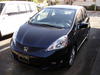
Now it was time to test fit.
OFF
ON
Next, the bumper is coming off to run wires and find a signal wire to attach a relay to for the lights.
Stay tuned for more updates.
I do recommend if you want to buy this kit, have it installed by a pro.
i'm sure he triggers it off a switched fuse. removing the bumper cover is easy.
I googled "switched fuse" but didn't find anything that looked like it might be useful. Not sure what you mean by "trigger." What you need to do is get negative and positive terminals for the drls, connected to ground and a source of positive voltage, with either the neg or pos voltage being supplied through a switch.
Yes I've removed the bumper cover. It is not hard. It is light enough for me to carry by myself. No problem with physical installation of the DRL's
But then you need electrical connection. You need to have a switch in the cabin to operate the drls. Let's say you connect one wire from the drls to a convenient ground point. That takes care of the negative side. Then you have to get a positive voltage first to a switch, and then from the other terminal of the switch to the drls. Without a wiring diagram, how do you know where you can find a suitable positive connection - one where you know what is connected to it already, if anything, and how many total amps they draw, so that the addition of the drl's amperage requirements won't overload that circuit and blow its fuse?
If I had an EX with fog lamps I could perhaps tap into the positive voltage for the fog lamps, disconnect the fog lamps, and use the switch that is already in place in the cabin, to turn on the drls instead of the fog lamps. But my LX does not have fog lamps or a fog lamp switch.
Last edited by nomenclator; Oct 17, 2017 at 05:03 PM.
switched fuse = fuse for a circuit that turns on when the ignition is switched ON.
trigger = you use a relay and when the trigger receives 12v from the switched fuse (ignition is in the ON position), direct wired 12v is sent to DRL. i suppose you can also use the DRL circuit as trigger as well. or even direct wire to a switched fuse if amperage is like under 10A.
switched fuse = fuse for a circuit that turns on when the ignition is switched ON.
trigger = you use a relay and when the trigger receives 12v from the switched fuse (ignition is in the ON position), direct wired 12v is sent to DRL. i suppose you can also use the DRL circuit as trigger as well. or even direct wire to a switched fuse if amperage is like under 10A.
anyway, many ways around it to wire.
I am sure there are many ways. I am not sure I can find them without a wiring diagram. I doubt you need a relay. These are LEDs and they don't have the amount of light output that headlights have so their current flow will be pretty low. If the 2 of them consume 16 watts - and i suspect they actually consume less that that - on a 12 volts circuit that would be 1.3 amps. That is not going to need a relay. I'm not sure what gauge wire you will need for that many amps but it will be small enough to be easily routed anywhere. I suppose I ought to look it up. For 10 feet of wire, carrying 2 amps at 12 volts, it only needs to be 18 gauge - same guage as each of the 2 conductors in household lamp wire. http://www.offroaders.com/technical/...gauge-to-amps/ Actually at 2 amps you can go as much as 25 feet before needing a larger gauge. There is also the issue of the switch. I could be wrong but I think a light duty switch should be able to handle 2 amps. 9003 halogens require about 60 watts each, so 120 watts, so 10 amps at 12 volts. You can use 18 gauge wire up to 10 feet, but think probably the little switch on the steering wheel stalk may not handle 10 amps, therefore a relay is used. Or perhaps you want the switch on the stalk to be connected to the computer, at low amperage, with 22 gauge wire, and the computer connected to the low amperage side of a relay. On newer cars with computers lots more things work off relays. On older cars, I think parking lights, brake lights, backup lights etcetera, all were wired in without a relay. Turn signal lights need a relay to do the flashing. Headlights needed a relay because of their high current flow.
Last edited by nomenclator; Oct 17, 2017 at 06:36 PM.





 . With the help of google translate, I was able to understand what the blue and gray wires do. These two wires can be hooked up to the turn signals so when your turning they can flash also. I deleted these wires by cutting them short




 or even direct wire to a switched fuse if amperage is like under 10A.