


Seatbelts that don't behave!

Guest
Posts: n/a
Seatbelts that don't behave!
I've had a problem with my seatbelts, and it's started to annoy me. everytime i go to check my blind spot, the gosh dang seatbelt goes into "safety mode" and locks up on me, making it difficult for me to make sure the coast is clear.
i like wearing my seatbelt, but having that on, and having a clear view of your blind spot when needed, is very important as well.
and i hate that damn beeping when you don't wear it.
does this happen to anyone else?
i like wearing my seatbelt, but having that on, and having a clear view of your blind spot when needed, is very important as well.
and i hate that damn beeping when you don't wear it.
does this happen to anyone else?

No, i have never experienced this problem, and i check my blind spot EVERY TIME i merge lol...Maybe when you turn your body to look, you move it too fast and the seatbelt thinks your in a accident? thats all i could think of..

Member

Joined: May 2007
Posts: 306
From: Texarkana, TX
Mine does that, too. I hate it. I usually end up lurching my shoulders forward and back quickly a few times until the seatbelt lets go. I know I look like I have spasms or am having a seizure - but it usually lets go. My wife laughs when it happens


No more blind spots.
I think this might help your situation by eliminating the need to lean forward and check your blind spot. I have been driving with this mirror setup for a few years now and I love it. It definitely takes some getting used to since we like to use the side mirrors to check behind us in addition to the rear view mirror, but I swear it works wonders.
1. The first step is to adjust the rear-view mirror to do exactly that - give you a view directly to the rear. Position it so that it best covers your view straight out the rear window. Don't bother tilting it to one side or the other to assist with your view of traffic to either side of your car. That's what the side mirrors are for.
2. Next, lean your head until it almost touches the driver's side window. Then, adjust your left side mirrors so that you can just barely see the side of your car, and no more than that.
3. Lean your head to the right towards the middle of the car and adjust the right side mirror so that you can just barely see the right side of your car. You should NOT be able to see the side of your car when your head is perfectly upright. After all, why would you want to? When was the last time your own car ran into itself.
4. Check for blind spots by doing the following: While driving along a four-lane road in the right lane, note a vehicle in the left lane coming up to pass you from behind. Without moving your head, glance in the rear-view mirror and follow it as it approaches your car in the left lane. Just before it disappears from your view in the rear-view mirror, glance to the left side mirror. There it is. Now follow that vehicle in the side mirror as it begins to pass you. Then, just before it disappears from the side mirror, you should see it with your peripheral vision. Notice that without even turning your head, you never had a blind-spot. Then try it with the right side mirror. Watch as you pass a vehicle travelling in the right lane go from your peripheral vision, to your right side mirror, to your rear-view mirror. Again, no blind-spot. If there is a blind spot for even a fraction of a second, your side mirror adjustment needs some fine-tuning.
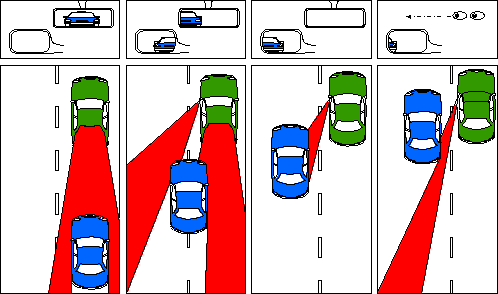
1. The first step is to adjust the rear-view mirror to do exactly that - give you a view directly to the rear. Position it so that it best covers your view straight out the rear window. Don't bother tilting it to one side or the other to assist with your view of traffic to either side of your car. That's what the side mirrors are for.
2. Next, lean your head until it almost touches the driver's side window. Then, adjust your left side mirrors so that you can just barely see the side of your car, and no more than that.
3. Lean your head to the right towards the middle of the car and adjust the right side mirror so that you can just barely see the right side of your car. You should NOT be able to see the side of your car when your head is perfectly upright. After all, why would you want to? When was the last time your own car ran into itself.
4. Check for blind spots by doing the following: While driving along a four-lane road in the right lane, note a vehicle in the left lane coming up to pass you from behind. Without moving your head, glance in the rear-view mirror and follow it as it approaches your car in the left lane. Just before it disappears from your view in the rear-view mirror, glance to the left side mirror. There it is. Now follow that vehicle in the side mirror as it begins to pass you. Then, just before it disappears from the side mirror, you should see it with your peripheral vision. Notice that without even turning your head, you never had a blind-spot. Then try it with the right side mirror. Watch as you pass a vehicle travelling in the right lane go from your peripheral vision, to your right side mirror, to your rear-view mirror. Again, no blind-spot. If there is a blind spot for even a fraction of a second, your side mirror adjustment needs some fine-tuning.
Guest
Posts: n/a
I think this might help your situation by eliminating the need to lean forward and check your blind spot. I have been driving with this mirror setup for a few years now and I love it. It definitely takes some getting used to since we like to use the side mirrors to check behind us in addition to the rear view mirror, but I swear it works wonders.
1. The first step is to adjust the rear-view mirror to do exactly that - give you a view directly to the rear. Position it so that it best covers your view straight out the rear window. Don't bother tilting it to one side or the other to assist with your view of traffic to either side of your car. That's what the side mirrors are for.
2. Next, lean your head until it almost touches the driver's side window. Then, adjust your left side mirrors so that you can just barely see the side of your car, and no more than that.
3. Lean your head to the right towards the middle of the car and adjust the right side mirror so that you can just barely see the right side of your car. You should NOT be able to see the side of your car when your head is perfectly upright. After all, why would you want to? When was the last time your own car ran into itself.
4. Check for blind spots by doing the following: While driving along a four-lane road in the right lane, note a vehicle in the left lane coming up to pass you from behind. Without moving your head, glance in the rear-view mirror and follow it as it approaches your car in the left lane. Just before it disappears from your view in the rear-view mirror, glance to the left side mirror. There it is. Now follow that vehicle in the side mirror as it begins to pass you. Then, just before it disappears from the side mirror, you should see it with your peripheral vision. Notice that without even turning your head, you never had a blind-spot. Then try it with the right side mirror. Watch as you pass a vehicle travelling in the right lane go from your peripheral vision, to your right side mirror, to your rear-view mirror. Again, no blind-spot. If there is a blind spot for even a fraction of a second, your side mirror adjustment needs some fine-tuning.
1. The first step is to adjust the rear-view mirror to do exactly that - give you a view directly to the rear. Position it so that it best covers your view straight out the rear window. Don't bother tilting it to one side or the other to assist with your view of traffic to either side of your car. That's what the side mirrors are for.
2. Next, lean your head until it almost touches the driver's side window. Then, adjust your left side mirrors so that you can just barely see the side of your car, and no more than that.
3. Lean your head to the right towards the middle of the car and adjust the right side mirror so that you can just barely see the right side of your car. You should NOT be able to see the side of your car when your head is perfectly upright. After all, why would you want to? When was the last time your own car ran into itself.
4. Check for blind spots by doing the following: While driving along a four-lane road in the right lane, note a vehicle in the left lane coming up to pass you from behind. Without moving your head, glance in the rear-view mirror and follow it as it approaches your car in the left lane. Just before it disappears from your view in the rear-view mirror, glance to the left side mirror. There it is. Now follow that vehicle in the side mirror as it begins to pass you. Then, just before it disappears from the side mirror, you should see it with your peripheral vision. Notice that without even turning your head, you never had a blind-spot. Then try it with the right side mirror. Watch as you pass a vehicle travelling in the right lane go from your peripheral vision, to your right side mirror, to your rear-view mirror. Again, no blind-spot. If there is a blind spot for even a fraction of a second, your side mirror adjustment needs some fine-tuning.
I think this might help your situation by eliminating the need to lean forward and check your blind spot. I have been driving with this mirror setup for a few years now and I love it. It definitely takes some getting used to since we like to use the side mirrors to check behind us in addition to the rear view mirror, but I swear it works wonders.
1. The first step is to adjust the rear-view mirror to do exactly that - give you a view directly to the rear. Position it so that it best covers your view straight out the rear window. Don't bother tilting it to one side or the other to assist with your view of traffic to either side of your car. That's what the side mirrors are for.
2. Next, lean your head until it almost touches the driver's side window. Then, adjust your left side mirrors so that you can just barely see the side of your car, and no more than that.
3. Lean your head to the right towards the middle of the car and adjust the right side mirror so that you can just barely see the right side of your car. You should NOT be able to see the side of your car when your head is perfectly upright. After all, why would you want to? When was the last time your own car ran into itself.
4. Check for blind spots by doing the following: While driving along a four-lane road in the right lane, note a vehicle in the left lane coming up to pass you from behind. Without moving your head, glance in the rear-view mirror and follow it as it approaches your car in the left lane. Just before it disappears from your view in the rear-view mirror, glance to the left side mirror. There it is. Now follow that vehicle in the side mirror as it begins to pass you. Then, just before it disappears from the side mirror, you should see it with your peripheral vision. Notice that without even turning your head, you never had a blind-spot. Then try it with the right side mirror. Watch as you pass a vehicle travelling in the right lane go from your peripheral vision, to your right side mirror, to your rear-view mirror. Again, no blind-spot. If there is a blind spot for even a fraction of a second, your side mirror adjustment needs some fine-tuning.
1. The first step is to adjust the rear-view mirror to do exactly that - give you a view directly to the rear. Position it so that it best covers your view straight out the rear window. Don't bother tilting it to one side or the other to assist with your view of traffic to either side of your car. That's what the side mirrors are for.
2. Next, lean your head until it almost touches the driver's side window. Then, adjust your left side mirrors so that you can just barely see the side of your car, and no more than that.
3. Lean your head to the right towards the middle of the car and adjust the right side mirror so that you can just barely see the right side of your car. You should NOT be able to see the side of your car when your head is perfectly upright. After all, why would you want to? When was the last time your own car ran into itself.
4. Check for blind spots by doing the following: While driving along a four-lane road in the right lane, note a vehicle in the left lane coming up to pass you from behind. Without moving your head, glance in the rear-view mirror and follow it as it approaches your car in the left lane. Just before it disappears from your view in the rear-view mirror, glance to the left side mirror. There it is. Now follow that vehicle in the side mirror as it begins to pass you. Then, just before it disappears from the side mirror, you should see it with your peripheral vision. Notice that without even turning your head, you never had a blind-spot. Then try it with the right side mirror. Watch as you pass a vehicle travelling in the right lane go from your peripheral vision, to your right side mirror, to your rear-view mirror. Again, no blind-spot. If there is a blind spot for even a fraction of a second, your side mirror adjustment needs some fine-tuning.
wow amn thas pretty sick... im def. gonna try that thnks

Thread
Thread Starter
Forum
Replies
Last Post
TorontoBoy
3rd Generation (2015+)
21
Nov 7, 2016 09:26 AM
