


Rust Protection

Thread Starter
|
New Member

Joined: Sep 2007
Posts: 12
From: Barrie Ont Canada
Rust Protection
Ok so heres the deal, when i got my fit i got the symtech electronic rust control, and i have looked all over the internet for info on it and can not find any. I don't think it works as well the dealer said. He told me he got it on his car and he had a lil rust spot on his hood and it didnt get any worse after he installed the rust protector. Now my problem is that on my driver side fender there is exposed metal and its rusting. My brake rotors all rusted and my engine is starting to rust, I think it's a total SCAM! And another thing is this electronic rust control has these pads connected/stuck on my car body to provide the electronic signal, if you will, that provides rust protection, and they are stuck on a painted part of the body, that does not provide a good enough bond because any one knows paint is gonna stop the metal underneath from getting the electronic "pulse" but what im gettin at here is, Does anyone have this on there car and its not rusting? or is it a big waste of money? And does anyone have any info about these Sym_Tech rust protectors? any info / advice would be greatly appreciated, thanks. -Tom


i hear they work on bridges where all the metals are pretty much
connected together and have electric continuity.
im dont think those pulses are RF pulses right?
ground is ground on a car so theoretically it SHOULD work but
maybe salt or watever is rusting at a faster pace than wat
the pulse can handle.... not sure. i never buy those things.
connected together and have electric continuity.
im dont think those pulses are RF pulses right?
ground is ground on a car so theoretically it SHOULD work but
maybe salt or watever is rusting at a faster pace than wat
the pulse can handle.... not sure. i never buy those things.

super corrosive...even more so than roadsalt from wat i hear.
best is to try to wash your ride as much as possible.

New Member
Joined: Jan 2008
Posts: 4
From: Montreal, CA
The galvanization on Hondas hasn't really stood up to the Canadian climate that well until recent years. In anycase, these electronic anti rust devices do work. Like someone mentioned they are commonly found on metal bridges as well as the metal hull of ships. Basically anything metal that is exposed to the elements can benefit form this type of device. That being said, the reason why your brake rotors and engine are showing signs of rust is because they are isolated from the body of the car(engines mounts/suspension bushings) In order for these things to work at maximum efficiency they should also be connected to bare metal.
Tomsfit, since you're from Canada, you'll appreciate this.
Canadian Tire
Tomsfit, since you're from Canada, you'll appreciate this.
Canadian Tire
Last edited by mtlFit; Jan 26, 2008 at 05:55 PM.


Member
Joined: Apr 2009
Posts: 2,421
From: Upstate New York

I had one of those on a '92 Dodge Shadow. That car also rusted faster than any car I've ever owned. Since I didn't have a second '92 Shadow without it as a "control", I can't say whether it worked or made things worse.
In theory, these things DO work, and are used for structures such as bridges and battleships, but I suspect there is a lot more electrical current and anodic metal electrodes (zinc) being used.
"Rust Evader" and "Rust Buster" are a couple of brand names they used to be sold under. You might try googling those names.
In theory, these things DO work, and are used for structures such as bridges and battleships, but I suspect there is a lot more electrical current and anodic metal electrodes (zinc) being used.
"Rust Evader" and "Rust Buster" are a couple of brand names they used to be sold under. You might try googling those names.


Member
Joined: Apr 2008
Posts: 253
From: Parma Heights, OH, USA
Holy Cow! Did you see the hole in the fender that the Canadian Tire box repaired!
I live right across the river from Sarnia, ON I gotta get me one of them.
Seriously, these should work if they are installed correctly. They use them on outboards and I/O's designed for use in saltwater. I have also heard that the liquid spray that they put down before a snow storm is more corrosive than the salt they put down after the storm. I haven't found any details to support this. If anyone knows of a study please post it.
I live right across the river from Sarnia, ON I gotta get me one of them.
Seriously, these should work if they are installed correctly. They use them on outboards and I/O's designed for use in saltwater. I have also heard that the liquid spray that they put down before a snow storm is more corrosive than the salt they put down after the storm. I haven't found any details to support this. If anyone knows of a study please post it.

Member
Joined: Apr 2009
Posts: 93
From: Canada
A friend who is a Phd and works with metal corrosion, says those devices will not work on cars. I think it has to do with grounding.
I live in the rust belt of Southern Ontario and you do need rust protection if you want to keep your car for more then five years. I use Krown oil spray every year. I have a 16 year old Honda with no rust on it which has been sprayed every year. Krown cost around $100. a treatment.
I live in the rust belt of Southern Ontario and you do need rust protection if you want to keep your car for more then five years. I use Krown oil spray every year. I have a 16 year old Honda with no rust on it which has been sprayed every year. Krown cost around $100. a treatment.
Member
Joined: Mar 2008
Posts: 587
From: Wash DC Metro
Works but not on cars
The more accurate name for what you're trying to do is "cathodic protection". It is electrically based and requires a complete circuit to provide protection meaning it has to be grounded, to the ground. It works on bridges and boats because those are grounded. You can't ground the metal in a car to anything but itself because the tires are insulators. It might work if you dragged a piece of grounding metal behind the car.
Do a search for 'cathodic protection'. You'll find lots on the internet.
Do a search for 'cathodic protection'. You'll find lots on the internet.

Member
Joined: Apr 2008
Posts: 60
From: Eastern PA
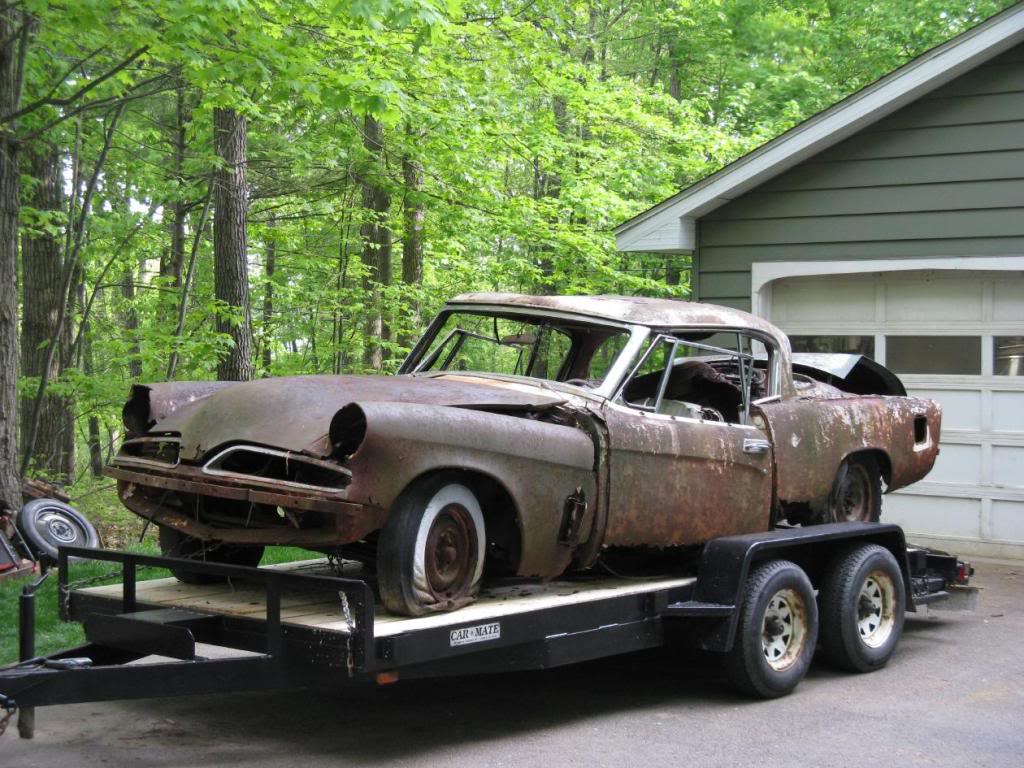
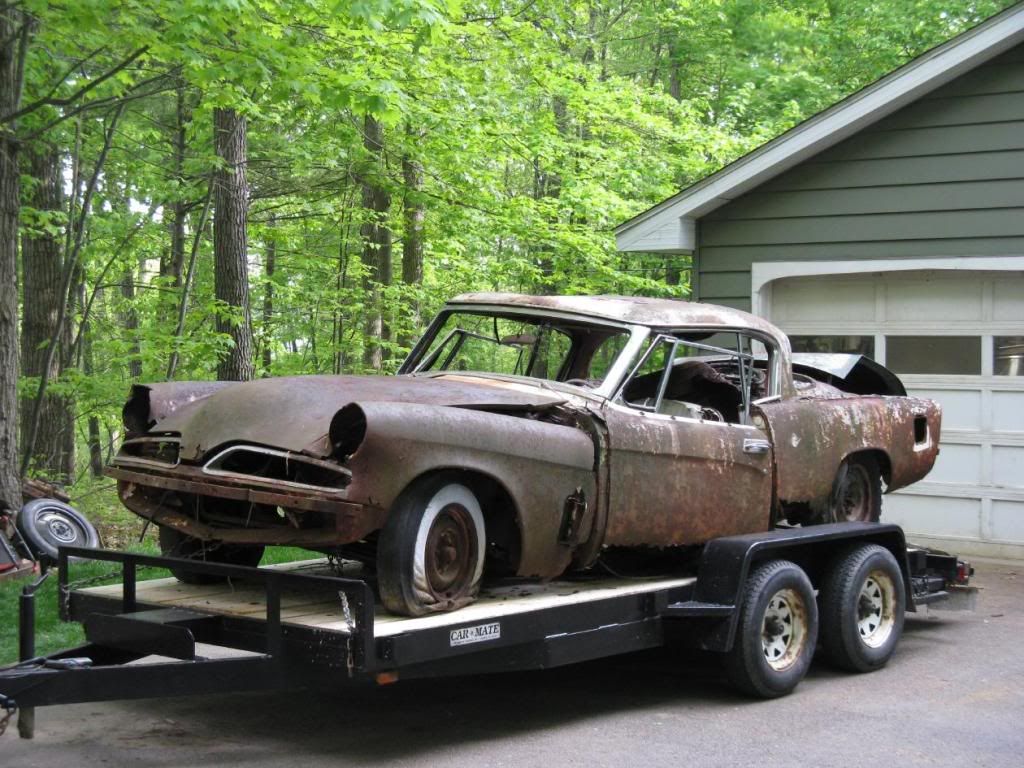
Yikes, you might have something like this in your future...not the car but the rust.
Best thing to do is wash you car when you can and limit its exposure to those corrosive agents. If you are really worried - find a beater.
Best thing to do is wash you car when you can and limit its exposure to those corrosive agents. If you are really worried - find a beater.
Member
Joined: Apr 2009
Posts: 2,421
From: Upstate New York
Wow, a '53 Studebaker Starliner. I remember those. Even back in the '50s, Studebakers were famous for rusting out early.
Member
Joined: Apr 2008
Posts: 60
From: Eastern PA
Some would even say they came from the factory with the rust already installed...
From what I understand there were not many cars made during the 1950s (and '60s for that matter) that were not bad about rusting out.
From what I understand there were not many cars made during the 1950s (and '60s for that matter) that were not bad about rusting out.
Member
Joined: Apr 2009
Posts: 2,421
From: Upstate New York
That's true, cars of that era had little in the way of factory corrosion protection, but even for their time, Studebakers were infamous for early rustout. those front fender mounted fresh-air intakes allowed all kinds of corrosive road splash into the fenders.
The worst era for rust was the early 70's. Highway departments drastically increased the use of salt while car companies stopped using zinc primer dips (or any kind of corrosion protection) to cut costs. One big reason for the high prices brought by clean early 70's musclecars is that so few have survived unrusted.
The worst era for rust was the early 70's. Highway departments drastically increased the use of salt while car companies stopped using zinc primer dips (or any kind of corrosion protection) to cut costs. One big reason for the high prices brought by clean early 70's musclecars is that so few have survived unrusted.
Last edited by Uncle Gary; Jun 12, 2009 at 03:33 PM.

See this thread here, post #7:
Just got an e-mail from Krown. The product is sold at Internation trucks in the US
International Truck and Engine Corporation
International Truck and Engine Corporation

It's the KL73 Lubricant
Krown Industrial

Thread
Thread Starter
Forum
Replies
Last Post
anti, buy, device, electric, electrical, fitrust, honda, international, kl73, krown, online, protection, rust, symtech, truck


