


Mods that increase fuel efficiency

Member

Joined: Jan 2008
Posts: 4,371
From: NC USA
Actually, the intake air valve pulled air in from over the hot exhaust manifold during warmup so the engine would run better and also have better emissions during warmup. Once the engine compartment warmed uop the valve closed so the intake would not pull in really hot air that hurt both performance (inc mpg) and emissions,

Ok, i may be wrong about this but here we go:
***The intake portion of this assumes the intake air temperature is the same as stock (so CAI's may actually draw denser air, thus more air, yadda, yadda, yadda*****
adding an intake, exhaust or header does not necessarily mean more air is going into the engine. Think about it, the engine is a 1.5 liter (USDM Fit) correct? That means that inside the cylinder there are 1.5 Liters of volume that will be filled with air after the engine completes the intake stroke. You can not put more than 1.5 Liters of air into a 1.5L engine without forcing the air in (ie turbo or super charger).
So keeping this in mind the conclusion you will come to is that adding I/H/E will not actually flow more air. Then the question must be raised: well then how is performanced gained by doing these mods? Well, the engine isn't bringing in more air, it is just pumping in and out the air that is inside it. If the engine is pumping air, that means there is a power loss associated with moving the air. Basically what ever cylinder is on the powerstroke is not only using the power it generates to turn the wheels, some of this power goes to forcing air into and out of the engine.
Now if you take a look at how fluid flow works, flow is inhibited by tight turns (like 90 deg bends), ledges (ie exhaust port is larger than header primary), and things like generally unsmooth materials (ie ribs in the intake pipe).
Knowing this, you can say that these things cause resistance in the flow path (much like when trying to move electricity, resistance = bad) Knowing that the more resistance there is in the flow path the more power the engine must use to bring the air in or push it out, leads to the conclusion that by decreasing this resistance more power will be transported to the wheels.
Keep in mind that at now point did the engine actually take in more air...
***********Disclaimer************
I am an mechanical engineer, but not some engine genius, this is just a thought process that I went through when trying to decide whether or not to mod my Fit. All of this could be wrong and I am open to hearing other peoples opinions, I would love to discuss this theory.
Last edited by slow-as-heck; May 20, 2008 at 12:12 PM.

Senior Member
Joined: May 2006
Posts: 450
From: Austin, TX
Turbochargers:
Turbos will be more efficient at making POWER. In general, a turbocharged engine will make more power given the same amount of fuel as a naturally aspirated engine. This means it's more efficient... at making power. In general, it will not help with fuel economy. I know VW's turbo engines have an intake bypass system, so that when cruising, the compressor is bypassed. I would make the SWAG that the wastegate is also closed.
CAI:
Cooler air means it's more dense. Meaning you can get more air molecules into the cylinder. However, more air needs more fuel to maintain the air:fuel ratio.
Vice, a CAI can reduce the amount of work the engine has to do to pull in air.
Warm Air Intake:
Warmer air is less dense, thus will require less fuel to attain the proper air:fuel ratio.
I think the best system would be a switching system. One that will switch between cooler outside air when accelerating, and warmer engine bay air to get more efficiency when cruising.
But we must all remember THE #1 thing that affects fuel economy:
YOU
Turbos will be more efficient at making POWER. In general, a turbocharged engine will make more power given the same amount of fuel as a naturally aspirated engine. This means it's more efficient... at making power. In general, it will not help with fuel economy. I know VW's turbo engines have an intake bypass system, so that when cruising, the compressor is bypassed. I would make the SWAG that the wastegate is also closed.
CAI:
Cooler air means it's more dense. Meaning you can get more air molecules into the cylinder. However, more air needs more fuel to maintain the air:fuel ratio.
Vice, a CAI can reduce the amount of work the engine has to do to pull in air.
Warm Air Intake:
Warmer air is less dense, thus will require less fuel to attain the proper air:fuel ratio.
I think the best system would be a switching system. One that will switch between cooler outside air when accelerating, and warmer engine bay air to get more efficiency when cruising.
But we must all remember THE #1 thing that affects fuel economy:
YOU
Member
Joined: Oct 2007
Posts: 388
From: Amish Paradise, PA
So very true. Everyone should be shooting for mid to upper 40 MPG stock before worrying about any kind of mod for fuel economy.
Member
Joined: Jan 2008
Posts: 4,371
From: NC USA
There is a moot between turbos and supervchargers. Both consume power from the engine output, not to mention turbo lag.
Any forced induction engine will consume more fuel than naturally aspirated simply because more power must have more fuel. If you didn't use the forced air it would be naturally aspirated.
Any forced induction engine will consume more fuel than naturally aspirated simply because more power must have more fuel. If you didn't use the forced air it would be naturally aspirated.
Senior Member
Joined: May 2006
Posts: 450
From: Austin, TX
There is a moot between turbos and supervchargers. Both consume power from the engine output, not to mention turbo lag.
Any forced induction engine will consume more fuel than naturally aspirated simply because more power must have more fuel. If you didn't use the forced air it would be naturally aspirated.
Any forced induction engine will consume more fuel than naturally aspirated simply because more power must have more fuel. If you didn't use the forced air it would be naturally aspirated.
Superchargers need to be cranked by the engine, which does take lots of energy.
Turbochargers are generally going to be more efficient since they do not take a lot of power to generate gains.
Senior Member
Joined: May 2006
Posts: 450
From: Austin, TX
It's pretty much a RULE when it comes to forced induction - fuel economy suffers for power gains.
Member
Joined: Jan 2008
Posts: 4,371
From: NC USA
Uh, have you tried putting a restriction in your Porsche's exhaust. The exhaust turbine has to be driven by exhaust gases and pushing that turbine takes a lot of work. Remember its resisting turning by the air on the other end resisting being pushed. And imposes significant back pressure on the exhaust, which of course eats power. For either superchargers and Turbochargers there is no free lunch.

Member
Joined: Mar 2008
Posts: 124
From: PDX
I dunno about that. If anything Honda went back to its roots and designs of the 80's and early 90’s for the Fit. The car over all is not really all that different in any way then say my 87 CRX Si.
Take say a 93 del Sol S or a 93 Civic hatch DX and change it a bit and you got a Fit.

i agree. they weren't ****ing around when they made teh intake and exhaust system. they did research to make them perform well, keep noise down, and get good fuel economy

Member
Joined: Apr 2007
Posts: 62
From: Lake Worth, FL

Exactly so what we have to play with is sacrificing noise and comfort for economy. Which things like a new intake (maybe), exaust, high psi tires, etc can do.

New Member
Joined: May 2006
Posts: 8
From: Central Illinois
I adjusted the nut between the stearing wheel and gas this weekend and yesterday while driving my wife's fit. On mixed driving I was able to run 342 miles on 8.2 gallons of gas for an average of 41.2 mpg on an automatic 07. Not too bad for just reading a few articles on cleanmpg.com and implimenting them into my driving. Every fill up we have ever done in the fit has netted 32mpg regardless if we were doing all highway, all city or mixed driving. This was a 30% increase in fuel ecconmy!!!! wow!!!
A few of the techniques I used were: Slowing down (duh) Yes, it took me longer to get to my destinations. However, with gas at 4.00 a gallon, I can not justify the cost of speeding. I drove at or just below the speed limit for the entire take of gas.
Moving to neutral and coasting down hills, to stop lights/signs.
Letting up off of the break at green lights for a second or two before pressing on the gas. This lets the car begin to move at idle without adding any extra gas usage.
Things I still plan to do:
Fill tires to max rated PSI
Getta Scan gauge.
Also, I am using these techniques on my vehicle, a 2006 Nissan Frontier. I am currently seeing an increase in fuel ecconmy, I usually only see about 270 miles per 18gallons, for only 15mpg average. However I am currenlty at just under a 1/2 tank with 240 miles I'd like to see 360 miles per 18 gallons for 20mpg.
Save your money and just slow down you don't need a CAI to give you better FE.
A few of the techniques I used were: Slowing down (duh) Yes, it took me longer to get to my destinations. However, with gas at 4.00 a gallon, I can not justify the cost of speeding. I drove at or just below the speed limit for the entire take of gas.
Moving to neutral and coasting down hills, to stop lights/signs.
Letting up off of the break at green lights for a second or two before pressing on the gas. This lets the car begin to move at idle without adding any extra gas usage.
Things I still plan to do:
Fill tires to max rated PSI
Getta Scan gauge.
Also, I am using these techniques on my vehicle, a 2006 Nissan Frontier. I am currently seeing an increase in fuel ecconmy, I usually only see about 270 miles per 18gallons, for only 15mpg average. However I am currenlty at just under a 1/2 tank with 240 miles I'd like to see 360 miles per 18 gallons for 20mpg.
Save your money and just slow down you don't need a CAI to give you better FE.
Last edited by Imprez25; May 21, 2008 at 10:56 AM.

Description and pictures, from last year, are here:http://s89686473.onlinehome.us/airtabs-test.html
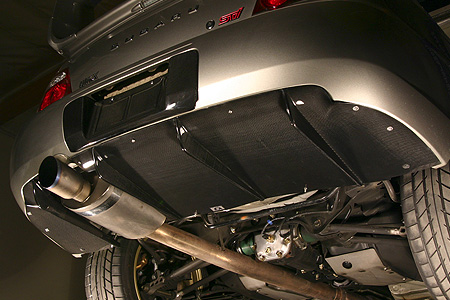
It occurs to me that maybe they influenced the wake vortex system somewhat, and the change from the underbody aluminum interacts with them to push it into some totally different mode. Aerodynamics can be unpredictable that way. So, maybe some large part of the huge increase in fuel economy on my first fill-up is for real.
By popular demand, I'll do a proper A-B-A test on the weekend.
It occurs to me that maybe they influenced the wake vortex system somewhat, and the change from the underbody aluminum interacts with them to push it into some totally different mode. Aerodynamics can be unpredictable that way. So, maybe some large part of the huge increase in fuel economy on my first fill-up is for real.
By popular demand, I'll do a proper A-B-A test on the weekend.
Senior Member
Joined: May 2006
Posts: 450
From: Austin, TX
Don't do that.
Neutral means your engine is idling. Idling burns gas.
Just lift off the throttle, and as long as you're above about 1100RPM in the auto, it will cut off fuel to the engine. Burning no gas is more efficient than burning a little gas.
Get a ScanGauge, you'll see it happening if you watch the fuel consumption gauge. (drops to 0.00GPH - gallons per hour)
Neutral means your engine is idling. Idling burns gas.
Just lift off the throttle, and as long as you're above about 1100RPM in the auto, it will cut off fuel to the engine. Burning no gas is more efficient than burning a little gas.
Get a ScanGauge, you'll see it happening if you watch the fuel consumption gauge. (drops to 0.00GPH - gallons per hour)