When you click on links to various merchants on this site and make a purchase, this can result in this site earning a commission. Affiliate programs and affiliations include, but are not limited to, the eBay Partner Network.
2nd Generation GE8 Specific DIY: Repair & Maintenance Sub-ForumThreads discussing repairs and maintenance you can do yourself on the 2nd generation Honda Fit (GE8)
If you haven't used a torque wrench before or if you have a new one, test it a few times outside the car to get a feel for how it works. As NKG notes, 20lbs/ft doesn't leave a lot of margin for error
Courtesy of the lovely Mrs.Velvet of Escondido Honda, CA. The date is even on there.
I also attached the full procedure for spark plug biz. I know its around the forum elsewhere, but searching.. just sucks.. so. just print that biz out.
Oh yeah, siding with Fiting on testing the t-wrench. Frickin.. oh. If you can, don't get a torque wrench that starts at 20 ft.lbs. and goes to 100 if you're doing 20. And don't max out an in.lbs torque wrench that only goes up to 16 ft.lbs (244in. or whatever.) stay away from maxes and minimums to be sure that it gives a nice, audible click. and if your friend's one isn't stored in a hard case.. well. you know. And always set it back to the minimum torque spec when you're done with it!
Courtesy of the lovely Mrs.Velvet of Escondido Honda, CA. The date is even on there.
I also attached the full procedure for spark plug biz. I know its around the forum elsewhere, but searching.. just sucks.. so. just print that biz out.
My birthplace!
Thanks so much for posting that! Also, is this from a repair manual I don't know about?
Originally Posted by Pyts
Oh yeah, siding with Fiting on testing the t-wrench. Frickin.. oh. If you can, don't get a torque wrench that starts at 20 ft.lbs. and goes to 100 if you're doing 20. And don't max out an in.lbs torque wrench that only goes up to 16 ft.lbs (244in. or whatever.) stay away from maxes and minimums to be sure that it gives a nice, audible click. and if your friend's one isn't stored in a hard case.. well. you know. And always set it back to the minimum torque spec when you're done with it!
Looks like your Honda Multi Point Vehicle Inspection report claims that the wipers and wash system work perfectly! What's that say about the rest of the report?
Nice job giving your previously neglected Fit the attention it deserves!
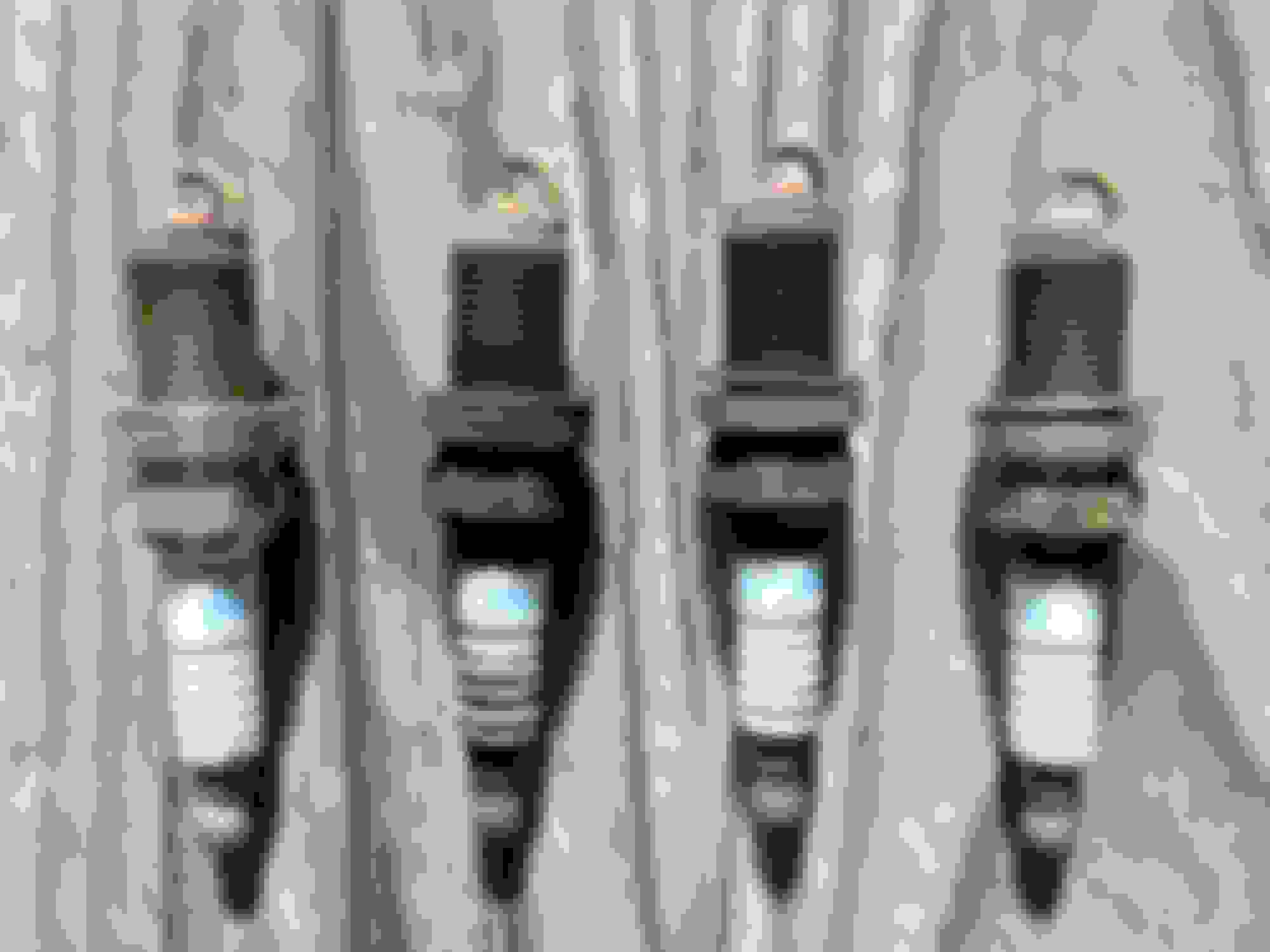
Okay! Replaced all four plugs today. I did test out the new torque wrench on the metal cowl bolts to get a feeling for what it feels like at 20-lbs. Unfortunately, I think I may have over-tightened Cylinder 2 (the one that was having gas blow-by issues).
The middle two cylinders both felt very loose, and the fourth cylinder slightly loose, and the first one felt more like what I'm used to. Only cylinder two had any issues, and all spark plugs look rather decent. (See spoiler for photos.)
Cylinder 2 Cylinder 2 Unsure if this is exact order, except cylinder 2 Unsure if this is exact order, except cylinder 2
Originally Posted by petelite
Looks like your Honda Multi Point Vehicle Inspection report claims that the wipers and wash system work perfectly! What's that say about the rest of the report?
Nice job giving your previously neglected Fit the attention it deserves!
Yo. All those plugs have blow-by. It becomes blow-by the second it starts gettin all up on the threads. R...right? I mean. Yeah. I think.
See, adding anti-seize or copper adhesive has a secondary purpose not discussed much. Its used on head gaskets to promote heat transfer between the cast iron block and aluminum head combo, or whatever. Thats a pretty standard combo. Since theyre so different, when heated, they expand and contract at different rates.
For a hip pocket class on that, when you finish your next drive, kill it, pop out, and listen. Youll hear all kinds of ticks and tings from your thin exhaust cooling.
Well, heat transfer MATTERS, and can mean the difference between loose and tight fitting stuff. Copper is a great conductor (though it aint silver)
You can, and I have, even used copper anti-seize as the thermal conductor for a computer. Between the processor and its heat-sink. Sh*t works (silver recommended though)
So uh.. yeah, its called anti-seize, but its also, in a way, locktite. Cuz things can break free when temps of materials fluctuate. Only suggesting it because of the, you know, threads being burnt. If not now, you know, just dont wait forever.
Apologies for being scatterbrained.
Grats on getting it done though!! Shes gonna have a bunch more punch driving now.
You have to remember that the threads from the engine only cover the half near the gasket ring. The far half by the spark end is completely exposed to the cylinder once installed.
You have to remember that the threads from the engine only cover the half near the gasket ring. The far half by the spark end is completely exposed to the cylinder once installed.
I used Vibra-TITE. Didn't even think about checking the compounds that make it up. I got what was quickest. Hope it works well! I've only ever used Loctite and Permatex before.
I know backing out the plugs is a no-no. So any time I want to inspect a plug, be sure to replace it, right? I'm just worried I over-tightened that one plug, though not by much. For some reason, the click from the wrench was a LOT less intense once I had it in the bay vs. practicing with it.
not backing them out is my personal advice. i feel once the crush washer has been...well ...crushed...it loses its effectiveness.
as for the overtightening...if u dont think it was by much id just leave it. its most likely fine. but i know how u feel...because ive done the same thing...where i wasnt sure if it clicked and it seemed like it was going further into the tight zone than it should be. i did that with my oil drain plug in january actually. if u are really not sure bout the plug u can always replace just the one so u dont go mad
not backing them out is my personal advice. i feel once the crush washer has been...well ...crushed...it loses its effectiveness.
as for the overtightening...if u dont think it was by much id just leave it. its most likely fine. but i know how u feel...because ive done the same thing...where i wasnt sure if it clicked and it seemed like it was going further into the tight zone than it should be. i did that with my oil drain plug in january actually. if u are really not sure bout the plug u can always replace just the one so u dont go mad
True. They're only $9. Worst part is the two hours it took doing all four haha! But it would only take about an hour to do one, probably.
For your drain plug – have you considered using a Fumoto valve? I used it on my two most previous vehicles and loved it!
#2 & #3 plugs look very ratty. Those cylinders seem to be most problematic here but that is just my gut from reading a lot of posts.
For old plugs, it is not a bad idea to check gaps and look at the plugs on a light surface (e.g. paper) so you get a good view on color and build-up. Regardless, the big issue seems pretty obvious.
The cylinder head is soft so that is where you can most reliably see thread damage. I suppose the #2 plug threads look quite pristine so that might indicate blow-by from a loose plug without damage to the head threads. Inspecting all the plug and head threads 360* provides more clues.
We can analyse and speculate on torque specs forever. The popular failure mode is a loosening spark plug that blows out vs. overtightening, although that is not entirely useful information. Still, I suspect the heads won't fail consistently until well north of 30 ft/lbs, ASSUMING all threads are in excellent condition. Unless you got the cylinder head threads super clean and you used a bit of anti-sieze, the torque your wrench reads overestimates clamping force (e.g you are not tightening as much as you think you are). Dirty threads without antisieze "lubricant" have quite a bit more friction, maybe 30%+ although that is a wild guess that varies from plug to plug; Honda's torque specs may assume clean threads and Honda recommends a dab of antisieze "lubricant".
#2 & #3 plugs look very ratty. Those cylinders seem to be most problematic here but that is just my gut from reading a lot of posts.
For old plugs, it is not a bad idea to check gaps and look at the plugs on a light surface (e.g. paper) so you get a good view on color and build-up. Regardless, the big issue seems pretty obvious.
The cylinder head is soft so that is where you can most reliably see thread damage. I suppose the #2 plug threads look quite pristine so that might indicate blow-by from a loose plug without damage to the head threads. Inspecting all the plug and head threads 360* provides more clues.
We can analyse and speculate on torque specs forever. The popular failure mode is a loosening spark plug that blows out vs. overtightening, although that is not entirely useful information. Still, I suspect the heads won't fail consistently until well north of 30 ft/lbs, ASSUMING all threads are in excellent condition. Unless you got the cylinder head threads super clean and you used a bit of anti-sieze, the torque your wrench reads overestimates clamping force (e.g you are not tightening as much as you think you are). Dirty threads without antisieze "lubricant" have quite a bit more friction, maybe 30%+ although that is a wild guess that varies from plug to plug; Honda's torque specs may assume clean threads and Honda recommends a dab of antisieze "lubricant".
I have noticed others mentioning #2 and #3, though I haven't done extensive research yet. Is this something that might prove to effect the longevity of the vehicle? Really impressed by the 512,000 mile Fit on here. Hah! And we don't purchase vehicles often, so we'll have this one for quite some time. Anything I should keep an eye on?
I did use anti-seize but, alas, did not thoroughly clean the threads in the block. I didn't have anything that I felt was safe to put down there.
how is the car running now? also u didnt mention how the coils looked. that second plug had some major blowby. i think the plugs are the main concern, but just keep an eye on all your fluids for a bit till u get a feel for the car and make sure its not leaking or burning any.
ps...i know its a pita...but plan on going up in the cowl again in a month or so to make sure the plugs are retaining torque. i just did mine the other day. i think about how much it sucks more than it actually does. the only bold i hate is the one on the driver side by the wiper motor that i need to use an open end wrench on.
Last edited by eulogy; Jul 19, 2019 at 10:47 PM.
Reason: add ps..
how is the car running now? also u didnt mention how the coils looked. that second plug had some major blowby. i think the plugs are the main concern, but just keep an eye on all your fluids for a bit till u get a feel for the car and make sure its not leaking or burning any.
ps...i know its a pita...but plan on going up in the cowl again in a month or so to make sure the plugs are retaining torque. i just did mine the other day. i think about how much it sucks more than it actually does. the only bold i hate is the one on the driver side by the wiper motor that i need to use an open end wrench on.
I've attached an image of the #2 cylinder coil. Probably not very telling other than all the blow-by.
I've already set a reminder to check them in a month. Should I just set the torque to 20 again and check them that way? The cylinders that were the most pain for me were #2 and #4. I had to half-straddle the front of the car. I am only 5'7" though!
The car is quite a bit peppier – the largest difference in driving that I've noticed from changing plugs. I'm also excited to see what sort of fuel economy we get from the next tank, as on our first tank we averaged only 29.6 mpg.
Aside from this, it seems the remaining issues are:
- Noise from Passenger Front suspension – most likely sway bar link
- OBDII code 3-1 – only thing I've seen online referencing this is in other Honda vehicles, saying "driver belt tensioner" something or other.
- Window washer fluid pump – most likely bad pump. No vibration or tension in lines; current fluid looks like water (can I drain this somehow, so my reservoir doesn't crack?); really wish I could reach the pump so I could test it with a multi-meter to confirm, but looks like the fender needs to be removed. Maybe just do this when I do the sway bar link. edit: I suppose I could drain it using gravity-fed tube.




 And always set it back to the minimum torque spec when you're done with it!