


TPMS problem


Thread Starter
|
New Member
Joined: Feb 2016
Posts: 7
From: California

TPMS problem
My tire pressure indicator light has been on for months. I've made sure all tires (yes, including the spare) are at full pressure, but the light remains lit.
Went to my independent servicer, and they suggested it may be in the sensor embedded in the tires (which they don't work on). So then I went to a tire service shop. They said the tires are fine, and suspect it is a computer problem in the vehicle, and I need to go to the dealer (suggesting it may be a widespread problem with this model).
I am happy to do so, but first wanted to with you all: anyone have a similar experience, or insight into the problem?
Thanks.
Went to my independent servicer, and they suggested it may be in the sensor embedded in the tires (which they don't work on). So then I went to a tire service shop. They said the tires are fine, and suspect it is a computer problem in the vehicle, and I need to go to the dealer (suggesting it may be a widespread problem with this model).
I am happy to do so, but first wanted to with you all: anyone have a similar experience, or insight into the problem?
Thanks.

Member
Joined: Sep 2010
Posts: 1,061
From: New Mexico
Welcome. GK5 (2015+ Fit in the US) relies on indirect sensing via the ABS system, not individual sensors in the wheels as in previous generations. This is both good and bad news.
The good news is that you don't go through replacing sensors every few years, which ain't cheap.
The bad news is that the indirect system doesn't work very well. With the original rims and tires at full inflation, my '16 LX would alert all the time for no apparent reason, and then disappear just as quickly. Not sure what it was reacting to, but it wasn't tire pressure.
I'm on my third set of tires & second set of rims, and each change was accompanied by alerts of various duration. The last one didn't go away for months.
I honestly don't know if it's just cheap implementation +/- too sensitive to ambient conditions to be very useful. I've gotten used to carrying around a handheld digital gauge just so I can confirm what I already know.
The good news is that you don't go through replacing sensors every few years, which ain't cheap.
The bad news is that the indirect system doesn't work very well. With the original rims and tires at full inflation, my '16 LX would alert all the time for no apparent reason, and then disappear just as quickly. Not sure what it was reacting to, but it wasn't tire pressure.
I'm on my third set of tires & second set of rims, and each change was accompanied by alerts of various duration. The last one didn't go away for months.
I honestly don't know if it's just cheap implementation +/- too sensitive to ambient conditions to be very useful. I've gotten used to carrying around a handheld digital gauge just so I can confirm what I already know.

Member
Joined: Nov 2016
Posts: 1,098
From: Friendswood, TX
My tire pressure indicator light has been on for months. I've made sure all tires (yes, including the spare) are at full pressure, but the light remains lit.
Went to my independent servicer, and they suggested it may be in the sensor embedded in the tires (which they don't work on). So then I went to a tire service shop. They said the tires are fine, and suspect it is a computer problem in the vehicle, and I need to go to the dealer (suggesting it may be a widespread problem with this model).
I am happy to do so, but first wanted to with you all: anyone have a similar experience, or insight into the problem?
Thanks.
Went to my independent servicer, and they suggested it may be in the sensor embedded in the tires (which they don't work on). So then I went to a tire service shop. They said the tires are fine, and suspect it is a computer problem in the vehicle, and I need to go to the dealer (suggesting it may be a widespread problem with this model).
I am happy to do so, but first wanted to with you all: anyone have a similar experience, or insight into the problem?
Thanks.
Last edited by wasserball; Oct 31, 2021 at 08:55 PM.

Member
Joined: Dec 2020
Posts: 142
From: Las Vegas, NV
I love the fact that Honda (and Mazda) don't use those stupid battery-powered sensors inside the tires, because they cost way too much and are pain to deal with when swapping wheels (summer / winter / whatever).
With Honda indirect system, start out with the pressure you want (cold tire), deflate maybe 1 PSI from each tire, and then start calibration (see owner's manual).
Once the calibration completes, inflate them all up by 1 PSI to the values you actually wanted.
This will mitigate some of the over-sensitivity issues.
For example, if I wanted 34 front and 33 rear, I'd get them to 33 front and 32 rear (COLD), start calibration, drive around, and once complete, park it overnight and inflate to 34 front and 33 rear. Done!
I've never seen it complain about over inflation, although I suppose it might if you REALLY over do it.
With Honda indirect system, start out with the pressure you want (cold tire), deflate maybe 1 PSI from each tire, and then start calibration (see owner's manual).
Once the calibration completes, inflate them all up by 1 PSI to the values you actually wanted.
This will mitigate some of the over-sensitivity issues.
For example, if I wanted 34 front and 33 rear, I'd get them to 33 front and 32 rear (COLD), start calibration, drive around, and once complete, park it overnight and inflate to 34 front and 33 rear. Done!
I've never seen it complain about over inflation, although I suppose it might if you REALLY over do it.

Member
Joined: Jul 2019
Posts: 531
From: New England USA
I love the fact that Honda (and Mazda) don't use those stupid battery-powered sensors inside the tires, because they cost way too much and are pain to deal with when swapping wheels (summer / winter / whatever).
With Honda indirect system, start out with the pressure you want (cold tire), deflate maybe 1 PSI from each tire, and then start calibration (see owner's manual).
Once the calibration completes, inflate them all up by 1 PSI to the values you actually wanted.
This will mitigate some of the over-sensitivity issues.
For example, if I wanted 34 front and 33 rear, I'd get them to 33 front and 32 rear (COLD), start calibration, drive around, and once complete, park it overnight and inflate to 34 front and 33 rear. Done!
I've never seen it complain about over inflation, although I suppose it might if you REALLY over do it.
With Honda indirect system, start out with the pressure you want (cold tire), deflate maybe 1 PSI from each tire, and then start calibration (see owner's manual).
Once the calibration completes, inflate them all up by 1 PSI to the values you actually wanted.
This will mitigate some of the over-sensitivity issues.
For example, if I wanted 34 front and 33 rear, I'd get them to 33 front and 32 rear (COLD), start calibration, drive around, and once complete, park it overnight and inflate to 34 front and 33 rear. Done!
I've never seen it complain about over inflation, although I suppose it might if you REALLY over do it.
Thread Starter
|
New Member
Joined: Feb 2016
Posts: 7
From: California
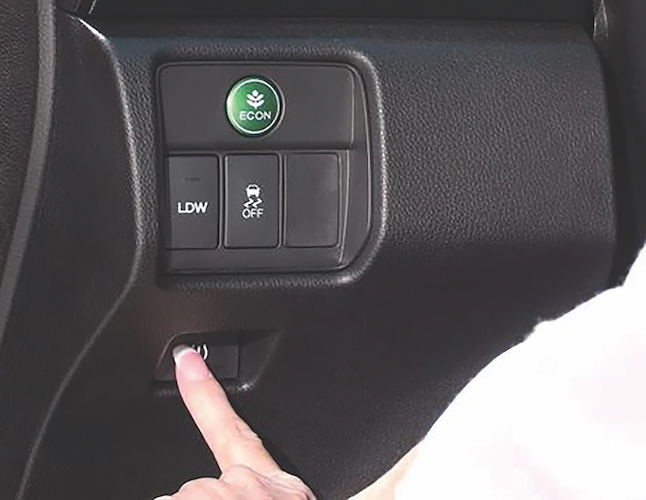
Many months ago, I made sure all the pressures were right, then (with the car stopped), I pressed the button, THEN drove for a couple of miles, but that did nothing. At this point I'm happy to bring it to the dealer.

Member
Joined: Aug 2018
Posts: 428
From: huntington station
the light i my '19 LX has been on since almost new , i check tire pressure fairly regularly . about a year ago , it was off briefly after i had new rims installed .
it came back on within days and has been on ever since . since it's part of the ABS system , i guess it can't be disabled . totally useless
it came back on within days and has been on ever since . since it's part of the ABS system , i guess it can't be disabled . totally useless

The indirect TPMS can be a little quirky at times but once understood its not so bad. The following comments below are effectively a copy and paste synopsis of system functionality and potential triggering faults that I made in another thread... =)
--
Proper tire inflation to spec and initializing/relearning the system is of course the standard procedure but if the light keeps coming back on then there needs to a little digging done. If one simply relearns/initializes the system without adjusting tire pressure then the system will briefly monitor the wheel speed and tire characteristics while comparing it to its previous data, so no difference, and turn the light back on anyway.
The system can fault if...
You run mixed tire sizes (obviously... >.>.) with a noticeably different overall diameter
Noticeably different tread depths even with the same batch of tires (Example; 3 tires at 3/32nds and 1 at 7/32nds)
Excessive road force with the wheel & tire assembly during balancing (Common on 10th Gen Civic Sport Sedans w/ 18s and factory Goodyear Eagles. -.-)
Alignment being excessively out of spec
And of course whether or not the wheel speed sensors and other ABS/TPMS components are properly functioning
Easiest thing to do would be to baseline the car by setting tire pressure while the tires are cold, **perform a TPMS hard reset**, then drive the car for 30 to 60 minutes. If the light comes back on after that then again... You got some digging to do.
** The TPMS hard reset clears out previous data used for comparison and allows the vehicle to learn that wheel and tire combo from that point forward. Just initialize the system reset 3 times while pausing for 5 to 7 seconds between each press then you'll see the system light illuminate for about 1 second then turn off to indicate that the hard reset has been performed.
--
I'd encourage doing the hard reset whenever new tires are installed or swapping to an entirely different wheel and tire set on Hondas with indirect TPMS.
--
Proper tire inflation to spec and initializing/relearning the system is of course the standard procedure but if the light keeps coming back on then there needs to a little digging done. If one simply relearns/initializes the system without adjusting tire pressure then the system will briefly monitor the wheel speed and tire characteristics while comparing it to its previous data, so no difference, and turn the light back on anyway.
The system can fault if...
You run mixed tire sizes (obviously... >.>.) with a noticeably different overall diameter
Noticeably different tread depths even with the same batch of tires (Example; 3 tires at 3/32nds and 1 at 7/32nds)
Excessive road force with the wheel & tire assembly during balancing (Common on 10th Gen Civic Sport Sedans w/ 18s and factory Goodyear Eagles. -.-)
Alignment being excessively out of spec
And of course whether or not the wheel speed sensors and other ABS/TPMS components are properly functioning
Easiest thing to do would be to baseline the car by setting tire pressure while the tires are cold, **perform a TPMS hard reset**, then drive the car for 30 to 60 minutes. If the light comes back on after that then again... You got some digging to do.
** The TPMS hard reset clears out previous data used for comparison and allows the vehicle to learn that wheel and tire combo from that point forward. Just initialize the system reset 3 times while pausing for 5 to 7 seconds between each press then you'll see the system light illuminate for about 1 second then turn off to indicate that the hard reset has been performed.
--
I'd encourage doing the hard reset whenever new tires are installed or swapping to an entirely different wheel and tire set on Hondas with indirect TPMS.
Last edited by Hootie; Nov 2, 2021 at 07:17 PM.
Member
Joined: Nov 2020
Posts: 695
From: Vancouver
My 16 has never had an issue with the light, even after swapping to a set of 15" Acura EL wheels and tires.
...come to think of it, I'm not even sure if I have a "reset" button on my dash.

Member
Joined: Nov 2016
Posts: 1,098
From: Friendswood, TX
Never had a problem with the Fit's tire pressure monitoring system. It works and easy to reset. I prefer to have it over the TPMS sensor in each of the tires, which is more complicated and expensive to replace..
Member
Joined: Nov 2016
Posts: 1,098
From: Friendswood, TX


Member
Joined: Jul 2019
Posts: 531
From: New England USA
My TPMS light has been going on lately - my tires were at 31-32 psi (33 psi is marked as the tire pressure target on my 2019 Fit LX). I put 35 psi in each tire at 0 °C / 32 °F this morning and it took 4 resets to get the light to stay off today.

Thread
Thread Starter
Forum
Replies
Last Post
Ron Belisle
3rd Generation GK Specific Wheel & Tire Sub-Forum
23
Nov 3, 2021 04:40 PM
dpmason
2nd Generation GE8 Specific Wheel & Tire Sub-Forum
4
Oct 9, 2015 02:22 PM