


-44 F. Drive to Work


Thread Starter
|
Member
Joined: Jun 2007
Posts: 389
From: Fairbanks, AK

-44 F. Drive to Work
-35 F. all night at home in the hills, plugged in, easy start, steering really hard for a few minutes, -44 F. on the highway, 40 miles to work. Clutch slow to return, otherwise car is perfect. 



Member
Joined: Sep 2007
Posts: 2,055
From: The Unknown
By "plugged in" i take it you have a block heater? Those suckers will save your butt in really cold weather. As long as you have a good battery your car will always start, atleast they always did for me in Wisconsin.

 We get that shit all the time in January. Mind you I'd rather deal with that than Twisters, Floods or Hurricanes.

ill take california earthquakes over any other regional natural disaster anyday.
shit....
i dont care. to me 32 degrees in san diego is COLD.
yeah yeah yeah....thats not that bad.
but when i used to live in north carolina 5 degrees use to be just fine.
but when you go hot weather, to straight cold with no in between...it just sucks.
i dont care. to me 32 degrees in san diego is COLD.
yeah yeah yeah....thats not that bad.
but when i used to live in north carolina 5 degrees use to be just fine.
but when you go hot weather, to straight cold with no in between...it just sucks.

Member

Joined: Nov 2006
Posts: 472
From: Brandon, MS/ Memphis, TN
whatever you do don't try to give your car a goodnight kiss hahaha. weather down here is not much better right now we go from having 70's raining then goes to 50's goes up then back down there is no definite temp. and there is tons of rain and tornado warnings every week

Member
Joined: Sep 2006
Posts: 549
From: Dublin, CA., USA
correct me if I am wrong, but you also have months of total darkness during winter solstice, as well as months of constant daylight during summer solstice.
BTW, is your dash squeaking and crackling while you drive in that cold?
My Fit is perfectly fine down in SF Bay Area, but when I go skiing and reach cold snow belt dash starts acting up.
I'd say Fit is a champ!
Member
Joined: Jan 2007
Posts: 745
From: IL
you know what's great? having a snowstorm, thunderstorm AND a tornado all in 3 days. it happened here 2 weeks ago, a tornado touched down a couple miles from my work.
fantastic january weather. i'd take bitter cold over a tornado any day too





Thread Starter
|
Member
Joined: Jun 2007
Posts: 389
From: Fairbanks, AK
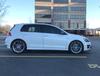
...hey, sharp looking red Fit!
We use the Holy Trinity here, a 3-way outlet with a cord to the front end to plug-in, and plugged in to that in the engine compartment are an OEM block heater, an oil pan heater pad and a battery pad. The combination, set on a timer to start heating 3 hours before startup, allows for a fairly normal-sounding start. I also use Mobil1 0W-20 when it's this cold. For some reason I wasn't connected yesterday and started after the car was cold all night at -35. It groaned and cranked really slow at first, but the battery hung in better than I would have thought for such a little thing, and she started OK. We have a chip-sealed road for a few miles ("boulder-sealed", actually) and there is some dash vibration noise, but it's not noticeable when I hit a half-way decently paved road, so I must be lucky as I have seen quite a few guys complain about dash noise. The freaky thing is the way the shocks and/or suspension bushings squawk a bit on bumps. Maybe by the time my '08 reached the dash assembly point, Honda had received enough complaints and figured something out. I have found out (see my "is valve noise at 6000 miles normal" thread) that the cold air at highway speeds does seem to cool things off under the hood enough that a valve sounds a bit loose after I first stop; if I let it idle awhile it quiets down. And the clutch pedal takes awhile to return after driving a bit at -44, so I have to shift a little easily. But the tranny fluid is great, shifting is not that bad at -44. Anyway, the Fit has passed the cold-weather test in my book. If it hits -50 I won't drive if I can help it, too hard on everything. It was -70 F. in Tok, Alaska (yes, there is a town with that name) yesterday.
We use the Holy Trinity here, a 3-way outlet with a cord to the front end to plug-in, and plugged in to that in the engine compartment are an OEM block heater, an oil pan heater pad and a battery pad. The combination, set on a timer to start heating 3 hours before startup, allows for a fairly normal-sounding start. I also use Mobil1 0W-20 when it's this cold. For some reason I wasn't connected yesterday and started after the car was cold all night at -35. It groaned and cranked really slow at first, but the battery hung in better than I would have thought for such a little thing, and she started OK. We have a chip-sealed road for a few miles ("boulder-sealed", actually) and there is some dash vibration noise, but it's not noticeable when I hit a half-way decently paved road, so I must be lucky as I have seen quite a few guys complain about dash noise. The freaky thing is the way the shocks and/or suspension bushings squawk a bit on bumps. Maybe by the time my '08 reached the dash assembly point, Honda had received enough complaints and figured something out. I have found out (see my "is valve noise at 6000 miles normal" thread) that the cold air at highway speeds does seem to cool things off under the hood enough that a valve sounds a bit loose after I first stop; if I let it idle awhile it quiets down. And the clutch pedal takes awhile to return after driving a bit at -44, so I have to shift a little easily. But the tranny fluid is great, shifting is not that bad at -44. Anyway, the Fit has passed the cold-weather test in my book. If it hits -50 I won't drive if I can help it, too hard on everything. It was -70 F. in Tok, Alaska (yes, there is a town with that name) yesterday.
Member
Joined: Sep 2006
Posts: 549
From: Dublin, CA., USA
Thanks derMond!
BTW, for that cooling off effect while driving, there is about an 1" to 1 1/2" gap between the top of the radiator and front clip where the hood latch is. While experimenting with cold air intake for a short ram, I used to put vet/dry vacuum bare floor attachments on each side of the "H" badge to feed more cold air under the hood. It was efficient down to 10 mph. Perfect for putting around stop and go traffic in town.
Have you tried blocking that grill and from the back of the bumper reinforcement to the condenser core? It would prevent air flow (cold air) to the engine compartment except for the air going through the radiator itself (warm air)? Maybe even portion of the lower part of the condenser/radiator? It is fairly common thing to do on older cars.
Also, you might try to disconnect duct between the air box and fender opening behind driver side headlight. How ever small it still brings colder air from inside fender which is fed through the small scoops just to the inside of the driver side fog light and radiator opening.
This will feed "warmer" air from engine compartment inside the air box.
Term "warmer air" is relative in your case when you are dealing with temps below -35, but anything helps!
Just a thought.
BTW, for that cooling off effect while driving, there is about an 1" to 1 1/2" gap between the top of the radiator and front clip where the hood latch is. While experimenting with cold air intake for a short ram, I used to put vet/dry vacuum bare floor attachments on each side of the "H" badge to feed more cold air under the hood. It was efficient down to 10 mph. Perfect for putting around stop and go traffic in town.
Have you tried blocking that grill and from the back of the bumper reinforcement to the condenser core? It would prevent air flow (cold air) to the engine compartment except for the air going through the radiator itself (warm air)? Maybe even portion of the lower part of the condenser/radiator? It is fairly common thing to do on older cars.
Also, you might try to disconnect duct between the air box and fender opening behind driver side headlight. How ever small it still brings colder air from inside fender which is fed through the small scoops just to the inside of the driver side fog light and radiator opening.
This will feed "warmer" air from engine compartment inside the air box.
Term "warmer air" is relative in your case when you are dealing with temps below -35, but anything helps!
Just a thought.

Thread
Thread Starter
Forum
Replies
Last Post