TIRE questions,sizes, mounting,pressures ANY tire questions

Member
Joined: Oct 2005
Posts: 163
From: GREECE

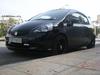
I have the 1.3 and from the standard tyres now i have 195/50-15.Someone told me that it is better if i put 185/55-14 but with these tyres my car is looking better.With tese tyres the grip is much better than the standard but it is a little slower.Never mind.

Honda Fit Forums Moderator
Joined: Dec 2005
Posts: 374
From: Ontario, Canada
So, is there evidence that the trim levels in North America are calibrated differently? (185/55/R15 is only 0.7mm off 175/65R14 -- completely negligible since a little tread wear makes as much difference.)
If I get a Fit it'll most likely be a base (actually the middle level here in Canada, which I speculate is equivalent to the US base). I'm not likely to change the wheels, at least not until the factory tires have worn out, but I'm curious to know, if I stick on my old snows next winter, how far off they'd actually be. In real life of course I can wait until I have my next car and check it against highway mileposts.
. . . . .
If you have tires of "width / aspect R rim", the rolling radius in mm is
(12.7 × rim) + (width × aspect ÷ 100)
For example, for the stock 175/65R14 the rolling radius is
stock = (12.7 × 14) + (175 × 65 ÷ 100) = 291.5
You would want to keep the rolling radius of any replacement tires within about 8mm of that at worst.
If you have selected a rim size and tire width, the ideal aspect is
(stock - 12.7 × rim) × 100 ÷ width
For example if you want 205mm wide tires on a 16" rim, the ideal aspect is
(291.5 - 12.7 × 16) × 100 ÷ 205 = 43
so you'd get the closest, 205/45R16.
If you want to know how far off a change will put your speedometer, get the rolling radius of the stock tires and the new ones; your actual speed is
speedometer × new ÷ stock
For example, if you're reusing the 155/80R13 from your '77 Civic (rolling radius 289.1mm) and the stock tires are 175/65R14 (rolling radius 291.5mm), when your speedometer reads 100 you are actually doing
100 × 289.1 ÷ 291.5 = 99.1
If I get a Fit it'll most likely be a base (actually the middle level here in Canada, which I speculate is equivalent to the US base). I'm not likely to change the wheels, at least not until the factory tires have worn out, but I'm curious to know, if I stick on my old snows next winter, how far off they'd actually be. In real life of course I can wait until I have my next car and check it against highway mileposts.
. . . . .
If you have tires of "width / aspect R rim", the rolling radius in mm is
(12.7 × rim) + (width × aspect ÷ 100)
For example, for the stock 175/65R14 the rolling radius is
stock = (12.7 × 14) + (175 × 65 ÷ 100) = 291.5
You would want to keep the rolling radius of any replacement tires within about 8mm of that at worst.
If you have selected a rim size and tire width, the ideal aspect is
(stock - 12.7 × rim) × 100 ÷ width
For example if you want 205mm wide tires on a 16" rim, the ideal aspect is
(291.5 - 12.7 × 16) × 100 ÷ 205 = 43
so you'd get the closest, 205/45R16.
If you want to know how far off a change will put your speedometer, get the rolling radius of the stock tires and the new ones; your actual speed is
speedometer × new ÷ stock
For example, if you're reusing the 155/80R13 from your '77 Civic (rolling radius 289.1mm) and the stock tires are 175/65R14 (rolling radius 291.5mm), when your speedometer reads 100 you are actually doing
100 × 289.1 ÷ 291.5 = 99.1

Avid FitFreak Poster
Joined: Jan 2006
Posts: 1,491
From: Middletown/Front Royal, Virginia, USA
Best Tire Size for GD3
Looking into purchasing tires for the GD3 for the new wheels I just aquired. Goodyear GS D3 195/50/15 or Falken Azenis 195/55/15 or 205/50/15?
Just curious is all since I heard the Falken has lost alittle traction with the new design and the GS D3 is one of the top rating tires even beating the Bridgestone series....
Just curious is all since I heard the Falken has lost alittle traction with the new design and the GS D3 is one of the top rating tires even beating the Bridgestone series....


New Member
Joined: Feb 2006
Posts: 19
From: www.myfit.org
the falkens didnt loose traction, they gaind consistancy. the old azenis, once warmed, got TOO warm and were greasy. so it was a GREAT autoX tire. for road course, not so much. the new ones are MUCH more consistant. i ran 1.5 hours on the road course in my DC5 track car running consistant times for majority of the session. PS: ive had both the old and new on the same car, so ive been able to directly compare. just my 2cents.



Someone that Posts too much
Joined: Aug 2005
Posts: 683
From: Sydney, Australia
34psi all round. Door placard and manual say 32 to 34psi. If you find the ride too hard lower the pressure but remember doing so will reduce fuel economy, increase tyre wear and reduce traction. Always increase pressure when carrying a big load.
Last edited by vividjazz; Apr 30, 2006 at 11:16 PM.
Member
Joined: Apr 2006
Posts: 531
From: washington
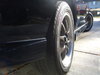
The USA spec 16 inch wheel option is:
HFP 16" Alloy Wheels
8-Spoke wheel design. Carbon bronze finish. Comes with HFP logo. Recommended tire size 205/45 R16.
- 16x6 1/2
- 55 Offset
http://www.collegehillshonda.com/hon...ies/wheels.htm
HFP 16" Alloy Wheels
8-Spoke wheel design. Carbon bronze finish. Comes with HFP logo. Recommended tire size 205/45 R16.
- 16x6 1/2
- 55 Offset
http://www.collegehillshonda.com/hon...ies/wheels.htm


Member
Joined: Apr 2006
Posts: 531
From: washington
Hoping for sub 12# wheels
I am hoping that the Kosei K1 TS will somehow work.
http://www.koseijp.co.jp/engfl/n_p5_k1.htm
where are all of the JDM options? Is it just a matter of waiting a few months for more options and info out there?
after hearing some harsh criticisms of ride quality I am wondering if I want to go with anything lower than a '50 series' tire. It will be a daily driver, after all. (I am secretly pleased that you cannot cram big $$ 20" rims on this car. Tires and wheels are going to be a lot cheaper.)
http://www.koseijp.co.jp/engfl/n_p5_k1.htm
where are all of the JDM options? Is it just a matter of waiting a few months for more options and info out there?
after hearing some harsh criticisms of ride quality I am wondering if I want to go with anything lower than a '50 series' tire. It will be a daily driver, after all. (I am secretly pleased that you cannot cram big $$ 20" rims on this car. Tires and wheels are going to be a lot cheaper.)

Member

Joined: Nov 2005
Posts: 728
From: San Francisco, CA
Originally Posted by pokems23
Is it worth buying HFP 16" or just sticking with the 15" sport version.
If you can afford HFP 16" rims and aggresive tires, then go ahead. But thats not going to be cheap.

Member
Joined: Apr 2006
Posts: 531
From: washington
Elsewhere in this forum I found this list of 'ideal' wheel sizes for the FiT:
15x7 +42/+38
16x7 +42/+40
17x7 +42/+38
Seeing an ad in Grassroots Motorsports Magazine with some FiTs sporting ROTA rims, I went to their site www.rotausa.com but found it sadly lacking in info and detail. (they had some fine looking rims with 8 and 10 bolt patterns--what are they for?)
Tire Rack dot com is not yet up to speed on the wheel options for the FiT. I have been looking at rims that would fit a late 90s civic (4x100) but I am not sure about offset. Anybody have any thoughts on comparable cars for shopping/daydreaming purposes (keeping the above 'ideal' numbers in mind?
15x7 +42/+38
16x7 +42/+40
17x7 +42/+38
Seeing an ad in Grassroots Motorsports Magazine with some FiTs sporting ROTA rims, I went to their site www.rotausa.com but found it sadly lacking in info and detail. (they had some fine looking rims with 8 and 10 bolt patterns--what are they for?)
Tire Rack dot com is not yet up to speed on the wheel options for the FiT. I have been looking at rims that would fit a late 90s civic (4x100) but I am not sure about offset. Anybody have any thoughts on comparable cars for shopping/daydreaming purposes (keeping the above 'ideal' numbers in mind?