


has anyone adjust their valves ?


Member
Joined: Feb 2008
Posts: 1,098
From: VA
Hi I would recommend that you take it to a mechanic but if you wanna do it, make sure you have plenty of time doing it and your back and knees are good. It killed my knees and lower back but it was a great experience and would do it again.
Member
Joined: Feb 2008
Posts: 1,098
From: VA
I did adjusted my valve clearance again to a slight drag. Also where specifically should I put the Honda bond? What I did is I put a thin layer of Honda bond on the gasket since it's the part that really touches the the surface of the block.

Member
Joined: Aug 2006
Posts: 311
From: Minneapolis, Minnesota

You don't want a thin layer on the entire gasket. It wont hurt but isn't necessary and will make things difficult when the time comes for removal again. If you look at the mating surface it's perfectly flat and then transitions upwards, curves and then back down. You want the Hondabond in both areas where this transition happens. At the changes of plane i suppose would be another way of explaining it.
Member
Joined: Feb 2008
Posts: 1,098
From: VA
You don't want a thin layer on the entire gasket. It wont hurt but isn't necessary and will make things difficult when the time comes for removal again. If you look at the mating surface it's perfectly flat and then transitions upwards, curves and then back down. You want the Hondabond in both areas where this transition happens. At the changes of plane i suppose would be another way of explaining it.
Also I may have overlooked the instruction posted, where are the intake valves and and the exhaust valves. Are the exhause valves located closer to me when I open the hood or are they located at the back where the spark plugs are located? I'm sorry for the dumb question. This is my first experiend of doing this procedure and I'm not sure if mine was correctly done.
Member
Joined: Aug 2006
Posts: 311
From: Minneapolis, Minnesota
It's good to be asking these questions. There's not much room for error with this stuff. In other words, damage can occur if they're not correctly adjusted. An easy way to determine which set of valves is for exhaust and which is for intake is to look at where the intake and exhaust manifolds connect to the engine. In our case the intakes are on the front and exhausts are on the rear. Keep in mind that you also need to have the piston for each cylinder in the correct part of the stroke for each set of valves that you adjust. If you're not comfortable with this whole procedure you may want to have it done at Honda. Again, damage can be done here.
Good luck
Good luck
Member
Joined: Feb 2008
Posts: 1,098
From: VA
It's good to be asking these questions. There's not much room for error with this stuff. In other words, damage can occur if they're not correctly adjusted. An easy way to determine which set of valves is for exhaust and which is for intake is to look at where the intake and exhaust manifolds connect to the engine. In our case the intakes are on the front and exhausts are on the rear. Keep in mind that you also need to have the piston for each cylinder in the correct part of the stroke for each set of valves that you adjust. If you're not comfortable with this whole procedure you may want to have it done at Honda. Again, damage can be done here.
Good luck
Good luck
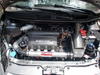
I just did mine today. It took me 4.5hours, it killed my back! Great experience though. I notice that the clearance on the exhaust is pretty much close to nothing so I had to adjust that. My only question is how much drag should I be expecting to do? Because when I did it, I just made sure that the feeler guage would slide in freely but with enough drag.


Member
Joined: Feb 2008
Posts: 1,098
From: VA
I hate to hear that it hurt your back, my back is totally trashed out causing a chronic pain condition I have been taking heavy duty pain medication for over 12 years and I was noticing clicking just today.... I will be in pain for the next week or longer for having changed out my springs today.

I am enjoying them a lot... The little station wagon feels like a sports car for sure now.... Much more stable, less under steer and less wheel spin. I like the way it looks as well.

Member

Joined: Jul 2009
Posts: 837
From: Atlanta, GA
 Seriously, this is more of an art than a science, but you can make it a lot easier by getting a set of go/no-go feeler gauges. Probably more important than the exact clearance is to get all the intake and all the exhaust valves as close to the same clearance as possible. This is SOP for BMW boxer engines, and I suspect the same is true for inline 4's: use two sets of feeler gauges, and for each cylinder, put feelers under both the intake and exhaust at the same time; this will minimize any possible valve train movement and ensure more consistent results. Feeler gauges are cheap; effort to take everything apart and put it back together again is expensive, so obsessive attention to detail is a good investment.

Thread
Thread Starter
Forum
Replies
Last Post
