


What did you do to the GD Fit today?


Thought I heard some sloshing while pulling away from a stop sign last night, found ice in the spare tire-well with no apparent entry point..

Knocked it out with a ball-peen and took a hair dryer to it, then put down some kitty litter in the hopes it will leave a trail on the way in if this wasn't a one time deal.
51,000 miles and five years and this is my first "issue"
Can't complain about that!

Knocked it out with a ball-peen and took a hair dryer to it, then put down some kitty litter in the hopes it will leave a trail on the way in if this wasn't a one time deal.
51,000 miles and five years and this is my first "issue"
Can't complain about that!




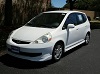

Would you mind sharing where you get these? I see it includes an Alt pulley as well...
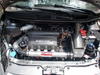


I'd love to have a supercharged Fit, but the class I would have to jump to I would get slaughtered.
These light weight pulley's are current class legal and like a lighter weight flywheel (which Isn't class legal
 ) ought to help me keep revs up to stay in our narrow power band!
  Even a 3-5 hp gain is 3-5% AND more important is the weight reduction
Also these Ralco units are $100 cheaper than the Unorthodox ones were...
yeah i paid $ 158 shipped for them from www.streetrays.com . and thats why i ordered them because UR doesnt make them any more which is dissapointing.

Member
Joined: May 2012
Posts: 150
From: Monkeyville
It sure would be, but I'd have to have the supercharger in the first place!
I'd love to have a supercharged Fit, but the class I would have to jump to I would get slaughtered.
These light weight pulley's are current class legal and like a lighter weight flywheel (which Isn't class legal) ought to help me keep revs up to stay in our narrow power band! Even a 3-5 hp gain is 3-5% AND more important is the weight reduction
Also these Ralco units are $100 cheaper than the Unorthodox ones were...
I'd love to have a supercharged Fit, but the class I would have to jump to I would get slaughtered.
These light weight pulley's are current class legal and like a lighter weight flywheel (which Isn't class legal
) ought to help me keep revs up to stay in our narrow power band! Even a 3-5 hp gain is 3-5% AND more important is the weight reduction Also these Ralco units are $100 cheaper than the Unorthodox ones were...
However, swapping out your wheels for lighter ones, will allow you to accelerate faster, but it won't give you more power, simply due to the fact your car is lighter. So will doing anything that reduces the weight of a vehicle. Acceleration = force/mass. If you reduce the mass you increase acceleration. Lighter wheels also spool faster. angular acceleration = torque/moi (moment of inertia). You decrease the moi (wheel or pulley) and the angular acceleration goes up. So while you don't make any more power, you have less mass to change in direction or less rotational inertia to spool, and you'll get their faster. It's exactly the same thing as accelerating on a flat road vs acclerating on a downslope. Your power level is always the same, but the mass reaction is less going downhill. With the pulley swap though you're substituting a tiny rotational mass reduction with a loss in designed damping capability.
Last edited by CTCT; Mar 7, 2013 at 02:49 AM. Reason: added some notes on acceleration
There was a magazine article a few years back that tested the results of numerous performance parts on a dyno...I agree that there isn't going to be an engine horsepower gain but when the pulley was put on the test car and ran on the dyno there was an increase in horsepower at the wheels.... The reduced rotating mass frees up power to the belt driven accessories that is measurable at the wheels on a dyno... The most profound power increase at the drive wheel I ever experienced was on a very tricked out Harley-Davidson I'd installed a Primo belt drive and Barnett kevlar clutch disc on.
Honda Fit Crank Pulley - Import Tuner Magazine
this is the article, you should read it before blowing smoke and hot air. hotroders have been using lighter pulley for decades without problems. its a reliable and proven performance product thats worked for millions of rodders and racers world wide.
this is the article, you should read it before blowing smoke and hot air. hotroders have been using lighter pulley for decades without problems. its a reliable and proven performance product thats worked for millions of rodders and racers world wide.
Member
Joined: May 2012
Posts: 150
From: Monkeyville
Honda Fit Crank Pulley - Import Tuner Magazine
this is the article, you should read it before blowing smoke and hot air. hotroders have been using lighter pulley for decades without problems. its a reliable and proven performance product thats worked for millions of rodders and racers world wide.
this is the article, you should read it before blowing smoke and hot air. hotroders have been using lighter pulley for decades without problems. its a reliable and proven performance product thats worked for millions of rodders and racers world wide.
It might work for hot rodders where the milliseconds of dr/dt (change in rpm) can make the difference in a close race and where you get instantaneous wheel spin where friction is no longer the overwhelming reaction factor but inertia is, but it won't help a Honda Fit.
Lastly, beware of reading manufactures "technical" justification for the products they're trying to sell you, as per the link you sent. They are interested in selling you their product and there is no consequence for incorrect engineering advice.
Member
Joined: May 2012
Posts: 150
From: Monkeyville
There was a magazine article a few years back that tested the results of numerous performance parts on a dyno...I agree that there isn't going to be an engine horsepower gain but when the pulley was put on the test car and ran on the dyno there was an increase in horsepower at the wheels.... The reduced rotating mass frees up power to the belt driven accessories that is measurable at the wheels on a dyno... The most profound power increase at the drive wheel I ever experienced was on a very tricked out Harley-Davidson I'd installed a Primo belt drive and Barnett kevlar clutch disc on.
Reducing mass only changes acceleration, and only fractionally if it's a pulley. It doesn not change power or torque. Power and torque are produced at the engine and the only thing to reduce it is friction. Inertial reaction is NOT friction. Roational inertia only affects how fast the rpms can change given the power the engine produces. For a Honda Fit, there are so many things contributing to rotational inertia that taking a pound or two just out of the pulley will do squat to total inertia. You have the crankshaft, con rods, pistons, transmission, and all the accessory drives contributing to rotational inertia. Not only would the pulley change be negligible in the overal inertial change it would have to be larger than the torque reaction load produced by the friction at the tires. In other words, the wheels would have to start spinning on the pavement, then try to accelerate faster, rotationally, only being held back by the inertial reaction of the spinning masses (wheels included). It's a futile attempt and it's enriching a lot of "performance" companies.... Unless you race and have a modified car. I'm only speaking to regular owners of regular cars trying to simply bolt on a few hp.
Last edited by CTCT; Mar 7, 2013 at 03:33 PM.
It might work for hot rodders where the milliseconds of dr/dt (change in rpm) can make the difference in a close race and where you get instantaneous wheel spin where friction is no longer the overwhelming reaction factor but inertia is, but it won't help a Honda Fit.
Lastly, beware of reading manufactures "technical" justification for the products they're trying to sell you, as per the link you sent. They are interested in selling you their product and there is no consequence for incorrect engineering advice.
Lastly, beware of reading manufactures "technical" justification for the products they're trying to sell you, as per the link you sent. They are interested in selling you their product and there is no consequence for incorrect engineering advice.
And of course any one trying to sell you something has a bias.
You are also correct about a non dampened pulley potentially causing issues. Numerous people noticed that right off and several discussions have been had on here about the effects. As you stated it will increase load both torsionaly and laterally effecting things like crank case bearing wear and potentially more.
Considering I have also raised the redline and am regularly pushing the car, I already expect additional maintenance AND significantly different engine wear with the increased friction and load. I don't expect 200+K from my engine.
Any form of cheap anodizing is also garbage on a wearing surface area. Since these are a polished finish (as long as there is no remaining compound or clear coat) this should be a non issue.
Lastly, 6061 is common for a reason. Its cheap, and it works.
Member
Joined: May 2012
Posts: 150
From: Monkeyville
I Race my car in SCCA Solo. So yes, in a sport regularly won in the realm of 0.0XX second differences there is an advantage for me
And of course any one trying to sell you something has a bias.
You are also correct about a non dampened pulley potentially causing issues. Numerous people noticed that right off and several discussions have been had on here about the effects. As you stated it will increase load both torsionaly and laterally effecting things like crank case bearing wear and potentially more.
Considering I have also raised the redline and am regularly pushing the car, I already expect additional maintenance AND significantly different engine wear with the increased friction and load. I don't expect 200+K from my engine.
Any form of cheap anodizing is also garbage on a wearing surface area. Since these are a polished finish (as long as there is no remaining compound or clear coat) this should be a non issue.
Lastly, 6061 is common for a reason. Its cheap, and it works.
And of course any one trying to sell you something has a bias.
You are also correct about a non dampened pulley potentially causing issues. Numerous people noticed that right off and several discussions have been had on here about the effects. As you stated it will increase load both torsionaly and laterally effecting things like crank case bearing wear and potentially more.
Considering I have also raised the redline and am regularly pushing the car, I already expect additional maintenance AND significantly different engine wear with the increased friction and load. I don't expect 200+K from my engine.
Any form of cheap anodizing is also garbage on a wearing surface area. Since these are a polished finish (as long as there is no remaining compound or clear coat) this should be a non issue.
Lastly, 6061 is common for a reason. Its cheap, and it works.
I won't argue whatever feeling you have about performance products but it is physically impossible to get more power from an engine, or free up power from an engine simply by reducing inertial reaction or reducing rotational inertial reaction. If a dyno showed more power then it is completely a false test. You cannot go against physics and I won't argue it here. Google it. The pulley manuf web sites will of course tell you it will make you better looking. You need to question their claims. It's like saying you get more power when you don't have any passengers in the car vs when you do. That would be silly. Right? You know that it's simply the weight of the car that is the issue. So does removing 1 or 2 lbs from a pulley going to do something for you?
You need to understand the difference between power, torque, and rotational and linear acceleration. Reducing mass only changes acceleration, and only fractionally if it's a pulley. It doesn not change power or torque. Power and torque are produced at the engine and the only thing to reduce it is friction. Inertial reaction is NOT friction. Roational inertia only affects how fast the rpms can change given the power the engine produces. For a Honda Fit, there are so many things contributing to rotational inertia that taking a pound or two just out of the pulley will do squat to total inertia. You have the crankshaft, con rods, pistons, transmission, and all the accessory drives contributing to rotational inertia. Not only would the pulley change be negligible in the overal inertial change it would have to be larger than the torque reaction load produced by the friction at the tires. In other words, the wheels would have to start spinning on the pavement, then try to accelerate faster, rotationally, only being held back by the inertial reaction of the spinning masses (wheels included). It's a futile attempt and it's enriching a lot of "performance" companies.
You need to understand the difference between power, torque, and rotational and linear acceleration. Reducing mass only changes acceleration, and only fractionally if it's a pulley. It doesn not change power or torque. Power and torque are produced at the engine and the only thing to reduce it is friction. Inertial reaction is NOT friction. Roational inertia only affects how fast the rpms can change given the power the engine produces. For a Honda Fit, there are so many things contributing to rotational inertia that taking a pound or two just out of the pulley will do squat to total inertia. You have the crankshaft, con rods, pistons, transmission, and all the accessory drives contributing to rotational inertia. Not only would the pulley change be negligible in the overal inertial change it would have to be larger than the torque reaction load produced by the friction at the tires. In other words, the wheels would have to start spinning on the pavement, then try to accelerate faster, rotationally, only being held back by the inertial reaction of the spinning masses (wheels included). It's a futile attempt and it's enriching a lot of "performance" companies.
This is false and you are contradicting yourself.
So you recognize that changing mass affects acceleration? No shit!
Do you recognize acceleration is a component of a force vector?
Angular acceleration of a mass, gives us a rotational moment. That is torque.
What we have is a force trying to accelerate a mass, giving us an acceleration. That same force trying to accelerate a smaller mass is going to yield a greater acceleration.
That mass change allows more torque that would otherwise be wasted to be transmitted to the gearbox, and ultimately more to the ground.
Torque over time gives us horsepower.
Therefore, lighter pulley gives you more power. This has been documented. Have you ever run lighter pulleys, a lightened flywheel and a pucked ceramic clutch seperate from other changes? The motor will change rates much faster on idle and under load.
Go back under your bridge. If I wanted to hear from a condescending asshole, I would have farted.

Last edited by DiamondStarMonsters; Mar 7, 2013 at 03:22 PM.
so let me get this straight, your just going to sit there and trust what you read from your classroom textbook or where ever you got this garbage from without even looking into the fact that this has been tested in the real world by engineer's, race teams, magazines, dyno's and all the other people that have been doing this for 40+ years looking for every hp and tq they can find all of them no bias?? no, it's not generating more hp or tq its freeing up lost hp and tq that your drivetrain eats up do to unneccery weight, which is a real thing not theory and its measurable at the wheels where it counts. the fact that your trying to dicount tens of thousands of people who actually know what they are doing and proved it umteen gillion times over is rediculous. and the pulley is stock size and a exact replica of the stock unit and uses the dampener insert. i've been doing this long enough to know your nothing more than a troll bud, so just stop.
After the coilover/LCA Bushing/Alignment Issue's I'm fighting are sorted, this and my Weapon R header to shorty exhaust will be first up!

Member
Joined: May 2012
Posts: 150
From: Monkeyville
so let me get this straight, your just going to sit there and trust what you read from your classroom textbook or where ever you got this garbage from without even looking into the fact that this has been tested in the real world by engineer's, race teams, magazines, dyno's and all the other people that have been doing this for 40+ years looking for every hp and tq they can find all of them no bias?? no, it's not generating more hp or tq its freeing up lost hp and tq that your drivetrain eats up do to unneccery weight, which is a real thing not theory and its measurable at the wheels where it counts. the fact that your trying to dicount tens of thousands of people who actually know what they are doing and proved it umteen gillion times over is rediculous. and the pulley is stock size and a exact replica of the stock unit and uses the dampener insert. i've been doing this long enough to know your nothing more than a troll bud, so just stop.
Your 100 years of experience doesn't absolve the fallacy of any website stating a pulley frees up or adds hp. You'll notice most websites that say you'll get hp with these things are also in the business of selling you these. Its the perfect example of "if its on the internet it must be true". Even the wiki page is shill written.
Google it. There's plenty of discussion in it but every technical one always comes to the conclusion I've made.
Last edited by CTCT; Mar 7, 2013 at 08:39 PM.

