


Manual vs CVT...?


Member

Joined: Oct 2008
Posts: 210
From: USA
I'm with robertsmithfromthecure, I currently have a manual, but wish I had an auto. I got the car when I was single. Now I am married and she can't drive my car at all, it would make it easier in case we had to switch cars for some reason.

All we have to do is think outside of the box. You don't need more torque to be faster or make more horsepower. Lighten the car. Reduce rotating mass from wheels, crankshaft, etc. Use the same torque as stock but raise the rev limit and add aftermarket camshafts. Instead of 6500rpm peak horsepower, raise it to 7200rpm, ......hell 8500rpm with additional valves and springs to support it. You'd be using the same amount of torque as stock but further up in the powerband. No worries about breaking anything in the CVT tranny and it'd be doing it on a lighter vehicle.
Either way, arguing either way is useless. Get what best 'Fit's your needs. I'm just excited about the 'new' technology and love experimenting with what it's capable of. I'm liking it a LOT so far!
Either way, arguing either way is useless. Get what best 'Fit's your needs. I'm just excited about the 'new' technology and love experimenting with what it's capable of. I'm liking it a LOT so far!

Member
Joined: Sep 2012
Posts: 1,374
From: Canada

If Obama lifts the embargo and you decide to vacation in Cuba, better try and figure out some MT skills because that's about all the have over there.
Member
Joined: Oct 2008
Posts: 210
From: USA
Lol. Yeah that's pretty much it. I'm sure she would try to learn if I pushed it, but I don't want to deal with at least one of two things: 1-a bad clutch from her learning and 2-she would be the type that would panic, kill the car and cause an accident.
How often would you really need to switch cars though? Isn't the entire point of having separate cars...so you can each have what you want/need?
Member
Joined: Oct 2008
Posts: 210
From: USA

Member
Joined: Dec 2014
Posts: 101
From: Florida
The Fit MT is a much easier car to drive in any and all conditions then any other manual I've ever driven. I somebody can't learn using this car then it's because they don't want to.

Member
Joined: Nov 2014
Posts: 87
From: La Quinta
Based on a half dozen passes on local mountain roads I know very well I've got to say the CVT left to its own is pretty boring. It does seem to sense on extended downhill stretches with braking to up the rpm's a bit for engine braking as other modern automatics do. A manual would be preferable to me on this road for brisk driving. By brisk I'd put the normal flow of traffic at 40 to 45mph and brisk at 60.
Above that pace however other things start to happen and as you get to its limits and I'd rather have the CVT with paddle shifters in order to keep both hands on the wheel. Though it's a dream on new smooth asphalt, the beam axle is skittish on irregular surfaces and quick adjustments need to be made. It would be interesting to see on a closed track what the final stages of understeer would be like.
Overall, the engine and chassis, aside from the inherent characteristics of a rear beam axle are great. The breaks however are not. It needs disks on the rear and bigger disks on the front
As to transmissions, it's a good car either way and if I had two, I'd have one of each.

New Member
Joined: Dec 2014
Posts: 2
From: Santa Cruz, CA
I just bought a 2015 Fit, replacing a manual 1989 Nissan Sentra Coupe. I got up to 34 mpg (which is why I kept it so long) and got quite used to the control that a stick shift gave me (I'm in California w/ very steep hills & curvy mountain roads). I was a bit hesitant, but because I've devloped plantar fasciitis in my left (clutch) foot and a rotator cuff injury in my right (shifting) arm, I decided to go with CVT. After a month of driving, I don't miss manual one bit. "S" & "L" modes give me added accelartion for advancing onto freeways & going up steep hills. I've been using cruise control frequently on freeways to give my foot a rest. As far as fun goes, I'm loving having a much quieter car that I don't have to turn up the volume on the stereo 1/2 way to hear & getting much more joy out of listening to what I love. Having a high-stress job, I much prefer sitting back & enjoying the ride rather than working at driving too. I'm sure my heart is enjoying the switch now too because I'm driving slower (maybe just because it's a new car & there are too many idiots on the road).

Member
Joined: May 2014
Posts: 1,545
From: SoCal, CA
In the '60s, Jim Hall was an racing innovator. He developed some of the most advanced sports cars of the time including aero innovations such as spoilers and wings. His Chapparal 2 series revolutionized racing.
One innovation he introduced was the use of an automatic transmission. His engines had surplus power, so the inefficient automatics of the time were not a detriment. His cars still had a third pedal, but it was used to feather the wing for less drag on the straights. The power delivery was smoother and drivers could devote the attention that they normally used for shifting to operating the wing and using left foot braking to drive more smoothly.
Of course, Jim Hall's innovations were often banned in subsequent competition seasons because the other teams didn't like Hall's cars dominating the competition!



Member
Joined: Sep 2012
Posts: 1,374
From: Canada
A ideal transmission should be boring. It should behave just as you expect it to. It shouldn't demand problem-solving attention on the part of the driver to prevent "surprises."
In the '60s, Jim Hall was an racing innovator. He developed some of the most advanced sports cars of the time including aero innovations such as spoilers and wings. His Chapparal 2 series revolutionized racing.
One innovation he introduced was the use of an automatic transmission. His engines had surplus power, so the inefficient automatics of the time were not a detriment. His cars still had a third pedal, but it was used to feather the wing for less drag on the straights. The power delivery was smoother and drivers could devote the attention that they normally used for shifting to operating the wing and using left foot braking to drive more smoothly.
Of course, Jim Hall's innovations were often banned in subsequent competition seasons because the other teams didn't like Hall's cars dominating the competition!
In the '60s, Jim Hall was an racing innovator. He developed some of the most advanced sports cars of the time including aero innovations such as spoilers and wings. His Chapparal 2 series revolutionized racing.
One innovation he introduced was the use of an automatic transmission. His engines had surplus power, so the inefficient automatics of the time were not a detriment. His cars still had a third pedal, but it was used to feather the wing for less drag on the straights. The power delivery was smoother and drivers could devote the attention that they normally used for shifting to operating the wing and using left foot braking to drive more smoothly.
Of course, Jim Hall's innovations were often banned in subsequent competition seasons because the other teams didn't like Hall's cars dominating the competition!
Member
Joined: Jan 2008
Posts: 4,371
From: NC USA
I never got the "devote the attention they usually devote to shifting" argument. That's what we call "driving". Most people don't drive stick because they need their hands free to text, knit and make a ham sandwich while they drive. Shifting doesn't take attention, it's the attention to the road that dictates shifting. I guess on foot on the brake and on foot on the accelerator is best but I don't think automatics are designed with that in mind anyway.
Driving is maximizing the speed, line, apex, acceleration, and braking; shifting is merely the means of maximizing speed. When to shift is the moment of driving skill, not how you do it. Your ability to shift cleanly will always be second to a computer controlled machine.
The means used to shift are paramount. If an automatic is quicker its better which is why automatics are used on the maximum performance vehicles and why most of them don't even offer a manual.
The means to turn the steering wheel is likewise important to accurately place the vehicle where it needs to be. And why advances in steering gear has likewise improved driving.
Attention in reality is a lot like reading license plates. Not very useful in 'driving'. Driving is the brain functioning to correlate the inputs around the driver and the outputs to maximize their use. You can pay very close attention to the inputs but if you don't convert them into outputs that maximize the movement of your device they aren't much use. One of those outputs is selecting the moment to shift that maximizes the progress. How you do it is merely an advertisement of the technology you are using. You can be last century or this century but its a like choosing XP over Windows 7 or a 1995 computer over a 2015 one.
Drivers can, and will, text or talk on cell phones no matter what they are driving.Its a pity the existing technology that will allow shut off of cells if the towers detect movement except for 911 calls is not active.
Ah yes, another case of outmoded use of technology.
cheers
PS I got to lay hands on the Chapparels. Indeed magnificent application of i=engineering innovationbut they had hanicaps that GP cars overcame. Colin Chapman at Lotus was one who forged the way into today's GP cars where driving is improved.
Last edited by mahout; Jan 16, 2015 at 03:12 PM.
Member
Joined: Nov 2014
Posts: 87
From: La Quinta
A ideal transmission should be boring. It should behave just as you expect it to. It shouldn't demand problem-solving attention on the part of the driver to prevent "surprises."
In the '60s, Jim Hall was an racing innovator. He developed some of the most advanced sports cars of the time including aero innovations such as spoilers and wings. His Chapparal 2 series revolutionized racing.
One innovation he introduced was the use of an automatic transmission. His engines had surplus power, so the inefficient automatics of the time were not a detriment. His cars still had a third pedal, but it was used to feather the wing for less drag on the straights. The power delivery was smoother and drivers could devote the attention that they normally used for shifting to operating the wing and using left foot braking to drive more smoothly.
Of course, Jim Hall's innovations were often banned in subsequent competition seasons because the other teams didn't like Hall's cars dominating the competition!
In the '60s, Jim Hall was an racing innovator. He developed some of the most advanced sports cars of the time including aero innovations such as spoilers and wings. His Chapparal 2 series revolutionized racing.
One innovation he introduced was the use of an automatic transmission. His engines had surplus power, so the inefficient automatics of the time were not a detriment. His cars still had a third pedal, but it was used to feather the wing for less drag on the straights. The power delivery was smoother and drivers could devote the attention that they normally used for shifting to operating the wing and using left foot braking to drive more smoothly.
Of course, Jim Hall's innovations were often banned in subsequent competition seasons because the other teams didn't like Hall's cars dominating the competition!
Yikes! don't get me started on old racing stories...50 years ago I was running AA/Fuel till I went in the military in '66. No shifting those things either.
My point is that when you're in the twisties and you want to grab another gear, there are occasions you're occupied by other driving situations. Paddles on the steering wheel make it a lot easier. For those same reasons of hands on the wheel I'd like to see high beam switching return to the floorboard.
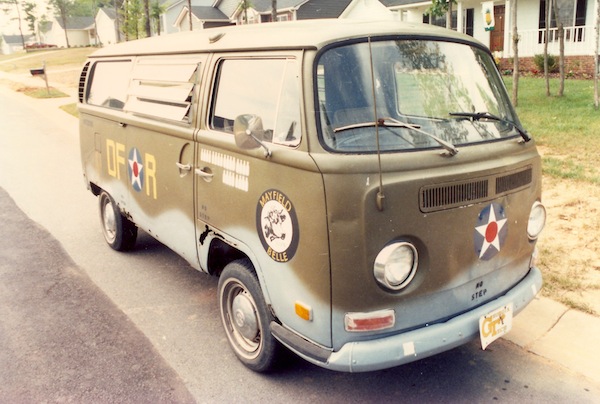
One more observation on this manual v automatic issue from a long lifetime of watching some true moronic driving on public roads. A responsibly driven car with a stick shift has the better driver, for they are far more in touch with their surroundings. Accent on 'responsible'. There was an insurance institute injury crash study back around 1980 where the VW bus came in second behind Volvo with the least injury claims. Baffled by this came to realize it had the perfect trifecta for safety: a stick shift, excellent visibility, and the constant threat of near certain death if you ran into anything.

Member
Joined: Dec 2014
Posts: 69
From: Miler, PA
As been hit upon me and others in other threads, I wish the new FIT was avavailable in the EX-L 6-speed combination. For those us who enjoy driving and shifting gears, why should we have to sacrifice on luxury and convenience options?
There some us who desire to have all options and still have the DIY transmission.
So if you want luxury perks , CVT is the only way to go.
I just wish associates from Honda actually read and took note of comments on this website and then actually took some action on those comments.
There some us who desire to have all options and still have the DIY transmission.
So if you want luxury perks , CVT is the only way to go.
I just wish associates from Honda actually read and took note of comments on this website and then actually took some action on those comments.
Last edited by cuemark8; Jan 16, 2015 at 04:19 PM.
Member
Joined: Sep 2012
Posts: 1,374
From: Canada
You need to attend a drivers school.
Driving is maximizing the speed, line, apex, acceleration, and braking; shifting is merely the means of maximizing speed. When to shift is the moment of driving skill, not how you do it. Your ability to shift cleanly will always be second to a computer controlled machine.
The means used to shift are paramount. If an automatic is quicker its better which is why automatics are used on the maximum performance vehicles and why most of them don't even offer a manual.
The means to turn the steering wheel is likewise important to accurately place the vehicle where it needs to be. And why advances in steering gear has likewise improved driving.
Attention in reality is a lot like reading license plates. Not very useful in 'driving'. Driving is the brain functioning to correlate the inputs around the driver and the outputs to maximize their use. You can pay very close attention to the inputs but if you don't convert them into outputs that maximize the movement of your device they aren't much use. One of those outputs is selecting the moment to shift that maximizes the progress. How you do it is merely an advertisement of the technology you are using. You can be last century or this century but its a like choosing XP over Windows 7 or a 1995 computer over a 2015 one.
Drivers can, and will, text or talk on cell phones no matter what they are driving.Its a pity the existing technology that will allow shut off of cells if the towers detect movement except for 911 calls is not active.
Ah yes, another case of outmoded use of technology.
cheers
PS I got to lay hands on the Chapparels. Indeed magnificent application of i=engineering innovationbut they had hanicaps that GP cars overcame. Colin Chapman at Lotus was one who forged the way into today's GP cars where driving is improved.
Driving is maximizing the speed, line, apex, acceleration, and braking; shifting is merely the means of maximizing speed. When to shift is the moment of driving skill, not how you do it. Your ability to shift cleanly will always be second to a computer controlled machine.
The means used to shift are paramount. If an automatic is quicker its better which is why automatics are used on the maximum performance vehicles and why most of them don't even offer a manual.
The means to turn the steering wheel is likewise important to accurately place the vehicle where it needs to be. And why advances in steering gear has likewise improved driving.
Attention in reality is a lot like reading license plates. Not very useful in 'driving'. Driving is the brain functioning to correlate the inputs around the driver and the outputs to maximize their use. You can pay very close attention to the inputs but if you don't convert them into outputs that maximize the movement of your device they aren't much use. One of those outputs is selecting the moment to shift that maximizes the progress. How you do it is merely an advertisement of the technology you are using. You can be last century or this century but its a like choosing XP over Windows 7 or a 1995 computer over a 2015 one.
Drivers can, and will, text or talk on cell phones no matter what they are driving.Its a pity the existing technology that will allow shut off of cells if the towers detect movement except for 911 calls is not active.
Ah yes, another case of outmoded use of technology.
cheers
PS I got to lay hands on the Chapparels. Indeed magnificent application of i=engineering innovationbut they had hanicaps that GP cars overcame. Colin Chapman at Lotus was one who forged the way into today's GP cars where driving is improved.

Member
Joined: Sep 2014
Posts: 927
From: The Middle West
There was an insurance institute injury crash study back around 1980 where the VW bus came in second behind Volvo with the least injury claims. Baffled by this came to realize it had the perfect trifecta for safety: a stick shift, excellent visibility, and the constant threat of near certain death if you ran into anything.
es
Member
Joined: Jan 2008
Posts: 4,371
From: NC USA
thats my point. driving is a lot more involved than merely 'paying attention'.
try attending a driving school from NASA, Trackdaze and the like close to you.
as for DSG's or mechanical sytems or rev matching, as well as CVT's they will all outperform drivers except for the few dag racers who would outshift a CVT but not a GP one. I have never seen a driver shift gears in less than 50 milliseconds, less than a 20th of a second. That, folks, is clicking it off.
