


Fuel Mileage Related Discussions


Member
Joined: Jul 2014
Posts: 3,241
From: Shokan, NY

I use the big red button on the dash - for long red lights, traffic jams, etc. There are several long lights in this area, and I time them so I know when to restart.

Member
Joined: May 2015
Posts: 664
From: Madison TN

Member
Joined: Jul 2014
Posts: 3,241
From: Shokan, NY


Member
Joined: Jul 2015
Posts: 514
From: cascadia
Does the car resume the same MPG session when you start and stop like that or does it start a new session every time you "pause" the car?
Last edited by Press Fit; Jul 24, 2016 at 09:19 AM.
Member
Joined: Jul 2014
Posts: 3,241
From: Shokan, NY
[QUOTE=Press Fit;1350002]Every start begins a new session, but, of course, the overall figure continues till I reset it.

New Member
Joined: Nov 2015
Posts: 11
From: Canada

Got 548.7KM (340.9 miles) on one full tank, with 3KM (1.9 miles) range to spare 
For this range, the Fuel Economy matched Honda Canada's advertised 6.1L/100KM for the entire trip.
Trip Details:
- Honda Fit EX-L Navi CVT 2016
- ECO Mode OFF
- 1 Driver, 1 Passenger (280lbs total)
- 80lbs cargo
- 90% highway, 8% stop-go traffic and urban, 2% "S" Mode passing
- 27°C to 32°C (80.6F to 89.6F) outside temp
- Auto Climate control set to 20°C (68F)
For this range, the Fuel Economy matched Honda Canada's advertised 6.1L/100KM for the entire trip.
Trip Details:
- Honda Fit EX-L Navi CVT 2016
- ECO Mode OFF
- 1 Driver, 1 Passenger (280lbs total)
- 80lbs cargo
- 90% highway, 8% stop-go traffic and urban, 2% "S" Mode passing
- 27°C to 32°C (80.6F to 89.6F) outside temp
- Auto Climate control set to 20°C (68F)


Member
Joined: Jan 2016
Posts: 302
From: Georgia, USA

If so, I have no idea why they would fluctuate like that. The bars should go to the left as gas is being used.

Member
Joined: May 2015
Posts: 664
From: Madison TN
The "bars" below the temperature are the equivalent of an analog gauge and are at best a WAG (Wild Ass Guess). The range numbers are like the bars (digital) but are a little more accurate therefore are SWAGs (Scientific Wild Ass Guesses). Both are pessimistic. When the little orange gas can icon lights up, you've got a WAG of about 60 miles. Look for fuel between now and then.
Indicators depend of the temperature and attitude (up or down hill), length of last trip, etc. As said above the various indicators are guesses and tend to get you to get fuel before being stranded on a lonely stretch of road or a really bad neighborhood.
BTW, my daughter's name is Jessica.
Indicators depend of the temperature and attitude (up or down hill), length of last trip, etc. As said above the various indicators are guesses and tend to get you to get fuel before being stranded on a lonely stretch of road or a really bad neighborhood.
BTW, my daughter's name is Jessica.
Member
Joined: Jul 2014
Posts: 3,241
From: Shokan, NY
The biggest variation in mileage is between a cold engine and one that is warmed up. Huge variation. Make a lot of short trips on a cold engine, and you will lucky to average 30 MPG.

Member
Joined: Jun 2014
Posts: 130
From: MN, USA
Did a 275 mile (each way) round trip over slightly rolling terrain (across Wisconsin) in our 2016 LX CVT with 2700 miles. Filled up with gas and immediately hit open road. Used Eco mode and had AC on for about half the trip each way. Cruise control most of the way.
Outward trip: Upon arriving at destination the car reported 54 mpg. Never exceeded 65 mph. No noticeable wind.
Return trip: For the final 200 miles the car reports 48 mpg. Did 70 mph where I was doing 65 mph outward. On the westward return trip there was a fairly strong wind blowing from the SW so that may account for part of the drop in mpg.
I don't have a clean set of numbers for fill ups but we filled up, did the outward journey, arrived (I noted the reported 54 mpg number), drove around locally for about 40 miles, then did part of the return journey before filling up again (3 marks on the gauge), reset trip meter. 375 miles, 7.294 gallons. At this stage the car reported 51.8 mpg and calculated mpg from fill-up data is 51.4 mpg. So given that part of that 51 mpg includes a quarter of the miles done at lower mpg it seems the 54 mpg reported at the end of the outward journey is real!
The car did most of its trip at 2000 rpm. I think I saw it go up to 2500 rpm once when going up a hill.
Maybe this is mentioned elsewhere but how does the car determine trip mpg? Is it through metering fuel injection or is it saying you started with a full tank and now have half a tank which is X gallons used and you have done Y miles and determining from that?
Outward trip: Upon arriving at destination the car reported 54 mpg. Never exceeded 65 mph. No noticeable wind.
Return trip: For the final 200 miles the car reports 48 mpg. Did 70 mph where I was doing 65 mph outward. On the westward return trip there was a fairly strong wind blowing from the SW so that may account for part of the drop in mpg.
I don't have a clean set of numbers for fill ups but we filled up, did the outward journey, arrived (I noted the reported 54 mpg number), drove around locally for about 40 miles, then did part of the return journey before filling up again (3 marks on the gauge), reset trip meter. 375 miles, 7.294 gallons. At this stage the car reported 51.8 mpg and calculated mpg from fill-up data is 51.4 mpg. So given that part of that 51 mpg includes a quarter of the miles done at lower mpg it seems the 54 mpg reported at the end of the outward journey is real!
The car did most of its trip at 2000 rpm. I think I saw it go up to 2500 rpm once when going up a hill.
Maybe this is mentioned elsewhere but how does the car determine trip mpg? Is it through metering fuel injection or is it saying you started with a full tank and now have half a tank which is X gallons used and you have done Y miles and determining from that?
Last edited by Limmie; Aug 26, 2016 at 10:58 AM. Reason: Corrected model information


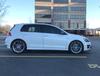

Living in New England the highways are a lot of ups and downs, so it takes a little bite out of the mpg. I'm averaging about 37 with all of my crappy suburb driving, but on a trip to Long Island recently I averaged ~41mpg there and back