


K&N Filter kit for a Jazz


New Member
Joined: Apr 2006
Posts: 12
From: Elyria, Ohio
Thanks,
That was really good the part about K&N and replacment Filters.
It's kind of what I thought, but had nothing to back it up.
The Honda dealer Guy reminded me of a domestic Car dealer VS a Honda Car dealer,,
Geeezee,
Thanks again,
Bruce
That was really good the part about K&N and replacment Filters.
It's kind of what I thought, but had nothing to back it up.
The Honda dealer Guy reminded me of a domestic Car dealer VS a Honda Car dealer,,
Geeezee,
Thanks again,
Bruce
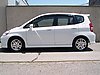

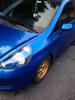




picked up my car yesterday, the intake will be developed within 6 weeks. its gonna be a short ram with a heatshield. it almost looks like an S shape and the filter will be located in front of the battery.

New Member
Joined: Jun 2006
Posts: 19
From: davis, ca
Originally Posted by strepto
Adding an aftermarket intake system is probably the most common upgrade today. However - in most cases it will increase the fuel consumption. The reason is simple. The Jazz ECU uses the output of the primary O2 sensor to calculate injector Duty Cycle. This is done in whats called a Closed Loop operation - a part of the OBD1 and OBD2 systems.
In Closed Loop Mode - the ECU will use the output of the O2 sensor to correct the fuel injectors output to match an Air Fuel Ratio (AFR) of 14.7 units of air, to 1 unit of fuel. An AFR @ 14.7:1 is called Stoich. This is the point where the blend of fuel and oxygen is optimalized to perform its best without causing too much exhaust - and without sacrificing performance. The lower the AFR value, the more fuel is consumed.
When you add a new performace Intake System the engine gets more air. ECU will get a feedback from the primary O2 sensor saying that "Hey, I got more Air today, toss in some fuel there!" and ECU increases the Duty Cycle of the injector - thus adding fuel.
Closed Loop operations are usually located between 1500 and 4000 RPMs. On the higher revs the ECU uses static maps programmed into the ECU to calculate injector Duty Cycle. This is called Open Loop. Regardless of amount of air entering the engine, the ECU will tell the injectors to spray the same amount of fuel. This causes another problem with the aftermarket intake.
The stock ECU has its fuel and ignition maps made based on the stock intake, and the supplied air the stock intake can take - of course with a certain degree of variation based on climate, temerature, etc. When you add a new intake to the car, which gives the engine more air - you can end up running lean on the higher RPMs. Ultimately - this can cause the engine to overheat and in rare cases die on you due to overheating (high AFR causes more heat). A more common problem is engine knock and reduced performance from the engine.
An aftermarket intake system can yield great results performance wise - but like all other engine parts - it needs to be tuned to perform its best
In Closed Loop Mode - the ECU will use the output of the O2 sensor to correct the fuel injectors output to match an Air Fuel Ratio (AFR) of 14.7 units of air, to 1 unit of fuel. An AFR @ 14.7:1 is called Stoich. This is the point where the blend of fuel and oxygen is optimalized to perform its best without causing too much exhaust - and without sacrificing performance. The lower the AFR value, the more fuel is consumed.
When you add a new performace Intake System the engine gets more air. ECU will get a feedback from the primary O2 sensor saying that "Hey, I got more Air today, toss in some fuel there!" and ECU increases the Duty Cycle of the injector - thus adding fuel.
Closed Loop operations are usually located between 1500 and 4000 RPMs. On the higher revs the ECU uses static maps programmed into the ECU to calculate injector Duty Cycle. This is called Open Loop. Regardless of amount of air entering the engine, the ECU will tell the injectors to spray the same amount of fuel. This causes another problem with the aftermarket intake.
The stock ECU has its fuel and ignition maps made based on the stock intake, and the supplied air the stock intake can take - of course with a certain degree of variation based on climate, temerature, etc. When you add a new intake to the car, which gives the engine more air - you can end up running lean on the higher RPMs. Ultimately - this can cause the engine to overheat and in rare cases die on you due to overheating (high AFR causes more heat). A more common problem is engine knock and reduced performance from the engine.
An aftermarket intake system can yield great results performance wise - but like all other engine parts - it needs to be tuned to perform its best
Member
Joined: Jul 2006
Posts: 431
From: Marietta, GA
K&N filter kit for a Jazz
I just got my FIT (2007) here in the USA. I have read that short ram intake decreases the milage a bit. K&N has said that they are having Fitting problems because of restrictive space. Maybe will have one out in Aug or Sep. I have a AT. And the AT at regular driving and less pedal (drive by wire) will shift at 4000 rpm except for 4th. My engine is supposed to be a VTECH L15A.
I am impressed with the car and don't expect to do as much as I did with my Accord Coupe V6...
I am impressed with the car and don't expect to do as much as I did with my Accord Coupe V6...

New Member
Joined: Jun 2006
Posts: 9
From: canby, oregon
Hey, I didnt know there was an actual speed limit in the P.I.? he he. Looks real nice. Could you please provide me with the cost for the intake and the total cost for installation. Thanks, take care. Gary w.
Member
Joined: Aug 2006
Posts: 544
From: Grant, Alabama U.S.A.

Intake size
Originally Posted by archonpsi
Greetings, I want to start with a K&N filter, the pipe could be in stainless steel? What is the right diameter of air entrance? ,sorry but i am a rookie in tuning.

http://img60.imageshack.us/img60/5463/airintakeve8.jpg
If the picture shows up this is my first post here. I also made a pipe to turn it down to the bottom of the radiator but I suspect that water would get in when it rains. I have it out to sandblast it tomorrow.
I'll have to make a snorkle for it. By the way I used 409 stainless and I'm going to use a ceramic paint to help keep the pipe from getting hot.
Good luck it's not a difficult mod.


Member
Joined: Aug 2006
Posts: 215
From: toronto
Originally Posted by strepto
Adding an aftermarket intake system is probably the most common upgrade today. However - in most cases it will increase the fuel consumption. The reason is simple. The Jazz ECU uses the output of the primary O2 sensor to calculate injector Duty Cycle. This is done in whats called a Closed Loop operation - a part of the OBD1 and OBD2 systems.
In Closed Loop Mode - the ECU will use the output of the O2 sensor to correct the fuel injectors output to match an Air Fuel Ratio (AFR) of 14.7 units of air, to 1 unit of fuel. An AFR @ 14.7:1 is called Stoich. This is the point where the blend of fuel and oxygen is optimalized to perform its best without causing too much exhaust - and without sacrificing performance. The lower the AFR value, the more fuel is consumed.
When you add a new performace Intake System the engine gets more air. ECU will get a feedback from the primary O2 sensor saying that "Hey, I got more Air today, toss in some fuel there!" and ECU increases the Duty Cycle of the injector - thus adding fuel.
Closed Loop operations are usually located between 1500 and 4000 RPMs. On the higher revs the ECU uses static maps programmed into the ECU to calculate injector Duty Cycle. This is called Open Loop. Regardless of amount of air entering the engine, the ECU will tell the injectors to spray the same amount of fuel. This causes another problem with the aftermarket intake.
The stock ECU has its fuel and ignition maps made based on the stock intake, and the supplied air the stock intake can take - of course with a certain degree of variation based on climate, temerature, etc. When you add a new intake to the car, which gives the engine more air - you can end up running lean on the higher RPMs. Ultimately - this can cause the engine to overheat and in rare cases die on you due to overheating (high AFR causes more heat). A more common problem is engine knock and reduced performance from the engine.
An aftermarket intake system can yield great results performance wise - but like all other engine parts - it needs to be tuned to perform its best
In Closed Loop Mode - the ECU will use the output of the O2 sensor to correct the fuel injectors output to match an Air Fuel Ratio (AFR) of 14.7 units of air, to 1 unit of fuel. An AFR @ 14.7:1 is called Stoich. This is the point where the blend of fuel and oxygen is optimalized to perform its best without causing too much exhaust - and without sacrificing performance. The lower the AFR value, the more fuel is consumed.
When you add a new performace Intake System the engine gets more air. ECU will get a feedback from the primary O2 sensor saying that "Hey, I got more Air today, toss in some fuel there!" and ECU increases the Duty Cycle of the injector - thus adding fuel.
Closed Loop operations are usually located between 1500 and 4000 RPMs. On the higher revs the ECU uses static maps programmed into the ECU to calculate injector Duty Cycle. This is called Open Loop. Regardless of amount of air entering the engine, the ECU will tell the injectors to spray the same amount of fuel. This causes another problem with the aftermarket intake.
The stock ECU has its fuel and ignition maps made based on the stock intake, and the supplied air the stock intake can take - of course with a certain degree of variation based on climate, temerature, etc. When you add a new intake to the car, which gives the engine more air - you can end up running lean on the higher RPMs. Ultimately - this can cause the engine to overheat and in rare cases die on you due to overheating (high AFR causes more heat). A more common problem is engine knock and reduced performance from the engine.
An aftermarket intake system can yield great results performance wise - but like all other engine parts - it needs to be tuned to perform its best
in closed loop operation the engine is trying to get lowest emmisions possible by using only the oxygen sensor outputs to try to get as close to stoichemetric as possible
in open loop operation the engine takes different inputs (coolant temp, throttle position, map/maf sensor readings, air temp readings, etc.) and takes these values and compares to a chart stored in the computers memory to determine how much fuel should be injected
the argument that a new air intake lets more air into the engine is somewhat wrong, in most cases the stock airbox isn't a bottleneck and the amount of air entering the engine with an aftermarket intake is exactly the same, the aftermarket intakes are usually less restrictive and at top end conditions (by this i mean WOT or high rpm operation) allow more air into the engine thereby increasing volumetric efficiency
the ecu will see that more air is entering the engine through either a map or maf sensor and inject more fuel accordingly (this is ofcourse assuming air temp, coolant temp, throttle position, and all other relevent variables remain constant)

Member

Joined: Nov 2005
Posts: 243
From: Croton, NY
K&N Filter kit for a Jazz
Hey,
I would like to get some info on Air Intakes.
My last post was closed with out any real info given. ( hey moderator, relax, )
So, are( sorry) these Air Intakes worth it??
What do you think.
Will you get one?
Thanx
I would like to get some info on Air Intakes.
My last post was closed with out any real info given. ( hey moderator, relax, )
So, are( sorry) these Air Intakes worth it??
What do you think.
Will you get one?
Thanx
Last edited by coldstorage5; Sep 1, 2006 at 07:15 PM.


Member
Joined: May 2006
Posts: 137
From: Gilbert, AZ
Sure most of them work, as long as you don't expect too much. Lets all be honest here, we drive 100HP cars, and that 5 or so added HP is not much more than a placebo. Are they worth it... I guess it depends on how you want to justify it. I will add an exhaust to my car but thats because I like to hear it. But I don't know that I want to hear the intake too. I have no illusions that I will be able to run with any car that I couldn't before.