


What did you do to your GE fit today?


Member
Joined: Oct 2007
Posts: 2,304
From: Illinois

Crack is bad stuff, but the road crews are trying to seal them as fast as they can.


Member
Joined: May 2010
Posts: 3,417
From: Capital Distric New York
.... the open area of the carpet seems clean enough. Just can't get under that plastic.
So, anyone got tips on removing the plastic? Or should I just take my car to a professional detailer? I wonder if the pros take seat cushions apart. Maybe they can finally clean the old Pepsi spill on the other side of the rear seats.
This all could've been avoided ... if I hadn't tried to be slick and tried to carry two large plastic jars and one smaller glass jar at the same time.
So, anyone got tips on removing the plastic? Or should I just take my car to a professional detailer? I wonder if the pros take seat cushions apart. Maybe they can finally clean the old Pepsi spill on the other side of the rear seats.
This all could've been avoided ... if I hadn't tried to be slick and tried to carry two large plastic jars and one smaller glass jar at the same time.
The sill trim clips [2] into the rearward piece so you'll need to unclip-pop them first. Take care and don't over stress the pieces and you should be okay. Remember use force, but try not to gorilla it. Sill piece should then lift up from the bottom to unhook it.
Good luck - least it isn't milk [phew]!!!

Did an oil and filter change on a teacher's GE8 today at school. This is the same GE8 that we put Drag-21s on and transferred the TPMS sensors by the way. The owner of the GE actually wanted to learn more about their vehicle and how to perform most of the basic maintenance but was side tracked for the evening so I couldn't show them the procedures for the oil change.
Used Mobil 1 5w-20 for oil and a Fram oil filter with a new FREE drain bolt washer (Thanks Honda of Lake Jackson :thumbs up: ), showed the owner how to reset the maintenance minder as well as the location of the engine's air filter and the cabin's air filter (and how to check/replace them). Sometime next week we'll be doing a tire rotation, brake inspection, and chassis inspection.
Used Mobil 1 5w-20 for oil and a Fram oil filter with a new FREE drain bolt washer (Thanks Honda of Lake Jackson :thumbs up: ), showed the owner how to reset the maintenance minder as well as the location of the engine's air filter and the cabin's air filter (and how to check/replace them). Sometime next week we'll be doing a tire rotation, brake inspection, and chassis inspection.

Member
Joined: Sep 2011
Posts: 92
From: Villa Hills, KY
What does the nitrogen do? Is it free? I have never heard of that. Would the techs at Honda think I was nuts asking for that? I am confused.
Member
Joined: Oct 2011
Posts: 162
From: charlotte, north carolina
All honda dealerships do the nitrogen in the tires , and they know about it, it cost 40-60 bucks heres a article on it> If you are one of the 85% of Americans who
don't regularly check tire pressure, you need
nitrogen.
We take in nitrogen with every breath. Air is composed of:
It's not about the nitrogen. It's about reducing oxygen, water vapor and other gases.
By reducing the percentage of oxygen, water vapor and other gases in your tires from 22% to 7% or lower, your tires will maintain proper pressure longer than if you use “plain old air.” For example, with 95% nitrogen in your tires, they retain optimal pressure three to four times longer.
Proper tire pressure is a big deal.
Maintain it with nitrogen, and you'll see
these three primary benefits:
don't regularly check tire pressure, you need
nitrogen.
We take in nitrogen with every breath. Air is composed of:
- 1% Water Vapor and Other Gases – Escapes up to 250 times faster than Nitrogen
- 21% Oxygen – Escapes 3-4 times faster than Nitrogen
- 78% Nitrogen – The largest molecule in
air, dry, non-flammable.
It's not about the nitrogen. It's about reducing oxygen, water vapor and other gases.
By reducing the percentage of oxygen, water vapor and other gases in your tires from 22% to 7% or lower, your tires will maintain proper pressure longer than if you use “plain old air.” For example, with 95% nitrogen in your tires, they retain optimal pressure three to four times longer.
Proper tire pressure is a big deal.
Maintain it with nitrogen, and you'll see
these three primary benefits:
- Increased Fuel Efficiency – Correct tire pressure keeps the manufacturer's recommended “contact patch” on the road. This lessens the rolling resistance and maximizes fuel efficiency. Read On...
- Longer Tire Life – When it comes in contact with other materials, oxygen causes oxidation. Oxidation can make rubber brittle and cause it to lose tensile strength. In addition, at high temperatures and pressures, oxygen reacts and damages inner tire liners and belt packages; nitrogen does not. Read On...
- Increased Safety – Under-inflated tires cause 90% of blowouts. Nitrogen provides more reliable pressure for reduced blowout potential. Read On...
- Improved TPMS Performance – If you have a new car, you likely are plagued by a flashing light telling you your tire pressure is low. For example, one woman's light was going off every four to five weeks. After inflating with nitrogen, her light didn't reappear for 53 weeks!
- More Predictable Pressure Fluctuation – NASCAR teams use nitrogen so they can more accurately predict tire pressure fluctuation. Regular compressed air can fluctuate considerably when water vapor is present. Read On...
- Longer Rim Life – Rim rust caused by condensation from water vapor and other gases can get caught in valves and create slow leaks in tires. Nitrogen is completely dry, so it eliminates the potential for condensation.


Member
Joined: Oct 2007
Posts: 2,304
From: Illinois
All honda dealerships do the nitrogen in the tires , and they know about it, it cost 40-60 bucks heres a article on it> If you are one of the 85% of Americans who
don't regularly check tire pressure, you need
nitrogen.
We take in nitrogen with every breath. Air is composed of:
It's not about the nitrogen. It's about reducing oxygen, water vapor and other gases.
By reducing the percentage of oxygen, water vapor and other gases in your tires from 22% to 7% or lower, your tires will maintain proper pressure longer than if you use “plain old air.” For example, with 95% nitrogen in your tires, they retain optimal pressure three to four times longer.
Proper tire pressure is a big deal.
Maintain it with nitrogen, and you'll see
these three primary benefits:
don't regularly check tire pressure, you need
nitrogen.
We take in nitrogen with every breath. Air is composed of:
- 1% Water Vapor and Other Gases – Escapes up to 250 times faster than Nitrogen
- 21% Oxygen – Escapes 3-4 times faster than Nitrogen
- 78% Nitrogen – The largest molecule in
air, dry, non-flammable.
It's not about the nitrogen. It's about reducing oxygen, water vapor and other gases.
By reducing the percentage of oxygen, water vapor and other gases in your tires from 22% to 7% or lower, your tires will maintain proper pressure longer than if you use “plain old air.” For example, with 95% nitrogen in your tires, they retain optimal pressure three to four times longer.
Proper tire pressure is a big deal.
Maintain it with nitrogen, and you'll see
these three primary benefits:
- Increased Fuel Efficiency – Correct tire pressure keeps the manufacturer's recommended “contact patch” on the road. This lessens the rolling resistance and maximizes fuel efficiency. Read On...
- Longer Tire Life – When it comes in contact with other materials, oxygen causes oxidation. Oxidation can make rubber brittle and cause it to lose tensile strength. In addition, at high temperatures and pressures, oxygen reacts and damages inner tire liners and belt packages; nitrogen does not. Read On...
- Increased Safety – Under-inflated tires cause 90% of blowouts. Nitrogen provides more reliable pressure for reduced blowout potential. Read On...
- Improved TPMS Performance – If you have a new car, you likely are plagued by a flashing light telling you your tire pressure is low. For example, one woman's light was going off every four to five weeks. After inflating with nitrogen, her light didn't reappear for 53 weeks!
- More Predictable Pressure Fluctuation – NASCAR teams use nitrogen so they can more accurately predict tire pressure fluctuation. Regular compressed air can fluctuate considerably when water vapor is present. Read On...
- Longer Rim Life – Rim rust caused by condensation from water vapor and other gases can get caught in valves and create slow leaks in tires. Nitrogen is completely dry, so it eliminates the potential for condensation.
Member
Joined: Oct 2007
Posts: 2,304
From: Illinois
Nitrogen has not been proven, Air is 78 percent nitrogen and if it even gave .1 percent better mpg they would use it in the trucks. At 4 dollars a gallon and using 30,000+ gallons a year that would be 120+ dollars per truck, my company would use it and the DOT would require it.


Member
Joined: Aug 2010
Posts: 345
From: San Antonio, Texas
I have my own portable air compressor so filling the
tires with air is relatively painless and easy.
It would drive me nuts not being able to check the
pressure once I started using nitrogen... because
each time you check the pressure a little leaks out
thus increasing the frequency I have to pay someone
to check the nitrogen level and fill as necessary.
tires with air is relatively painless and easy.
It would drive me nuts not being able to check the
pressure once I started using nitrogen... because
each time you check the pressure a little leaks out
thus increasing the frequency I have to pay someone
to check the nitrogen level and fill as necessary.
Member
Joined: Oct 2011
Posts: 57
From: Tarzana, CA
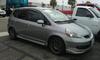
I threw a couple of stickers on. You know. To go faster.


I'm trying to get the software to open up my database of graphics I designed while working at a sign shop years ago. From what I remember, my portfolio had some real hilarious stuff. I'd love to get a plotter and start making decals again someday.
I'm trying to get the software to open up my database of graphics I designed while working at a sign shop years ago. From what I remember, my portfolio had some real hilarious stuff. I'd love to get a plotter and start making decals again someday.

Member
Joined: Oct 2009
Posts: 4,295
From: Wandering around.
I have my own portable air compressor so filling the
tires with air is relatively painless and easy.
It would drive me nuts not being able to check the
pressure once I started using nitrogen... because
each time you check the pressure a little leaks out
thus increasing the frequency I have to pay someone
to check the nitrogen level and fill as necessary.
tires with air is relatively painless and easy.
It would drive me nuts not being able to check the
pressure once I started using nitrogen... because
each time you check the pressure a little leaks out
thus increasing the frequency I have to pay someone
to check the nitrogen level and fill as necessary.
Then again... if you have your own air compressor... why bother with nitrogen?


Not sure what is in my 09 Stock tires but my winter tires are nitrogen filled. That is nice because who wants to freeze fingers checking tire pressures.




Member
Joined: Oct 2011
Posts: 162
From: charlotte, north carolina
im a daily driver and nitrogen in my tires made a HUGE diffence, alot smoother ride, i havent had my air pressure go down since i got it done almost a year ago. Worth every penny to get it done. Ill never go back to air, must the new Honda come with nitrogen in the tires already. If your see a Honda with green vavle covers it means it has nitrogen filled tires. I reccommened to to everyone.